
A picture worth a thousand words
Background information
- The term Anunnaki. In the absence of reliable information to the contrary, Aryan-type ET humanoids can all be considered Anunnaki, with the exception of the seemingly German crews of some ET-type craft (Anunnaki are from The Winter Sky)
- Anunnaki attributes. In The Anunnaki: Basic information it is shown that these ET humanoids are (i) human-shaped, (ii) wearing high hats (suggesting exceptionally long heads), (iii) Aryan (Northern European / Nordic appearance), (iv) amphibious, (v) from a local base on Mars and “The Winter Sky,” and (vi) likely speakers of a lost proto-European language known as “the language of the gods.
Pillars of evidence
- Human creation
1.1 The Atra-Hasis Epic
1.2 The Enūma Eliš
1.3 Enki and Ninmah
1.4 Key points
1.5 Genetic engineering of humans - Anunnaki and Apkallu mating with humans
2.1 Antediluvian Sumerian kings were divine
2.2 Anunnaki x human mating: Gilgamesh
2.3 Apkallu x human mating - Genesis 6:1–4
3.1 The “sons of God” are the Anunnaki
3.11 Christian O’Brien
3.12 Paul Wallis
3.2 The Nephilim are Anunnaki x human hybrids
3.21 Ancient scholarly support for this view
3.22 Modern scholarly support for this view - Summary of the Mesopotamian and Biblical evidence
- Humans
5.1 Sudden appearance
5.2 Species characteristics
5.21 Summary
5.22 Australopithecus
5.23 H. habilis
5.24 H. erectus
5.25 H. heidelbergensis
5.26 Chromosome 2
5.27 Neanderthals
5.28 Modern humans
5.281 From long-heads to round-heads
5.282 Natural vs artificial long skulls
5.283 Decreasing brain size
5.29 Denisovans
5.3 The Aquatic Ape Hypothesis
5.31 A problem with this hypothesis
5.4 The Hybrid Hypothesis of Eugene McCarthy
5.41 Multiple human creations
5.42 A problem with this hypothesis
5.5 The Standard ET Hypothesis
5.51 Limitations of this hypothesis - Long-head humans are Nephilim
6.1 Brien Foerster
6.2 Lynn A. Marzulli
6.3 Examples of Nephilim remains
6.31 Long-skull shape variants - European Nephilim
7.1 Western hunter-gatherers
7.11 The Iberian type
7.2 Indo-Europeans
7.3 Examples of European long-skulls - European Round-heads
8.1 Early Farmers
8.2 Round-head extermination of Nephilim - The AAWSome explanation
9.1 Summary of the evidence
9.2 Application of McCarthy’s findings
9.3 Dates of human creation
9.4 Dates of Nephilim creation
9.5 The transition from long-heads to round heads
9.6 Additional supporting evidence
9.7 Conclusion
9.71 The Anunnaki created humans
9.72 The value of this knowledge
9.73 The future - References
Appendix: A classification of dolichocephalic skulls
1. Human creation
Following are specific, verifiable quotes from primary Mesopotamian texts, organized by source, with scholarly attribution.
1.1 The Atra-Hasis Epic
The Atra-Hasis Epic (Old Babylonian, c. 18th century BCE) is the most detailed Mesopotamian creation account. Context: The Igigi (lesser gods) rebel against forced labor, and the greater gods convene to solve the problem.
Quote 1 — The gods decide to create a substitute laborer:
They called up the goddess, asked
The midwife of the gods, wise Mami,
“You are the womb-goddess (to be the) creator of mankind!
Create primeval man, that he may bear the yoke!
Let him bear the yoke, the work of Enlil,
Let man bear the load of the gods!”
— Atra-Hasis, Tablet I, Dalley translation (Stephanie Dalley, Myths from Mesopotamia, Oxford World’s Classics)
Quote 2 — The mother goddess defers to Enki:
Nintu made her voice heard
And spoke to the great gods,
“It is not proper for me to make him.
The work is Enki’s;
He makes everything pure!
If he gives me clay, then I will do it.”
— Atra-Hasis, Tablet I, Dalley translation
Quote 3 — Enki’s recipe for human creation:
Enki made his voice heard
And spoke to the great gods,
“On the first, seventh, and fifteenth of the month
I shall make a purification by washing.
Then one god should be slaughtered.
And the gods can be purified by immersion.
Nintu shall mix clay
With his flesh and his blood.
Then a god and a man
Will be mixed together in clay.
Let us hear the drumbeat forever after,
Let a ghost come into existence from the god’s flesh,
Let her proclaim it as his living sign,
And let the ghost exist so as not to forget the slain god.”
— Atra-Hasis, Tablet I, lines 192–208, Dalley translation
Quote 4 — The god is slain and humans created:
On the first, seventh, and fifteenth days of the month,
he set up a bath for purification.
Geshtu-e, a god who had intelligence,
they slaughtered in their assembly.
From his flesh and blood,
Nintu mixed clay.
God and man
were mixed together in the clay.
From then on it was manifest, so they could hear it —
the ghost from the god’s flesh was present.”
— Atra-Hasis, Tablet I, lines 221–230, Dalley translation (also Lambert & Millard, Atra-Hasis: The Babylonian Story of the Flood, 1969)
Note on the slain god’s name: The name appears as We-ilu or Geshtu-e depending on the manuscript and translator. Lambert and Millard (1969) translate his epithet as “a god who had sense“ — meaning that his intelligence was transferred to humanity.
1.2 The Enūma Eliš
The Enūma Eliš / Babylonian Creation Epic (c. 12th century BCE) text shifts the creation narrative to Marduk and Ea, with other Anunnaki playing a supporting role.
Quote 5 — Marduk proposes creating humans:
Blood I will mass and cause bones to be.
I will establish a savage, ‘man’ shall be his name.
Verily, savage-man I will create.
He shall be charged with the service of the gods
that they may be at ease!
— Enūma Eliš, Tablet VI, lines 5–8, Dalley translation
Quote 6 — The Anunnaki identify Qingu as the one to be sacrificed:
The Igigi, the great gods, replied to him,
To Lugaldimmerankia, counselor of the gods, their lord:
“It was Kingu who contrived the uprising,
And made Tiamat rebel, and joined battle.”
They bound him, holding him before Ea.
They imposed on him his punishment and severed his blood vessels.
Out of his blood they fashioned mankind.
He imposed on him the service and let free the gods.
— Enūma Eliš, Tablet VI, lines 29–34, Dalley translation
Quote 7 — The Anunnaki react to human creation:
After the wise Ea had created mankind,
Had imposed upon them the service of the gods —
That work was beyond comprehension;
As for Nudimmud [Ea], the creator of all —
Marduk, the king, divided the gods,
And the Anunnaki, all of them,
He assigned to the upper and lower realms.
— Enūma Eliš, Tablet VI, lines 35–39
Quote 8 — Marduk redistributes the Anunnaki after creating humans:
After he had arranged all the decrees,
And had distributed incomes among the Anunnaki of heaven and netherworld,
The Anunnaki opened their mouths
And addressed their lord Marduk:
“Now, lord, seeing you have established our freedom,
What favour can we do for you?”
— Enūma Eliš, Tablet VI, lines 45–48, translation from World History Encyclopedia
1.3 Enki and Ninmah
The Enki and Ninmah (Sumerian, c. 2000–1800 BCE) [Ninmah is also known as Ninhursag] creation account is the earliest of the three texts and is purely Sumerian (not Akkadian). It’s catalogued as ETCSL 1.1.2 and available at the Oxford Electronic Text Corpus of Sumerian Literature.
Quote 9 — Enki instructs the creation of humans from clay:
My mother, the creature you planned will really come into existence.
Impose on him the work of carrying baskets.
You should knead clay from the top of the abzu;
the birth-goddesses will nip off the clay
and you shall bring the form into existence.
Let Ninmah act as your assistant;
and let Ninimma, Cu-zi-ana, Ninmada, Ninbarag, Ninmug, … and Ninguna
stand by as you give birth.
My mother, after you have decreed his fate,
let Ninmah impose on him the work of carrying baskets.
— Enki and Ninmah, lines 24–37, ETCSL translation
Quote 10 — Ninmah shapes the first humans from clay:
Ninmah took clay from the top of the abzu in her hand
and she fashioned from it first a man who could not bend his outstretched weak hands.
— Enki and Ninmah, lines 56–58, ETCSL translation
Quote 11 — Enki decrees destinies for the created beings:
Enki looked at the man who could not bend his outstretched weak hands, and decreed his fate: he appointed him as a servant of the king.
— Enki and Ninmah, lines 59–61, ETCSL translation
Enki and Namma (Sumerian, precursor text)
An even earlier Sumerian tradition places the idea for human creation with Namma, the primeval mother goddess.
Quote 12 — Namma urges Enki to create a laborer:
My son, wake up from your bed!
Please apply the skill deriving from your wisdom
and create a substitute for the gods
so that they can be freed from their toil!
— Enki and Ninmah (opening section), ETCSL translation
1.4 Key points
The Atra-Hasis Epic
From Quote 4 — The god is slain and humans created:
Nintu mixed clay.
God and man
were mixed together in the clay.
From then on it was manifest, so they could hear it —
the ghost from the god’s flesh was present.
The Enūma Eliš
From Quote 6 — The Anunnaki identify Qingu as the one to be sacrificed:
They imposed on him his punishment and severed his blood vessels.
Out of his blood they fashioned mankind.
Enki and Ninmah
From Quote 10 — Ninmah shapes the first humans from clay:
Ninmah took clay from the top of the abzu in her hand
and she fashioned from it first a man who could not bend his outstretched weak hands.
Summary
According to these ancient Mesopotamian creation accounts, Anunnaki gods (Enki, Nintu/Mami, Ea, Marduk) created humans in order to provide human labour for the Anunnaki.
1.5 Genetic engineering of humans
It is argued that the above-mentioned ancient cuneiform epics are literal accounts of extraterrestrial humanoid creation of humans. Proponents of this view reason that (a) clay is a metaphor for an existing Earth hominin, (b) divine blood and flesh is an explicit reference to extraterrestrial DNA, and (c) mixing these components refers to gene splicing to upgrade a primitive hominin into Homo sapiens.1
Evidence cited in Beyond-human technology suggests that these Aryan ETs were abundantly capable of genetically engineering humans. Evidence of these ETs’ technological advancement is also shown in Highly advanced life on Mars now and in ET spacecraft encounters.
Sources for Verification
Atra-Hasis: Lambert & Millard (1969); Dalley (2008). omnika.org
Enūma Eliš: Dalley (2008); Foster (2005). worldhistory.org
Enki and Ninmah: ETCSL (Oxford). etcsl.orinst.ox.ac.uk
KAR 4 (fragmentary creation text): Ebeling (1919); Foster (2005). Academic libraries only
2. Anunnaki and Apkallu mating with humans
2.1 Antediluvian Sumerian kings were divine
Key Passage: “When kingship was lowered from heaven… (In) Eridug A-lulim reigned 28,800 years… Then the flood swept over.” [Date c. 2100 BCE (Third Dynasty of Ur). Source: Weld-Blundell Prism and other cuneiform tablets]
The eight antediluvian kings as per the Sumerian King List (king, city, reign length, notes)
Alulim, Eridu, 28,800 years, First king after “kingship descended from heaven”
Alalgar, Eridu, 36,000 years
Enmenluanna, Bad-tibira, 43,200 years
Mengalanna, Bad-tibira, 28,800 years
Dumuzi (shepherd), Bad-tibira, 36,000 years, God-king hybrid
Enmeduranna, Sippar, 21,000 years
Ubara-Tutu, Shuruppak, 18,600 years, Last pre-flood king
The phrase “kingship was lowered from heaven” implies direct descent from gods and the impossibly long reigns suggest these “kings” had divine ancestry or were partially divine beings.
2.2 Anunnaki x human mating: Gilgamesh
The 12-tablet Epic of Gilgamesh on clay tablets from Nineveh library (Old Babylonian version c. 1800 BCE; Standard version c. 1200 BCE) provides the clearest example of divine x human mating producing a semi-divine offspring. Gilgamesh’ mother is Goddess Ninsun (divine) and his father is Lugalbanda (mortal human king of Uruk). Gilgamesh is two-thirds god, one-third human: “Two-thirds they made him god and one-third man.” (Tablet I)
2.3 Apkallu x human mating
The Bit Meseri Ritual Text (Neo-Assyrian period, c. 700-600 BCE) of the cuneiform incantation tablets refers to the seven Apkallu sages who came from the sea before the flood and four post-flood human sages who followed the seven divine Apkallu. According to scholarly reconstruction of the damaged tablet, Apkallu and human beings were presumably capable of conjugal relations. This apparent capability of divine (Anunnaki) Apkallu x human procreation, and the change from divine to human sages, suggests that the divine Apkallu mated with human females to produce the human wisdom figures.2
It is unsurprising that Mesopotamian texts record divine / Anunnaki x human mating as recorded in the Hebrew Bible. There are secure parallels between the divine and quasi-divine beings of Mesopotamian literature andthose inGenesis 6:1-4and Second Temple Jewish literature shows intimate familiarity with the original Mesopotamian context.3,4,5
Online resources for full transliterations
ETCSL (Oxford), https://etcsl.orinst.ox.ac.uk/ Complete Sumerian literary texts with transliterations
CDLI https://cdli.ucla.edu/ Cuneiform Digital Library Initiative with images
Oracc (Penn Museum) https://oracc.museum.upenn.edu/amgg/ Ancient Mesopotamian Gods and Goddesses
Akkadian Dictionary (CAD) https://oi.uchicago.edu/cad Chicago Assyrian Dictionary translations
3. Genesis 6:1–4
When man began to multiply on the face of the land and daughters were born to them, the sons of God saw that the daughters of man were attractive. And they took as their wives any they chose. Then the Lord said, “My Spirit shall not abide in man forever, for he is flesh: his days shall be 120 years.” The Nephilim were on the earth in those days, and also afterward, when the sons of God came in to the daughters of man and they bore children to them. These were the mighty men who were of old, the men of renown.
(Genesis 6:1–4, English Standard Version)
The Book of Enoch (specifically 1 Enoch 6:1–2 and 7:1–2), an ancient Jewish religious work traditionally ascribed to Enoch, the great-grandfather of Noah, expands Genesis 6:1-4 into detailed narrative about angelic-human unions:
“And it came to pass when the children of men had multiplied, in those days were born unto them beautiful and comely daughters. And the Watchers, the sons of heaven, saw them and desired them… And they took wives unto themselves… And they bore to them great giants.”
(1 Enoch 6:1–2 and 7:1–2)
3.1 The “sons of God” are the Anunnaki
3.11 Christian O’Brien
The “sons of God” (Genesis 6:1–4), known as the “Watchers” / “sons of heaven” (1 Enoch 6:1–2 and 7:1–2), are the Anunnaki according to Christian O’Brien, who was a British exploration geologist, structural engineer, and alternative history author. In The Genius of the Few (1985)6 O’Brien suggests a direct linguistic and historical connection between the “sons of God,” the Anunnaki, and the Tuatha Dé Danann (usually translated “folk of the goddess Danu,” also known by the earlier name Tuath Dé,
meaning “tribe of the gods” or “divine tribe”), a supernatural race in Irish mythology. He viewed them all as a single group of advanced beings who jump-started human civilization. The
Tuatha Dé Danann are said to be a race of ancient entities who descended to Earth on the sacred hill of Tara in prehistoric Ireland.6 Interestingly, the Irish legend of Tuath Dé has also been translated as “people of Anu,” as related to the Irish goddess Danu.7 Further, as was noted in Aspects of Aryans the name “Ireland” (and also “Iran”) means “land of the Aryans.”
3.12 Paul Wallis
Paul Wallis is an author, researcher, and public speaker who is best known for his Eden Series, starting with the international bestseller Escaping from Eden (2020).8 Before entering the alternative history field, Wallis spent 33 years as a senior churchman in the Anglican Church of Australia. During his career as an orthodox theologian, he served as a Theological Educator, a Church Doctor, and an Archdeacon. Wallis used his theological training to re-evaluate ancient scriptures. His 2020 book, Escaping from Eden, asks the subtitle’s central question: “Does Genesis teach that the human race was created by God or engineered by ETs?”
In the book Wallis argues:
- Various anomalies in the the book of Genesis indicate that we are not reading the original version of these stories.
- An earlier story of human origins was almost obliterated from the Hebrew Scriptures in the 6th century BCE and suppressed from Christian writing in the 2nd and 3rd centuries CE.
- Early biblical translations swapped out plural entities (like the Elohim) for a singular “God,” thereby masking historical memories of close encounters with advanced, non-human intelligence (the Anunnaki).
- Careful reading of the original Hebrew text reveals that Genesis 6 is not a story about a singular Supreme Being, but rather a compressed retelling of the Sumerian and Babylonian mythologies.
- The Elohim [a Hebrew word meaning “gods”] and Bene Ha-Elohim [a Hebrew phrase meaning “sons of God” or “sons of the gods”] are the local flesh-and-blood Anunnaki governors.
- The phrase “Then God said, ‘Let us make mankind in our image . . . .’” (Genesis 1:26) is a literal description of gene splicing, i.e. the Book of Genesis describes the genetic engineering of humanity by extraterrestrial beings rather than creation by an absolute God.
3.2 The Nephilim are Anunnaki x human hybrids
The Nephilim referred to in Genesis 6:1–4 are the supernatural offspring of fallen angelic beings (“sons of God,” identified as Anunnaki by O’Brien and Wallis) and human women (“daughters of man”). This is known as the Angelic Interpretation (or supernatural view).9
3.21 Ancient scholarly support for this view
An extensive list of ancient, medieval, and modern scholars explicitly argue that the text depicts the Nephilim as the direct product or offspring of this “sons of God” x human women breeding:10,11,12,13
- Ancient Jewish and Hellenistic scholars. The supernatural view was the near-universal consensus in Second Temple Judaism.9
- The Authors of Second Temple literature. The writers of 1 Enoch (The Book of the Watchers) and the Book of Jubilees, explicitly construct the narrative framework that 200 rebellious angels (“Watchers”) mated with human women, giving birth to a race of destructive giants called the Nephilim.9,13
- Philo of Alexandria. The Hellenistic Jewish philosopher wrote an entire treatise, On the Giants, directly interpreting the “sons of God” as incorporeal souls or angels descending to earth to cohabit with women.
- Flavius Josephus. In his seminal work Antiquities of the Jews, the 1st-century historian recorded that “angels of God accompanied with women, and begat sons that proved unjust . . . on account of the confidence they had in their own strength; for the tradition is, that these men did what resembled the acts of those whom the Grecians call giants.”
Early Christian theologians (pre-4th Century) heavily championed the angelic view9 and several prominent biblical scholars and ancient-text authorities argue that the Nephilim in Genesis 6:1–4 are the offspring produced by heavenly “sons of God” (often interpreted as fallen angels or divine watchers) mating with human women.14,15
3.22 Modern scholarly support for this view
Key scholars supporting the Angelic/Supernatural view:
- Michael Heiser, (1963 – 2023) a prominent Old Testament scholar and semiticist who extensively argued in works like The Unseen Realm that bene ha-elohim (“sons of God”) consistently refers to non-human, heavenly beings throughout the Hebrew Bible, representing a deliberate divine boundary-crossing.
- Gordon Wenham, (1943 – 2025) a noted Old Testament commentator (associated with Cambridge/Brunel) who argues in his Genesis commentary that this supernatural interpretation reflects the standard Second Temple Jewish understanding (found heavily in 1 Enoch) and fits the straightforward linguistic meaning of the Hebrew text.
- Umberto Cassuto, (1883 – 1951) the classic Hebrew University biblical commentator who maintained that the phrase “sons of God” denotes divine beings in ancient Semitic contexts rather than human lineages.
- James VanderKam (1946 –) and John Walton (1952 –), scholars of ancient Judaism and the Old Testament who recognize the “sons of God” as supernatural/heavenly entities whose union with humans mirrors ancient near-eastern and early Jewish traditions (such as the Watchers literature).
- R. H. Charles, (1855 – 1931) the foundational translator and scholar of the Pseudepigrapha who connected the Genesis 6 narrative directly to the angelology of 1 Enoch.14,15,16
4. Summary of the Mesopotamian and Biblical evidence
- Anunnaki gods (Enki, Nintu/Mami, Ea, Marduk) created humans in order to provide human labour for the Anunnaki.
- The method of creation described can be seen as a metaphor for genetically engineering humans from the DNA of an existing hominin and that of the Anunnaki.
- At some stage after creating humans, the Anunnaki mated with the humans.
- Resulting Anunnaki x human hybrids (Apkallu, who are known as Nephilim in the Hebrew Bible) also mated with humans.
- According to British exploration geologist Christian O’Brien, the “sons of God” (Genesis 6:1–4), known as the “Watchers” / “sons of heaven” (1 Enoch 6:1–2 and 7:1–2), are the Anunnaki. He identifies these gods as a supernatural race in Irish mythology who descended to Earth on the sacred hill of Tara in prehistoric Ireland.
- Theological Educator, Church Doctor, and Archdeacon Paul Wallis argues that the Elohim [a Hebrew word meaning “gods”] and Bene Ha-Elohim [a Hebrew phrase meaning “sons of God” or “sons of the gods”] are the local flesh-and-blood Anunnaki governors and that the phrase “Then God said, ‘Let us make mankind in our image . . . .’” (Genesis 1:26) is a literal description of genetic engineering of humanity by these god-like extraterrestrial beings.
- The view of Nephilim as the offspring of angelic beings (“sons of God,” Anunnaki) and human women (“daughters of man”) was a mainstream view among ancient biblical scholars and it is also supported by many respected modern scholars.
5. Humans
5.1 Sudden appearance
A review of the scientific literature by geologist Dr Casey Luskin (2015)17 reveals:
- The history of life shows a pattern of explosions where new fossil forms come into existence without clear evolutionary precursors.
- Many species remain virtually unchanged for millions of years, then suddenly disappear to be replaced by a quite different, but related, form.
- These bursts of rapid change (speciation events) separated by stasis mean that macro-evolutionary transitions may be compressed into short geological intervals.
- This “punctuated equilibrium” is offered as an explanation for the appearance of the earliest fossils of Homo [“human,” from the Latin word homō, meaning “human being” or “person”], including Homo erectus, the first human species with a human-like body plan and gait.
- However, as with many other groups of living organisms, there is no fossil record to support this claim.
- No fossils document a transition from ape-like Australopithecus to human-like Homo.
- This gap in the fossil record is real and not due to a poor fossil record.
5.2 Species characteristics
5.21 Summary
Temporal range, chromosome count, mean cranial capacity, cranial shape, chin
As some would have us believe that the genus Australopithecus (a group of extinct primates) is closely related to, if not actually ancestors of Homo sapiens (modern human beings), Australopithecus is included in this discussion.
- Australopithecus, 4.2–1.2 Ma, 48, 370–550 cm³, mostly dolichocephalic, no chin
- H. habilis, 2.4–1.4 Ma, 48, ~610 cm³, likely dolichocephalic (few complete crania), no chin
- H. erectus, 2.0–0.1 Ma, 48–46 [variable by time period], ~900–950 cm³, dolichocephalic, no chin
- H. heidelbergensis, 780–200 ka, 46 [all specimens postdate fusion event], ~1,230 cm³, dolichocephalic, no chin
- H. neanderthalensis (Neanderthals), 430–40 ka, 46, ~1,410 cm³, dolichocephalic, slight chin
- H. sapiens (Modern humans), 315 ka–present, 46, ~1,350 cm³, dolichocephaly common, full chin
- Denisovans, ~200 — ~40 ka, 46, ~1,420 cm³, dolichocephalic (only only nearly complete Denisovan cranium identified to date), no chin
5.22 Australopithecus (seven recognized species). Cranial capacity (370–550 cm³) within chimpanzee range (~350–500 cm³), mostly dolichocephalic ape-like skull (like a small gorilla), but A. africanus (3.3–2.1 Ma) and A. sediba (2.0–1.2 Ma, the most recent Australopithecus species) specimens were dolichocephalic (long and narrow) to mesocephalic (ovoid).18,19,20,21,22,23
5.23 H. habilis. Fossil evidence since 2007 has made it increasingly unlikely that this early human was a direct ancestor of H. erectus.24,25,26,27
5.24 H. erectus. Based on current scientific understanding, H. erectus could be the common ancestor of H. heidelbergensis, H. neanderthalensis, Denisovans, and H. sapiens. According to genetic and fossil evidence: (1) H. erectus originated in Africa approximately 1.9 million years ago and spread throughout Eurasia; (2) The African populations of H. erectus are widely accepted as the direct ancestor of H. heidelbergensis; (3) H. heidelbergensis (appearing ~600,000-400,000 years ago) is generally regarded as the last common ancestor of H. sapiens, H. neanderthalensis, and Desnisovans; and (4) Around 350,000-400,000 years ago, the H. heidelbergensis population split into: (a) an African branch that became H. sapiens, (b) a European/West Asian branch that became H. neanderthalensis, and an Eastern Asian branch that became Denisovans. In other words, the H. erectus who remained in Africa is now viewed as the direct ancestor of all later hominins, including H. heidelbergensis, H. sapiens, H. neanderthalensis, and the Asian H. erectus.28,29,30
5.25 H. heidelbergensis The species is poorly defined but a H. heidelbergensis-like population around 600–700 ka sits at the branching point that gave rise to all Neanderthals, modern humans, and Denisovans.
Fossil evidence suggests that the geographic range of this species was Africa (eastern, southern), Europe (Spain, Germany, Greece), and possibly Asia (China). H. heidelbergensis represents a major leap in hominin behavior: Large-game hunting (horse remains with butchery marks at Boxgrove, Germany; elephant, rhino, deer bones across Europe/Africa), wooden spears (Schöningen, Germany (400 ka): 11 complete spears made from spruce trees), fire control (earliest definite hearths, ~400–700 ka), shelter building (simple wooden/rock dwellings; first species in colder climates), possible ritual burial (deliberate placement of 29 corpses in pit), and handaxe tradition (Acheulean bifacial tools across all regions).31,32
5.26 Chromosome 2
Significant differences between Australopithecus and Homo include the head-to-head fusion of two chromosomes to form human chromosome 2 (HSA2). Molecular clock analysis suggests the fusion occurred ~930 ka – 800 ka, with a 95% confidence interval of 1.5 Ma – 400 ka.33 This means that the fusion occurred during the period of Homo erectus (2.0 Ma –117 ka), with early H. Erectus having 24 pairs and later H. Erectus having 23 pairs pairs. Consequently, while great apes (chimpanzees, bonobos, gorillas, orangutans) have 24 pairs of chromosomes (48 total), as of an event during the period of H. erectus, humans have 23 pairs (46 total). The fusion represents a major genetic milestone separating Homo from earlier hominins.34
Chromosome 2 and brain size
No novel brain-size genes were created by the fusion. A single chromosomal rearrangement is unlikely to drive major change. Brain size is polygenic — controlled by hundreds/thousands of loci across the entire genome.35,36,37,38
5.27 Neanderthals
Temporal range
Neanderthals (Homo neanderthalensis) as a distinct lineage first appeared in the fossil record around 430,000 years ago and their lineage was well-established in Europe by ~400,000 years ago. Their evolutionary history spans roughly 360,000 years before they went extinct ~40,000 years ago.39,40,41,42,43
Skull shape and intelligence
As was common among modern humans, Neanderthal skulls were generally dolichocephalic, including a prominent occipital bun.44,45,46
Recent genetic studies have confirmed that Neanderthal-derived DNA variants in modern humans are associated with longer (Neanderthal-like) skull shapes.47
Skin, hair and eye colour
Genetic and archaeological research indicates that Neanderthals likely had a range of skin and hair pigmentation similar to modern human populations. Likely ranges were skin tone light to medium-dark; freckling possible in some individuals; hair colour dark brown to red/blonde; eye colour brown to blue.48,49,50
5.28 Modern humans
Temporal range
Based on current paleoanthropological research, Homo sapiens (anatomically modern humans) first appeared around 300,000–315,000 years ago, based on the oldest securely dated fossils discovered at Jebel Irhoud, Morocco.51
Although H. Sapiens is still surviving after ~315,000 years, it is notable that Neanderthals went extinct after ~360,000 years and Denisovans (who appeared after us) were gone after ~170,000 years.
The defining chin
Pronounced chins first appear in the fossil record with early H. sapiens around 315,000 years ago at Jebel Irhoud, Morocco. The feature is variable and incompletely expressed in the earliest members of our species, becoming more consistently developed in later H. sapiens populations.
No other hominin species exhibits the full suite of chin features (central keel, triangular mental protuberance, bilateral mental fossae), making it one of the most diagnostically useful traits for identifying H. sapiens in the fossil record.
For example, a true chin does not appear in Neanderthals, H. heidelbergensis, or H. erectus. Occasionally, Neanderthals have a small small bulge at the inferior margin, but no central keel or fossae.52,53,54
Why does only H. sapiens have a chin? Leading hypotheses include that of von Cramon-Taubadel et al. (2026)55 based on the the most recent comprehensive analysis. They argue that the chin did not evolve through direct natural selection but emerged as an evolutionary byproduct of changes in overall craniofacial form. However there isn’t a definitive conventional explanation for the appearance of the chin in H. sapiens.
5.281 From long-heads to round-heads
The earliest H. sapiens crania were long and low, i.e. dolichocephalic. However, globularity (brachycephaly) gradually evolved thereafter. Upper Paleolithic (50 — 12 ka) people were still relatively dolichocephalic, but round heads have become increasingly prevalent since.51,56,57
Eventually, with the exception of high-volume long-heads still living in Sub-Saharan Africa, the high-volume long-heads died out, with the most recent high-volume long-heads found being dated to ~1,500 years BP (skull from Bavaria, Germany) and ~1,300 years BP (skull from de Sainte Odile, France). [More information about the long-skull people in the Long-heads posts on the ET Humanoids page]
5.282 Natural vs artificial long skulls
The long skulls of interest in this study are naturally long. They are not skulls that resulted from artificial cranial deformation. This important distinction is discussed in Long-heads of Europe.
5.283 Decreasing brain size
Consistent with the demise of large-brained long-heads, human brain size has reduced substantially since peaking in the Mesolithic period [15,000 to 5,000 BP in Europe, beginning as glaciers retreated at the end of the last inter-glacial period].58 The loss of large-brained long-heads, and the decline in human brain size more generally, can be understood within the context of the spiritual, religious and civilizational decline since the onset of global cooling and the great environmental catastrophes discussed in The Oera Linda Book.
5.29 Denisovans
Scientists generally place Denisovans within the genus Homo, but Denisovans do not have an officially established, formal scientific Linnaean name. Designations suggested by researchers include Homo denisova, but such names have not received formal universal taxonomic agreement. They are typically referred to by their informal name, Denisovans.
The Denisovan fossil record is extremely sparse compared to Neanderthals, with only ~10 reliably identified specimens total, mostly from Denisova Cave in Siberia. This contrasts sharply with hundreds of Neanderthal fossils. Most Denisovan identifications require ancient DNA or proteomics.
Temporal range
Denisovans as a distinct genetic lineage first appeared in the fossil record around 200,000 years ago. Their history spans approximately 170,000 years before they went extinct ~32,000–50,000 years ago, leaving genetic traces in modern Papuans, Aboriginal Australians, and some East Asian populations.59,60,61
Skull shape and intelligence
The Harbin cranium (the only nearly complete Denisovan cranium identified to date) is dolichocephalic (long-headed) with a brain volume of ~1,420 cm³.37
The dolichocephaly of this Denisovan skull is consistent with that of H. erectus, Neanderthals, and the long-head H. sapiens. The large brain volume is substantially greater than that of H. erectus (average ~900–950 cm³, range (48 crania) 546–1,260 cm³) but similar to that of Neanderthals and H. sapiens.62
DNA evidence suggests they had dark skin, eyes, and hair, and had a Neanderthal-like build. Based on the Harbin cranium, like other archaic humans, the skull is low and long, with massively developed brow ridges, wide eye sockets, and a large mouth. The cranial capacity and therefore the brain size of the Denisovans was within the range of modern humans and Neanderthals.
Denisovans interbred with modern humans, with a high percentage (roughly 5%) of Denisovan DNA occurring in Melanesians, Aboriginal Australians, and Filipino Negritos. In contrast, only 0.2% of ancestry in mainland Asians and Native Americans is Denisovan.63
5.3 The Aquatic Ape Hypothesis
The Aquatic Ape Hypothesis (AAH), first proposed by marine biologist Alister Hardy in 1960 and famously popularized by writer Elaine Morgan, suggests that unique human traits evolved because our ancestors spent a significant phase of their evolutionary history in semi-aquatic environments like shorelines, floodplains, or mangrove swamps.64,65
AAH proponents traditionally point to several anatomical, physiological, and behavioral traits as evidence:
1. Anatomical evidence
Relative Hairlessness (Nakedness): Unlike other great apes, humans lack a dense coat of fur. Proponents compare this to fully or semi-aquatic mammals (like whales, hippos, and walruses) where hairlessness provides a hydrodynamic advantage for swimming.66
Subcutaneous Fat: Humans carry much higher percentages of fat directly beneath the skin than other primates. AAH supporters argue this mirrors the insulating blubber of marine mammals, serving to keep early humans warm in water rather than acting purely as energy storage.
Bipedalism (Upright Walking): Walking on two legs is highly inefficient on land compared to four legs, but wading through water forces primates upright to keep their heads and airways above the surface. Modern observations show that chimpanzees and gorillas frequently resort to bipedal movement specifically when wading through water.67
Downward-Facing Nostrils: Unlike chimpanzees, human nostrils face downward. Proponents argue this acts as a structural shield to prevent water from rushing into the respiratory tract when diving or swimming forward.
2. Physiological evidence
Voluntary Breath Control: Humans possess precise, conscious control over their breathing—a trait rare among terrestrial mammals but essential for diving mammals. AAH supporters suggest this respiratory control was a necessary precursor that later allowed for the complex vocal modulation required for human speech.
The Mammalian Diving Reflex: When a human face is submerged in cold water, our heart rate automatically slows down (bradycardia) and blood shifts toward vital organs to conserve oxygen.
Infant Swimming Abilities: Human babies exhibit an instinctive ability to float, open their eyes underwater, and naturally hold their breath (laryngeal reflex) when submerged.
High Moisture and Salt Secretion: Humans sweat profusely and produce salty tears, which proponents argue is an evolutionary mechanism designed to dump excess dietary salt gathered from a coastal or marine ecosystem.68
3. Dietary and brain evolution evidence
Brain-Selective Nutrients (DHA): The rapid growth of the complex human brain required vast amounts of Docosahexaenoic acid (omega-3 fatty acids) and iodine. Proponents note that these nutrients are incredibly abundant in coastal foods like shellfish, fish, and shore-based plants, meaning a shoreline diet would have fueled human encephalisation (brain growth).65
AAH proponents have linked the “aquatic phase” to various hominins and time periods but the strongest emphasis in recent AAH literature is on Homo erectus and other archaic Homo as littoral/shallow-water foragers. The two flagship arguments are:
1. Pachyosteosclerosis — dense, heavy skeletons found in Homo erectus and Neanderthals (and fossil Homo broadly until roughly the Upper Paleolithic). Verhaegen and Munro (2011) argue this bone density is convergent with shallow-diving mammals like manatees and resembles slow littoral bottom-feeders, suggesting habitual collection of sessile shellfish. Mainstream interpretation attributes heavy bones to biomechanical loading, cold-climate adaptation, or hormonal factors (e.g. thyroid/parathyroid function under iodine variation).
2. Coastal dispersal — the rapid geographic spread of Homo erectus out of Africa into Java and beyond is argued to have followed coastlines, exploiting marine resources en route.
5.31 A problem with this hypothesis
Hominin fossils from the times the aquatic traits appeared are consistently found in inland, terrestrial woodland and savanna environments, not coastal zones.68,64 Under the weight of that evidence alone, the Aquatic Ape Hypothesis sinks.
5.4 The Hybrid Hypothesis of Eugene McCarthy
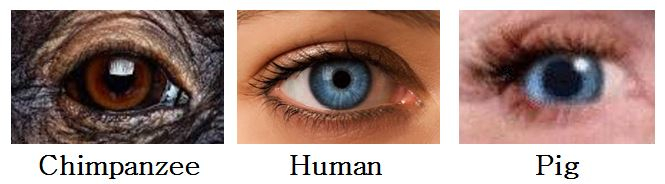
Image credit:Eugene McCarthy69
Eugene M. McCarthy (PhD Genetics) presents evidence to show that human beings came into existence via hybridization between members of the genus Panin (modern representative species chimpanzees, Pan troglodytes, and bonobos, Pan paniscus) and the species Porcine (modern representative wild boar/pig, Sus scrofa). McCarthy (2013)69 argues that many anatomical and physiological traits distinguishing humans from chimpanzees are actually shared with pigs rather than chimpanzees. He interprets this pattern as evidence of ancient hybridization rather than convergent evolution.
In his literature review, McCarthy (2013)69 highlights traits seen in pigs and humans but not other primates: dermal features, facial features, features relating to bipedality, organs, cranial features, and other traits.
On 14 August 2024 McCarthy published a genetic study70 to supply “hard DNA evidence” for a pig-bonobo cross. His central assertion is that “essentially all of the nucleotides distinguishing human from bonobo match pig.”
Hybrid fertility
Hybrid mammals are generally less fertile (often sterile) due to fundamental genetic and chromosomal incompatibilities that arise when two different species mate. This phenomenon is well-established in evolutionary biology and genetics, rooted in several interconnected mechanisms.71
As noted above, it can be rationally deduced that (a) humans are a genetically engineered product of Anunnaki and early hominid (H. erectus) genetic material, after which the human genome (at least in the case of H. sapiens) changed as a result of (b) Anunnaki x human matings that produced Nephilim and (c) Nephilim x human matings. On the basis that humans (at least H. sapiens) are Anunnaki x early hominin hybrids, we can expect humans to be less fertile than both Anunnaki and genetically pure hominins.
Although information about Anunnaki fertility is not publicly available, we have data on the fertility of humans compared to non-human primates.
Per-attempt fertility
Humans have lower per-attempt fertility and poorer semen parameters than non-human primates:
- Chemical pregnancy probability per ovulatory cycle: ~30% for a healthy human female aged 20–35 72 versus roughly 90–95% assumed for non-human primates. In chimpanzees, the probability reaches 64% on the single day before ovulation.73
- Implantation failure: ~30% of potential human pregnancies fail before implantation — a problem not observed in non-human primates.74
- Carrying to term: ~43% of human chemical pregnancies reach term, versus 86% in a five-year baboon study.75
Spermatogenic efficiency
Humans convert testicular tissue into sperm relatively inefficiently. Daily sperm production per gram of testicular parenchyma is a standard comparative measure, and human values are low relative to many mammals, including rodents.76
Menopause
Human females routinely cease reproduction decades before death; wild chimpanzees do not regularly experience menopause, and their fertility declines roughly in step with survival probability. This shortens the human reproductive span.77
5.41 Multiple human creations
- “Now, it could be that such hybridization occurred only once in very ancient times (perhaps 5,000,000 or more years ago), producing the earliest hominids (australopithecines), and that various early human types hybridized to produce subsequent human types.”McCarthy (2013)69
- It may be, too, that various hominid types each arose via a separate cross between a pig and a panin. One possible scenario is that a hybridization event occurred just prior to the time that modern humans first appeared, perhaps somewhere in the Nile Valley, followed by an indeterminate number of generations of backcrossing to panins.”McCarthy (2013)69
- “During this time the hybrids would have improved in fertility, eventually breaking off from the panin population to breed strictly among themselves. During this backcrossing period many pig-derived DNA sequences would become more and more like those of panins.” McCarthy (2013)69
- “It is my hope that the arguments presented here will serve as an intellectual springboard allowing the mind to rise above the inflexible creeds of traditional evolutionary thought. Even if the hybrid hypothesis is wrong, any satisfactory theory of human evolution will have to address the facts touched upon in the foregoing discussion. Wrong or right, I believe a final answer is at hand.”McCarthy (2013)69
5.42 A problem with this hypothesis
The Panin (modern representative species chimpanzees, Pan troglodytes, and bonobos, Pan paniscus) x Porcine (modern representative wild boar/pig, Sus scrofa) hybrid hypothesis is challenged by the large size of the human brain. As McCarthy (2013) wrote:69
“Why would a cross between a chimpanzee and a pig yield a hybrid with a big brain? The average cranial capacity of a chimpanzee is about 375 cubic centimeters; that of a pig, just 150. If humans are derived from crossing between chimpanzees and pigs, the initial expectation is that the human brain should be of an intermediate size. But, of course, it is not: the average cranial capacity of a human being is about 1,350 cc. Clearly, an explanation in terms of hybrid intermediacy, then, would be unsatisfactory.”
McCarthy offers a possible explanation in terms of the human brain’s thermoregulatory system.
5.5 The Standard ET Hypothesis
Authors have variously claimed:
- Extraterrestrial beings (particularly the Anunnaki) combined their own DNA with that of an early hominid to create humans. Evidence cited: the absence of an evolutionary link from hominids (particularly Australopithecus) to humans; the fusion of Chromosome 2 during the time of H. erectus).
- Extraterrestrial beings (particularly the Anunnaki) genetically modified wild flora and fauna to create easily manageable food sources for humans. Evidence cited: Humanity’s transition from hunter-gatherers to farmers 10,000 to 12,000 years ago was too sudden to be natural; the near-complete genetic turnover in pigs from ancient Near Eastern wild boars to European boars; the major changes in pig anatomy (e.g. changes in muscle density, organ size) and reproductive rates from a wild boar to a domestic pig could not have happened via simple breeding. Scientific evidence of ET intervention in this area is presented in Beyond-human technology.
Concerning the pig, claims of Standard ET Hypothesis proponents are supported by Eugene McCarthy (PhD Genetics):69
“But we do not know the history of the domestic pig. It’s usually treated as conspecific with the Eurasian wild boar, but the two differ in chromosome counts (for the domestic 2n=38, but for the wild boar 2n=36). So it may be that they are not the same animal . . . . It may well be that the two have been treated as the same species merely because it has long been known that they can produce fertile offspring together. But these offspring may simply represent hybrids . . . . So why assume that the domestic pig and wild boar are the “same” animal?”
Later in the article McCarthy writes:
“I do think pigs and humans share more than enough traits to suggest a relationship. For example, lightly pigmented eyes, in shades of blue, green, and tan, are never found in chimpanzees or orangutans (Schultz 1947, p. 11). There is, apparently, only one known case of a gorilla with blue eyes (Dixson 1981, p. 31). Light-colored eyes are also rare in other primates (ibid.). Why, then, are they common in certain human populations? Where did this trait come from?”69
5.51 Limitations of this hypothesis
The Standard ET Hypothesis does not reflect information that has become readily available since this hypothesis was formulated. The AAWSome explanation of human origins (explained below) integrates information of these earlier hypotheses in a comprehensive explanation of human origins.
6. Long-head humans are Nephilim
Further to the subject of Nephilim as discussed above, evidence suggests that the long-skulls (discussed in long-skulls posts on the ET Humanoids page) are of the humanoids known as Nephilim.
6.1 Brien Foerster
Biologist and researcher Brien Foerster found these skull features: cranial volume up to 25% larger than conventional human skulls; weight up to 60% heavier than normal human skulls; structurally different to normal human skulls in many respects; non-human DNA ancestry; cranial volume genetically determined and not the result of artificial cranial deformation; dark red and blond-haired; the beings are not indigenous to Peru; and they may represent a distinct genetic population. Further, analysis of bone powder from the longest skull showed a Haplogroup that originates in Mesopotamia (original home of the Apkallu / Nephilim according to Mesopotamian texts referred to above).78,79,80,81
6.2 Lynn A. Marzulli
In response to these findings, Christian researcher and author Lynn A. Marzulli has prominently argued that the Paracas skulls are physical evidence of the Nephilim.82,83,84,85,86
6.3 Examples of Nephilim remains
The identification of the Paracas beings as Nephilim indicates that all the long-skull being remains featured in the long-head posts (ET Humanoids page) are Anunnaki x human hybrids to some extent, depending on the number of subsequent Nephilim x human matings.
It is noticeable that all the Nephilim skulls featured in the long-head posts with intact jaws have prominent chins. This is consistent with human inheritance of the diagnostic pronounced chin of H. sapiens from the Anunnaki.
6.31 Long-skull shape variants
It is also noticeable that there are many long-skull shape variants as per the Standard Anthropological Classification of O’Brien and Sensor KP (2004), in the appendix.
The uniformity of the large-volume dolichocephalic shape in Africa from ancient to modern times, and the apparent predominance of this dolichocephalic shape among Western hunter-gatherers and Indo-Europeans, is consistent with the view87 that these Aryans all originated in North Africa.
In contrast to the uniformity of dolichocephalic shape seen in Africa and to a large extent in Western Europe, the Americas had the most diverse variation in long-head shapes. This includes the variety of extraordinarily large-volume long-skulls in Paracas, Peru (images in Long-heads of America).88,89,90
Europe also shows some variety of long-head shapes, including the annular (circular) and tabular (flat surfaces) of Hun-Germanic Groups; in Asia there were significant variations of long-head shapes, including various annular shapes in Central Asia; and in Oceania and Pacific Islands there were various annular and tabular shapes.88,89,90
7. European Nephilim
Prehistoric Europe comprised three distinct populations of Aryans: Western hunter-gatherers, Indo-Europeans, and Early Farmers.91 In the mainstream view87 these Aryans all originated in North Africa. Regardless, it is shown below that two of these distinct Aryan populations had long heads (dolichocephalic) and the other population had round heads (brachycephalic). [The subject of long heads vs round heads is explained in Long-heads of Europe.]
7.1 Western hunter-gatherers
This primordial Aryan population arrived in Europe about 45,000 years ago and developed a culture of egalitarian individualism in the northwest areas of Europe.91 As most of the Palaeolithic Europeans (2.6 millions years — 10,000 years BP), especially of the Aurignacian period (40,000 years — 28,000 years BP) had exceptionally long heads (Sir Arthur Keith, 1915),92 the Western hunter-gatherers would have been long-head Aryans.
7.11 The Iberian type
According to Taylor (1891):93
- Prevalence. “In the early Neolithic period [~ 10,000 BCE to ~ 2,000 BCE] we find skulls of the Iberian [SW Europe] type all over western Europe, in Caithness, Yorkshire, Wales, and Somerset, in the south of France, in Spain and Italy.” (p 491)
- Attributes. These people were swarthy, with olive complexion and black curly hair; orthognathous (face profile vertical or nearly so); leptorrhinic (long narrow nose), highly dolichocephalic (very long heads); and short stature, averaging about 5 feet 4 inches. (p 491)
- North Africa. “. . . . the dolichocephalic, or longheaded, Iberian race, [who] are physically allied to the North African tribes . . . .” (p 492)
Taylor’s comments about the Iberian type’s stature and link to North Africa parallels characteristics of the long-skulls in Malta (7,000 long-heads who died ~3,000 BCE; discussed in Long-heads of Europe]: a subspecies of lower medium height, akin to the early people of Egypt, who migrated westward along the north coast of Africa, to Malta, Sicily, Sardinia, and Spain. [Ancient wisdom. The Hypogeum of Hal Saflieni]
Further, as Bradley (1912)94 observed that the Malta long-skulls “. . . seem to approximate most closely to this type of the wider Galley Hill class” (pp 197-198), it seems that the Galley Hill skull (discussed in Long-heads of Europe), and Western hunter-gatherers more generally, were of the Iberian type Aryan (not the Scandinavian / Indo-European type) and physically similar to long-heads of some North African tribes.
7.2 Indo-Europeans
These Aryans migrated from the Pontic-Steppes [often called the Pontic Steppe, a massive geographic region, encompassing parts of modern-day Ukraine, southwestern Russia, and western Kazakhstan] as of about 4,500 years ago. They had the greatest genetic impact on central Europe and some regions in the north, with less effect in the east and south.91
As the findings of Grasgruber (2025)95 show that modern Scandinavian populations heavily inherited their skeletal traits (larger, longer, and taller skulls paired with narrow facial breadth, i.e. dolichocephaly) from Bronze Age Steppe pastoralist DNA, the Indo-European Aryans were evidently long-heads.
7.3 Examples of European long-skulls
Examples of European long-skulls can be seen in Long-heads of Europe. The skulls range in age from 10,000–15,000 years before present (the Galley Hill skull found in Kent, England) to 1,500 years BP (skull from Bavaria, Germany) and roughly 1,300 years BP (skull from de Sainte Odile, France).
8. European Round-heads
8.1 Early Farmers
These Aryan farmers arrived from Anatolia [the Asian part of Turkey] about 8,000 years ago and had the greatest genetic effect on the hunter-gatherer population in the southern areas of Europe.91 The Early Farmers migrated out of Northwestern Anatolia and across the Aegean region into Europe by splitting into two primary, independent migration corridors:96,97 One of these routes (the Northern Route) was across the Bosporus and Dardanelles straits into Thrace and the Balkans, then northwestward along the Danube River valley.98,99,100
This is the same route described by Deniker (1900, p 313)101 in The races of man: “Several hundred skulls, found in Neolithic [~10,000 BCE to ~2,000 BCE] burial-places in France, Switzerland, Austria, and Germany, exhibit an intermixture of brachycephals [round skulls] and dolichocephals [long skulls]. According to the more or less frequent occurrence of the former in relation to the latter in each burial, we may, with Hervé, trace the route followed by these brachycephals of Central Europe, from the plains of Hungary, by the valley of the Danube, into Belgium and Switzerland; from these last-named countries they flung themselves on the dolichocephalic populations of France and modified the primitive type, especially in the plains of the north-east and in the Alpine region.”
It can therefore be understood that the Early Farmers in Europe were round-heads from the Asian part of what is today Turkey.
8.2 Round-head extermination of Nephilim
Note: The superior intelligence of long-heads is discussed in Long-heads of Europe and in relation to Boskop Man in Long-heads of Sub-Saharan Africa.
In essence, the round-heads were able to wipe out the long-heads due to round-head aggressiveness, as discussed in Long-heads of Europe.
Taylor (1891, p 492)93 links the round-head people to the Lapps and Finns. The known aggressiveness of the round-heads toward the long-heads, including the Frisians of The Oera Linda Book, is discussed in Long-heads of Europe. In particular, The Oera Linda Book records this about the Finns:
- “. . . the Finns came to the defenceless villages and ran away with the children.” (pp 39-40)
- “. . . just at the time of the Juulfeest, they [the Finns] overran our country like a snowstorm driven by the wind. All who could not flee away were killed.” (p 28)
- “. . . we call them Finns, because although all the festivals are melancholy and bloody, they are so formal . . . .” (p 28)
- “. . . they [the Finns] are slaves to their priests, and still more to their creeds.” (p 28)
- “. . . of Wr-alda’s [God’s] spirit they [the Finns] know nothing.” (p 28)
9. The AAWSome explanation

Anunnaki genetically engineering wheat and pigs to feed humans
The Amphibious Aryans from Winter Skies (AAWSome) explanation integrates evidence cited in the Aquatic and Hybrid hypotheses with that of the ET hypothesis in an extended version of the ET hypothesis that is informed by the other evidence cited in this article. This includes adapting Eugene McCarthy’s69 terms to explain the evidence.
9.1 Summary of the evidence
The Aquatic Ape Hypothesis
Humans have anatomical, physiological, and behavioral traits associated with aquatic animals. However, hominin fossils from the times the aquatic traits appeared are consistently found in inland, terrestrial woodland and savanna environments, not coastal zones.
The Hybrid Hypothesis of Eugene McCarthy
Humans share many anatomical and physiological traits with pigs rather than chimpanzees, suggesting a genetic relationship between pigs and humans. McCarthy69 suggests that humans came into existence via hybridization between members of the genus Panin (modern representative species chimpanzees, Pan troglodytes, and bonobos, Pan paniscus) and the species Porcine (modern representative wild boar/pig, Sus scrofa). However, the chimp/bonobo x pig hybridization hypothesis does not explain the large size of the human brain.
McCarthy suggests that humans could have resulted from these events:
- A single hybridization in very ancient times (perhaps 5,000,000 or more years ago) followed by
- Hybridization of various early human types to produce subsequent human types.
- It is also possible that early human types each arose via a separate cross between a pig and a panin.
- A possible scenario is that a hybridization event occurred just prior to the time that modern humans first appeared (~315,000 years ago), perhaps somewhere in the Nile Valley, followed by an indeterminate number of generations of backcrossing to panins. [Anunnaki] During this backcrossing period many pig-derived DNA sequences would become more and more like those of panins. [Anunnaki]
The Standard ET Hypothesis
Evidence of extraterrestrial being intervention in the creation of humans, other animals (particularly the domestic pig), and certain plants for human consumption, is strong. This includes the absence of an evolutionary link from Australopithecus to humans; the fusion of Chromosome 2 during the time of H. erectus; the chromosomal difference between the Eurasian wild boar and the domestic pig; and evidence cited in the post Beyond-human technology. The Standard ET Hypothesis invites a development that incorporates evidence of The Aquatic Ape Hypothesis, The Hybrid Hypothesis of Eugene McCarthy, and other evidence cited in this article. Hence the AAWSome explanation of human origins.
Other evidence cited in this article
Anunnaki attributes: (i) human-shaped, (ii) long heads, (iii) Aryan (Northern European / Nordic features), (iv) amphibious, (v) from a local base on Mars and “The Winter Sky,” and (vi) likely speakers of a lost proto-European language known as “the language of the gods.” (The Anunnaki: Basic information)
Ancient texts: Mesopotamian and biblical texts record (i) the creation of humans by the Anunnaki in a way that could be interpreted as genetic engineering of humans from the DNA of Anunnaki and a pre-human homin, (ii) Anunnaki x human breeding (the offspring are known as Apkallu / Nephilim), and (iii) Apkallu / Nephilim x human breeding.
Nephilim: High-volume long-skulls of Nephilim have been found all over the world. In addition, this Nephilim characteristic can be seen in some living humans, particularly some Black Africans in Sub-Saharan Africa (Long-heads articles on the ET Humanoids page).
9.2 Application of McCarthy’s findings
Eugene McCarthy’s findings can explain the evidence of Aryan ET humanoid creation of humans and domestic pigs.
Humans resulted from hybridization of Panin x Porcine =
- Anunnaki genetic engineering of both Porcine and humans using Anunnaki DNA (hence the similarity of domestic pigs and humans via our shared Anunnaki DNA).
- Humans resulted from a combination of Anunnaki and Panin DNA (hence the similarity of humans to both domestic pigs / Anunnaki and a non-human great ape).
- Domestic pigs resulted from a combination of Anunnaki and ancient wild pig DNA (hence the similarity of domestic pigs to humans and the large genetic differences between domestic and wild pigs).
- Backcrossing of humans to Panins = Anunnaki x human matings and Nephilim x human matings. This increased Anunnaki genetic input explains the increasingly large human brains until ~15,000 to 5,000 BP. The decline in human brain size thereafter is consistent with the departure of the Anunnaki from Earth by no later than 539 BCE (the fall of Babylon, after which there is no further mention of Anunnaki in ancient texts) and the gradual disappearance of Nephilim (high-capacity long craniums) though extermination by the round-heads and interbreeding with the round-heads.
9.3 Dates of human creation
- If we assume that the head-to-head fusion of two chromosomes to form human chromosome 2 (HSA2) 1.5 Ma – 400 ka was done by Anunnaki, then late H. erectus populations (H. erectus temporal range 2.0–0.1 Ma, with the fusion occurring this period, and late H. erectus carrying the fused chromosome) would have resulted from Anunnaki genetic engineering.
- However, McCarthy’s suggestion that humans could have resulted from hybridization ~5 Ma suggests that Anunnaki could have been tinkering with hominin DNA since at least the time of Australopithecus (4.2–1.2 Ma) and the absence of a fossil link between Australopithecus and Homo is due to Anunnaki genetically engineered macro evolution from Australopithecus to Homo.
- Further to McCarthy’s suggestion that a hybridization event occurred (e.g. somewhere in the Nile Valley) just prior to the time that H. sapiens first appeared (~315 ka), it seems reasonable to assume that Neanderthals (~430–40 ka), H. sapiens (~315 ka — present) and Denisovans (~200 — 40ka) all represent Anunnaki genetic engineering.
- Concerning Neanderthals in particular, as was noted above, Neanderthals likely had a range of skin, hair and eye pigmentation similar to modern human populations. Further, the long heads (dolichocephaly), red hair and fair skin of Neanderthals is notably similar to that of many ancient people: (i) the dolichocephalic ancient Egyptian rulers with red hair and fair skin (Long-heads of Egypt); the red hair of dolichocephalic Gebelein Man “Ginger” (Long-heads of Egypt); the red hair and white skin of god Set (Seth, Setekh, Sut, Sutekh, Sety) and his followers (Symbols of our gods); the dolichocephalic humanoid remains in Paracas with dark red and blond hair and light-coloured skin (Long-heads of America); and the baby long-heads Detmold child and the Paracas baby skull both have red hair (Long-heads of Europe).
The similarity of Nordic-type features among such humans would be consistent with their creation by Nordic-featured Anunnaki by genetic engineering using Anunnaki DNA and Anunnaki / Nephilim mating with humans.
9.4 Dates of Nephilim creation
Concerning the start of Nephilim creation, on the basis of McCarthy’s suggestions of an indeterminate number of generations of backcrossing, it seems reasonable to assume that many productive Anunnaki x human matings occurred across many generations since the head-to-head fusion of two chromosomes to form human chromosome 2 (HSA2) 1.5 Ma – 400 ka. The assumption of productive Anunnaki x human matings is favoured if, like humans as of later H. Erectus, Anunnaki have 23 pairs of chromosomes (46 total).
Concerning the end of Nephilim creation, we can reliably assume that Nephilim (Anunnaki x human matings) were no longer created by 539 BCE at the very latest (the fall of Babylon and the departure of Anunnaki from overt and widespread involvement with humans). However, as human dolichocephaly yielded to brachycephaly and human brain size reduced substantially as of at least 12 ka (discussed above in 1.28 Modern humans), it seems reasonable to assume that Anunnaki were no longer mating with humans (at least on a scale that influenced the shape and size of found crania) since an earlier date. Considering the societal catastrophe and human downturn as of the catastrophic flood documented in ancient texts (the sinking of Atlantis was in 2193 BCE according to The Oera Linda Book), it seems reasonable to assume that Anunnaki (and therefore new Nephilim creations) were no longer overtly and widely involved with humans since at least 2193 BCE.
9.5 The transition from long-heads to round heads
The totally long-head H. sapiens population initially, followed by the increasing prevalence of round-heads over time, can be explained by (a) Anunnaki matings with some groups of H. sapiens (resulting in Nephilim) and not others, (b) the regression of the non-Nephilim H. sapiens to round-heads (smaller brains and more aggressive, as discussed in Long-heads of Europe and illustrated in the high-volume long-head craniums shown in the Long-heads posts), and (c) the separation of these intelligent / peaceful humans from the less intelligent / aggressive humans until climatic events displaced the round-heads into long-head territory, with disastrous consequences for the long-heads (this subject was discussed above in European Nephilim and European Round-heads).
Further to (a) above:
- There is evidence of Anunnaki x human matings in Sub-Saharan Africa (e.g. the enormously high-volume cranial capacities of extinct Nephilim in South Africa) and beyond (e.g. the huge cranial capacities of some Nephilim remains found in Paracas). On this point, Nephilim were not necessarily the stereotypical fair-skinned, blond-haired / red-haired and blue-eyed Aryans. In addition to the remains of almost certainly non-White long-head Sub-Saharan Africans, the long-head Western hunter-gatherers in Europe (discussed above) were of the Iberian type — olive complexion and black curly hair. However, as was noted above, the Iberian type did have the Nordic-type vertical face profile, long narrow nose, and high dolichocephaly (very long heads).
- Apparently the Early Farmers (round-heads from Anatolia, the Asian part of Turkey, as discussed above) in Europe were among the human groups with which the Anunnaki did not mate. Perhaps the Anunnaki didn’t like the look of them. Or, more likely, the alpha male Turks told the Anunnaki to FO and leave their women alone.
9.6 Additional supporting evidence
The aquatic traits
Further to The Aquatic Ape Hypothesis, human aquatic traits are not meaningless anomalies. Like the amphibious Aryan ET humanoids (Anunnaki are amphibious), humans behave like amphibious beings. We have a strong natural attraction to large bodies of water for permanent residence, vacations, and recreation (e.g. swimming, diving, fishing) and we often wash ourselves in baths and showers. An outside observer of human behaviour on Earth could logically conclude that humans are amphibious.
In our affinity with water, we are similar to pigs (and our shared creator, the Anunnaki) and different to non-human primates. McCarthy (2013)69 highlights differences between pigs and non-human primates in their relationship with water:
- In general, non-human primates have a greater fear of water than the members of perhaps any other mammalian order and they do not learn to swim unless they are raised by humans and taught to do so.
- In contrast, the domestic pig, like many of its wild relatives, is very fond of water. Pigs are very capable swimmers (they swim at least as well as most humans), can obtain food underwater (they are even capable of catching fish underwater) and are fond of fish.
- Given access to water, pigs not only swim, but also use it to keep themselves clean. Under normal conditions, pigs are instinctively neat and fastidiously clean. Pigs are only dirty if confined to a muddy pen and forced to be dirty, just as humans would be under similar circumstances.
- If provided suitable runs, pigs remain clean and they select a remote outside area for their defecation and urination. Due to these traits pigs are easily housebroken.
In contrast, non-human apes do not bathe even when given the opportunity. Their bodies constantly emit a powerful, reeking odor. This disregard of personal hygiene is also reflected in their attitude toward bodily wastes — apes are difficult to house train. As with wild apes, they have no defecating areas and no set times for defecation.
Anunnaki activity on Mars
Do you know your Mars from your elbow?
Meaning of geometric shapes, numbers and constructions on Mars
Highly advanced life on Mars now
Anunnaki activity on Earth
ET spacecraft encounters It seems likely that some of these craft were operated by Anunnaki.
ET humanoid meetings with President Eisenhower This included a meeting with Aryan ET humanoids / Anunnaki.
9.7 Conclusion
9.71 The Anunnaki created humans
Evidence cited above indicates that Anunnaki (Aryan ET humanoids) genetically engineered humans using their DNA and that of an early hominin.
Such genetic engineering could explain the absence of a fossil link from Australopithecus to Homo, the head-to-head fusion of two chromosomes to form human chromosome 2 (HSA2) 1.5 Ma – 400 ka, and the appearance of Neanderthals, H. sapiens and Denisovans.
Differences in the genetic engineering (e.g. different amounts of Earth hominin vs Anunaki DNA) could explain observed differences between modern human populations as described by influential Italian anthropologist Giuseppe Sergi (1841–1936). For example, his extensive racial taxonomy includes the following species/varieties: Homo africanus, Homo eurafricanus, Homo mediterraneus, Homo eurasicus, and Homo nordicus.102
Anunnaki x human matings over a period of time, and Nephilim x human matings, can explain the increasing human brain size until the Anunnaki departed from Earth.
Anunnaki matings with some humans but not others can explain why some humans retained long-heads (dolichocephaly), others became round-heads (brachycephaly), and round-heads became the norm after the Anunnaki departure.
It could also be that the regional differences seen in dolichocephalic shape uniformity vs variety (noted above in Long-skull shape variants) represent geographic differences in Anunnaki genetic engineering of the humans with whom they subsequently mated. For example, the uniform long-head shapes of Nephilim remains found in Africa could indicate that their earliest modern human ancestors were engineered differently to those of the Nephilim remains with a wide variety of long-head shapes found outside Africa.
Further, the enormously high-volume ancient long cranium skulls found in South Africa, lower-volume forms of which have been found elsewhere in Africa, could be construed as hard evidence in support of those who claim that the Anunnaki genetically engineered modern humans (not necessarily all modern humans) in Southern Africa. I have not reviewed the writing of such authors on this site because, although their claims ring true, their methods seem unscientific and potentially harmful to the respectability of this subject. Nonetheless, it is notable that the seemingly ‘purest’ forms of ancient human / Nephilim heads (enormously high cranial volume with uniformly long shape) do seem to be associated with Southern Africa.
Concerning the timing of Anunnaki engagement / disengagement with humans during the Holocene, this coincides with the rise / fall of global temperatures and A Great Dying since the Anunnaki departure.
9.72 The value of this knowledge
The importance of education about Aryans is discussed in Aspects of Aryans.
Further, the diverse history of humans as shown in this article, and our shared ancestry in Aryan ET humanoids, (a) favours the value of differentness (genuine diversity), (b) is consistent with intense opposition to multi-racialism, and (c) is compatible with mutually respectful racial pride (ethnocentrism).
9.73 The future
Anunnaki teachings are preserved in Natural religion and the modern return to natural religion (Natural religion explained) is effectively a return to life in truth of humanity’s shared Anunnaki ancestry. More specifically, we can understand the future in these terms:
- There is a temporal relationship between Anunnaki departure and the onset of religious decay.
- This decay is associated with the rising influence of a people who we would today identify as jews (Donald A. Mackenzie, 1915, discussed in The Oera Linda Book).
- Similarly, the dates and geographic locations of last-known Nephilim activity (Beyond-human technology) and their spiritual light coincides with the arrival of Abrahamic religion. Online videos showing the global spread of Christianity and Islam show the spread of a toxic sludge that killed the last remaining glimmers of Anunnaki enlightenment.
- The Anunnaki stand by ready, able and willing to help us, but they cannot help us until we are ready for their help. To intervene before we are ready would be in violation of a universal law against interference in the affairs of others (Teachings of Wilbert B. Smith).
Considering the above, when will we be ready for continued help by our Aryan ET creators?
10. References
- Soca, Gabriel (2025). The history of the Anunnaki and their connection to humanity, Gaia, 1 Sep 2025
- Wiggermann, Frans (1992). Mesopotamian Protective Spirits: Bīt Mēseri ritual texts, Academia
- Amar Annus (2010). On the origin of Watchers: A comparative study of the Antediluvian wisdom in Mesopotamian and Jewish traditions, Sage Journals
- Kvanvig, Helge S. (1988). Roots of Apocalyptic: The Mesopotamian background of the Enoch figure and of the Son of Man, Open Library.
- Stuckenbruck, Loren T. (1997). The Book of Giants from Qumran, Mohr Siebeck
- O’Brien, C.A.E. & O’Brien B.J. (1999). The Genius of the Few, Dianthus Publishing Ltd, Cirencester, England. First published in 1985. This revised edition published in 1999
- Koch, John T. (2006). Celtic culture: A historical encyclopedia, Santa Barbara, Calif.: ABC-CLIO
- Paul Wallis (2020). Escaping from Eden: Does Genesis teach that the human race was created by God or engineered by ETs?, Top Hat Books
- Gan, Samuel Ken-En (n.d.). Who are the Sons of God and Nephilim in Genesis 6?: An exegetical, theological, and scientific evaluation, Creation Ministries International
- r/AskAChristian (2020). Who were the “sons of God” and “daughters of men” mentioned in Genesis? Reddit
- Reasons to Believe (2013). Who Were The Nephilim? 8 Nov 2013
- Duguid, Iain M. (2025). Who Were the Nephilim and the Sons of God and Daughters of Man? (Genesis 6) Crossway, 15 Jun 2025
- Fritzpw (2024). Who Were the Nephilim? Crosswalk Forums, Oct 2024
- Schrock, David (2024). The Sons of God: Three interpretations of Genesis 6:1–4, Via Emmaus, 4 May 2024
- Thomas, Apostle Quinson (2025). What Gender are Angels in the Bible? Male or Female? Alive Christians, 20 Nov 2025
- Heiser, Michael S. (2019). The unseen realm: Recovering the supernatural worldview of the Bible, p. 102, Baker Books
- Luskin, C. (2015). Abrupt appearance of species in the fossil record does not support Darwinian evolution, Evolution News, 29 Jan 2015
- Smithsonian Institution. (2024). Australopithecus afarensis
- Kimbel, W. H., Rak, Y., & Johanson, D. C. (2004). The Skull of Australopithecus afarensis, Oxford University Press
- Britannica (2026). Homo heidelbergensis: Height, Brain Size, & Characteristics
- Rightmire, Philip G. (1996). The human cranium from Bodo, Ethiopia: evidence for speciation in the Middle Pleistocene? J of Human Evolution, 31(1) 21-39
- Stringer, C. (2016). The origin and evolution of Homo sapiens, Philosophical Transactions of the Royal Society B, 371(1698)
- Becoming Human Paleoanthropology Project (2024). Homo habilis
- Leakey, M. G., Spoor, F., Dean, M. C., et al. (2012). New fossils from Koobi Fora in northern Kenya confirm taxonomic diversity in early Homo, Nature, 488(7410), 201–204
- Kimbel, W. H., & Villmoare, B. (2016). From Australopithecus to Homo: the transition that wasn’t, Philosophical Transactions of the Royal Society B, 371, 20150248
- Lordkipanidze, D., et al. (2013). A complete skull from Dmanisi, Georgia, and the evolutionary biology of early Homo,Science, 342(6156), 326–331
- Smithsonian Human Origins Program. (n.d.). Homo habilis and Homo erectus overview
- Rightmire, G. P. (1998). Human evolution in the Middle Pleistocene: the role of Homo heidelbergensis, Evolutionary Anthropology, 6(6), 218–227
- Di Vincenzo, F., & Manzi, G. (2023). Homo heidelbergensis as the Middle Pleistocene common ancestor of Denisovans, Neanderthals and modern humans, J of Mediterranean Earth Sciences, 15, 303–315.
- Ko, K. H. (2016). Hominin interbreeding and the evolution of human variation, J of Biol Res-Thessaloniki, 23, 17
- Smithsonian Institution. (2024). Homo heidelbergensis, National Museum of Natural History
- Britannica (2026). Homo heidelbergensis
- Poszewiecka, B., Gogolewski, K., Stankiewicz, P., & Gambin, A. (2022). Revised time estimation of the ancestral human chromosome 2 fusion, BMC Genomics, 23(6), 616
- ScienceDaily. (2025). Scientists found Homo erectus 200,000 years earlier than expected, 7 Oct 2025
- Lancaster, M. A. (2024). Unraveling mechanisms of human brain evolution, Cell, 187(11), 2641–2655
- ScienceInsights. (2024). How Did Neanderthal Brain Size Compare to Ours?
- Fu, Q., Cao, P., Dai, Q., et al. (2025). Denisovan mitochondrial DNA from dental calculus of the >146,000-year-old Harbin cranium, Cell, 188(14), 3919–3926
- Lee, James J., McGue, Matt, Iacono, et al. (2019). The causal influence of brain size on human intelligence: Evidence from within-family phenotypic associations and GWAS modeling, Intelligence, Elsevier, 75(C), 48-58
- Meyer, Matthias; Arsuaga, Juan-Luis; de Filippo, Cesare et al. (2016). Nuclear DNA sequences from the Middle Pleistocene Sima de los Huesos hominins, Nature, 531(7595), 504–507
- Arsuaga, J. L., Martínez, I., Arnold, L. J., et al. (2014). Neandertal roots: Cranial and chronological evidence from Sima de los Huesos, Science, 344(6190), 1358–1363
- Arsuaga, J. L., Martínez, I., Gracia-Téllez, A. et al. (2024). How the Sima de los Huesos was won, The Anatomical Record, 307(7), 2225-2245.
- Wikipedia: Sima de los Huesos hominins
- Britannica: Swanscombe skull
- Smithsonian Institution (2024). Homo neanderthalensis, National Museum of Natural History
- Wikipedia: Neanderthal anatomy
- Anthropology.net. (2020). The Measure of a Neanderthal Mind
- Gregory, Michael D., Kippenhan, J. Shane, Eisenberg, Daniel P. et al. (2017). Neanderthal-derived genetic variation shapes modern human cranium and brain, 24 Jul 2017, 7:6308
- Lalueza-Fox, C., Römpler, H., Caramelli, D. et al. (2007). A melanocortin 1 receptor allele suggests varying pigmentation among Neanderthals, Science, 318(5855), 1453–1455
- Dannemann, M., & Kelso, J. (2017). The Contribution of Neanderthals to Phenotypic Variation in Modern Humans, The American J of Human Genetics, 101(4), 578–589
- Max Planck Institute for Evolutionary Anthropology (2017). How easily we tan is influenced by Neandertal DNA, Max-Planck-Gesellschaft, 5 Oct 2017
- Hublin, J.-J., Ben-Ncer, A., Bailey, S. E. et al. (2017). New fossils from Jebel Irhoud, Morocco and the pan-African origin of Homo sapiens, Nature, 546, 289–292
- Schwartz, J. H. & Tattersall, I. (2000). The human chin revisited: What is it and who has it? J of Human Evolution, 38(3):367-409
- Bergmann, I., Hublin, J.-J., Gunz, P. et al. (2021). How did modern morphology evolve in the human mandible? The relationship between static adult allometry and mandibular variability in Homo sapiens, J of Human Evolution, 157: 103026
- Filannino, M., et al. (2022). Mandibular symphyseal morphology in Jebel Irhoud fossils, Comptes Rendus Palevol, 21(4): 89-102
- von Cramon-Taubadel, N., Scott, J. E., Robinson, C. A., & Schroeder, L. (2026). Is the human chin a spandrel? Insights from an evolutionary analysis of ape craniomandibular form, PLOS ONE, 21(1).
- Neubauer, S., Hublin, J.-J. & Gunz, P. (2018). The evolution of modern human brain shape, Science Advances, 4(1), 24 Jan 2018
- Lieberman, D. E. (1998). Sphenoid shortening and the evolution of modern human cranial shape, Nature, 393, 158–162
- Henneberg, Maciej (1988). Decrease of human skull size in the Holocene, Human Biology, 60(3)
- Krause, J., Fu, Q., Good, J. M. et al. (2010). The complete mitochondrial DNA genome of an unknown hominin from southern Siberia, Nature, 464, 894–897
- Reich, D., Green, R. E., Kircher, M. et al. (2010). Genetic history of an archaic hominin group from Denisova Cave in Siberia, Nature, 468, 1053–1060
- Meyer, M., Kircher, M., Gansauge, M.-T. et al. (2012). A high-coverage genome sequence from an archaic Denisovan individual, Science, 338(6104), 222–226
- Rightmire, G. P. (2013). Homo erectus and Middle Pleistocene hominins: Brain size, skull form, and species recognition, J of Human Evolution, 65(3), 223–252
- Wikipedia: Denisovan
- Wikipedia: Aquatic ape hypothesis
- Verhaegen, M. J. (1985). The Aquatic Ape Theory: evidence and a possible scenario, Med Hypotheses, 16(1):17-32
- Aquatic Apes (n.d.). The Aquatic Ape Theory of Evolution
- Wayman, Erin (2012). A New Aquatic Ape Theory, Smithsonian Magazine, 16 Apr 2012
- Rosskothen, Michael (2016). Sorry David Attenborough, we didn’t evolve from ‘aquatic apes’ – here’s why, The Conversation, 16 Sep 2016
- McCarthy, E. M. (2013). The Hybrid Hypothesis (as of 1: Human origins: Are we hybrids?)
- McCarthy, E. M. (2024). Human autosomal nucleotide positions differing from Bonobo instead match Pig, bioRxiv, 19 Aug 2024
- Saey, Tina Hesman (2017). Hybrids reveal the barriers to successful mating between species, Science News, 31 Oct 2017
- Wilcox, A.J., Weinberg, C.R., O’Connor, J.F. et al. (1988). Incidence of early loss of pregnancy, New England J of Medicine 319(4), 189-94, 28 Jul 1988
- Thompson, Melissa Emery (2005). Reproductive endocrinology of wild female Chimpanzees (Pan troglodytes schweinfurthii): methodological considerations and the role of hormones in sex and conception, American J of Primatology, 14 Sep 2005
- Macklon, N. S., Geraedts, J. P. M., Fauser, B. C. J. M. (2002). Conception to ongoing pregnancy: the ‘black box’ of early pregnancy loss, Human Reproduction Update, 8(4), 1 Jul 2002, 333–343
- Gesquiere, Laurence R; Altmann, Jeanne; Archie, Elizabeth A; Alberts, Susan C. (2018). Interbirth intervals in wild baboons: environmental predictors and hormonal correlates, Am J Phys Anthropol, 166(1):107–126, 8 Feb 2018
- Johnson L. (1995). Efficiency of spermatogenesis, Microsc Res Tech., 1 Dec 1995, 32(5), 385-422
- Thompson, Melissa Emery; Jones, J. H., Pusey, A. E. et al. (2007). Aging and fertility patterns in wild chimpanzees provide insights into the evolution of menopause, Curr Biol., 18 Dec 2007, 17(24), 2150-6
- Foerster, B. (2017). The Enigma of Cranial Deformation: Elongated Skulls of the Ancients. Adventures Unlimited Press. ISBN: 978-1935487760
- Foerster, Brien (2015). Elongated Skulls of Peru and Bolivia: The Path of Viracocha, Hidden Inca Tours
- Foerster, Brien (2021). Paracas elongated skulls of Peru: The DNA results, morphological anomalies, and blood type Surprises, YouTube, 24 Aug 2021
- Hidden Inca Tours. (2023). Elongated skulls of Paracas: A people and their world
- Marzulli, L. A.
- Marzulli, L. A.
- Marzulli, L. A.
- Marzulli, L. A. (1999). Nephilim: The Truth is Here (Nephilim Series Vol. 1), Zondervan
- Beyond Belief (2021). Mounds of the Nephilim with L. A. Marzulli
- Hublin, J.-J. (2017). The North African origin of Homo sapiens. Proceedings of the National Academy of Sciences, 114(35), 9168–9170
- Mayall P, Pilbrow V, & Bitadze L. (2017). Migrating Huns and modified heads: Eigenshape analysis comparing intentionally modified crania from Hungary and Georgia in the Migration Period of Europe, PLoS One, 2 Feb 2017, 2(2), e0171064
- Fehir, Aaron (2014). In a Bind: Artificial Cranial Deformation in the Americas, Academia
- Dingwall, Eric John (1931). Artificial cranial deformation, Open Library
- Duchesne, Ricardo (2020). The Indigenous Europeans Consisted of Three Distinct White Population Movements, The Occidental Observer, 28 Jun 2020
- Keith, Sir Arthur (1915). The Antiquity of man, London: Williams and Norgate
- Taylor, Canon Isaac (1891). The prehistoric races of Italy, From the Smithsonian report for 1890, Washington: Govt. printing office
- Bradley, Robert Noël (1912). Malta and the Mediterranean race, London: T. F. Unwin
- Grasgruber, Pavel (2025). The evolution of European cranial morphology: From the Upper Paleolithic to the Late Eneolithic steppe invasions, Archaeol Anthropol Sci ,17, 108, 22 Apr 2025
- Bennett (2026). Early European Farmers and the Anatolian DNA Trail, Hominin History, 3 Oct 2026
- Yenişafak (2026). Ancient DNA reveals Anatolian farmers reshaped Europe’s genetic makeup
- Haak, W., Lazaridis, I., Patterson, N. et al. (2015). Massive migration from the steppe was a source for Indo-European languages in Europe, Nature, 11 Jun 2015, 522(7555), 207-11
- Hofmanová, Zuzana; Kreutzer, Susanne; Hellenthal, Garrett; & Burger, Joachim (2016). Early farmers from across Europe directly descended from Neolithic Aegeans, PNAS, 6 Jun 2016, 113 (25) 6886-6891
- Tsoupas, Alexandros; Reyna-Blanco, Carlos S.; Quilodrán, Claudio S. et al. (2025). Local increases in admixture with hunter-gatherers followed the initial expansion of Neolithic farmers across continental Europe, Science Advances, 20 Aug 2025, 11(34)
- Deniker, J. (1900). The races of man: an outline of anthropology and ethnography, London: W. Scott
- Sergi, G. (1908). Di una classificazione razionale dei gruppi umani, Atti della Società Italiana per il Progrèsso delle Scienze, Rome. Ref. 1 Ref. 2
Appendix: A classification of dolichocephalic skulls
Standard Anthropological Classification
(O’Brien TG & Sensor KP (2004). On the classification of abnormal head shape, J of Paleopathology 16: 27-51)
This system divides long skulls into two basic styles, each producing multiple shape variants:
A. Annular (circular)
Shape variant
Conical: cone-shaped cranium (posterior parietals extend superiorly and posteriorly)
Globular/rounded: rounded dome shape (uniform expansion)
Circular erect: vertical circular elongation (height increased, maintained circular symmetry)
Circular oblique: angled circular expansion (tilted forward/backward orientation)
B. Tabular (flat surfaces)
Shape variant
Tabular erect: box-like vault, high and short (vertical posterior cranial aspect; wide frontal bone)
Tabular oblique/slanted: angled, frontal and occipital flattening at an angle (“slanted”)
Box-like: rectangular/parallelogram appearance (flat frontal and occipital surfaces; high vertical dimension)
Bilobular: Two distinct lobes (postero-lateral parietals widened laterally)
Pseudoannular/pear-shaped: Upper and lower vault division (“Olmec” head form characteristic in Mesoamerica)
The classic dolichocephalic shape
The general anthropological term for skulls that are long/narrow in the horizontal plane is dolichocephalic. Such skulls resemble an overturned boat when viewed from above. This form of dolichocephaly is typical of the Western hunter-gatherers and Indo-Europeans and it seems to be the only dolichocephalic shape seen in ancient African skulls (from Egypt to Southern Africa) and among living Sub-Saharan Africans with dolichocephaly, including Africans with extraordinary large cranial volumes. (Images in Long-heads of Egypt and Long-heads of Sub-Saharan Africa)

Family from afar


Leave a Reply