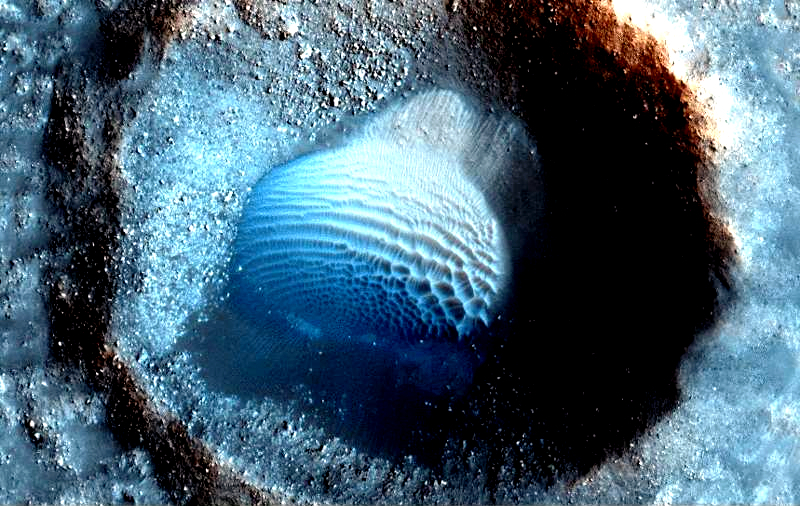
The above image shows a crater and dome in central Acidalia Planitia, Mars. The image was taken by Mars Reconnaissance Orbiter (MRO) on 10 February 2008 and posted on a University of Arizona Webpage. The picture is in Andrew Johnson’s book.1 The seemingly good condition of the dome suggests that ETs made this dome recently. Why and how they made it are discussed below.
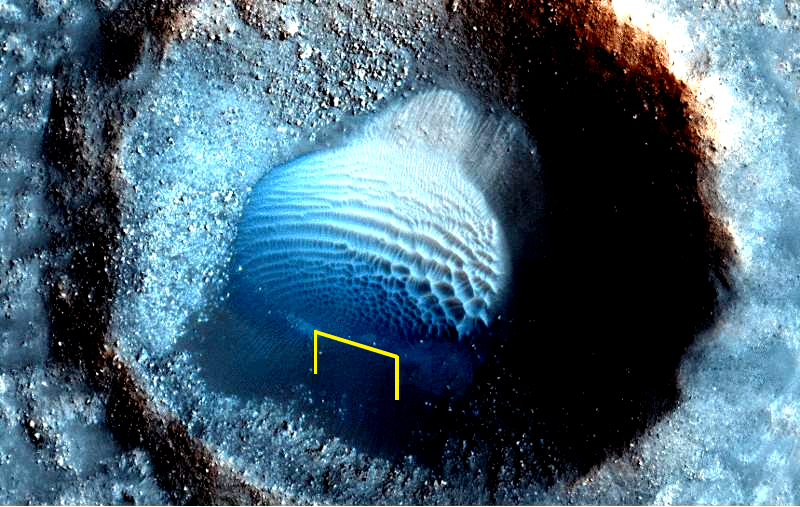
Figure 1.The dome featured above but with the doorway highlighted.
Modern buildings in Acidalia Planitia
The modern structures considered are domes, pipes and ground covering some of the pipes.
Domes: Notable features
- Good condition. These are not ancient ruins. Images suggest that the domes are in good condition for current use.
- Size. As we can see in image strips (links in A. Johnson’s book1), dome sizes vary considerably. To give an idea of dome size, the dome featured above is built in a crater measuring about 530 metres (660 yards) across.1 I estimated that the visible dome would therefore be roughly 228 metres (249 yards) wide and the doorway about 64 metres (70 yards) wide.
- Openings. The domes and dome-like structures have one or more doorways.
- Craters. Many of the domes are built in craters.
- Organic shapes.Within the structure of domes we see organic shapes.
Pipes: Notable features
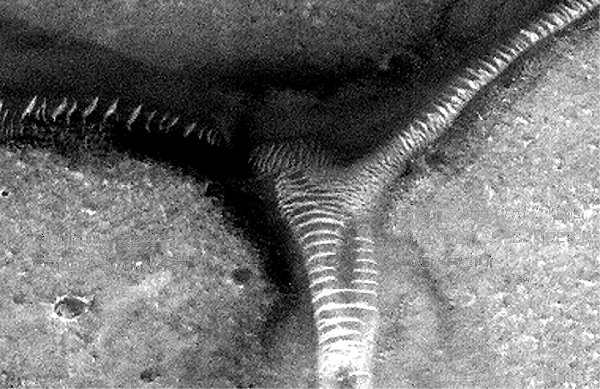
Figure 2. Pipe junction. Image credit: J. Danger2
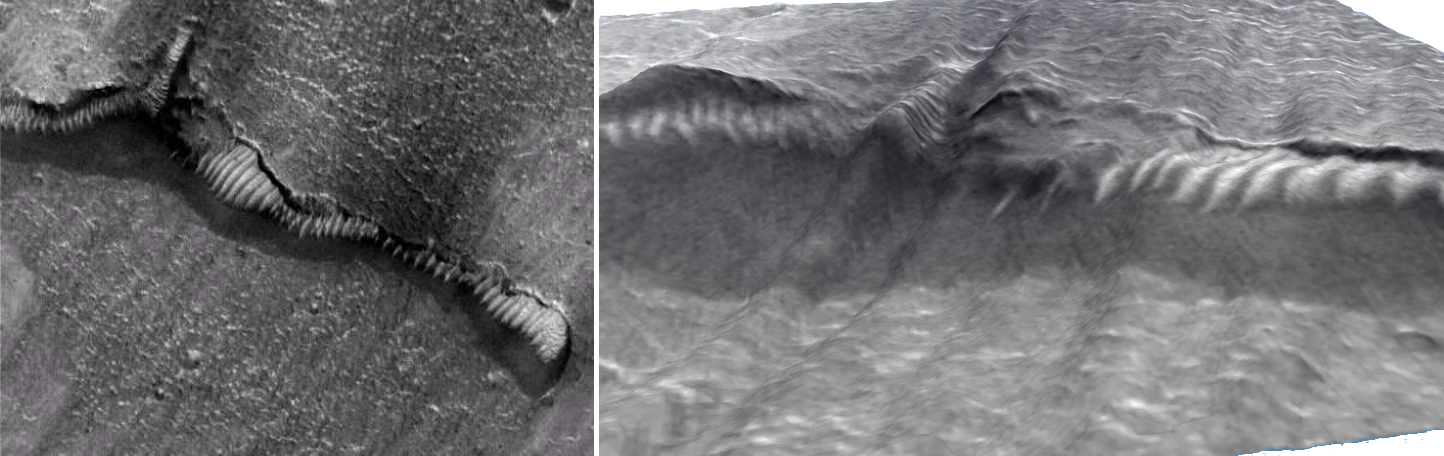
Figures 3a and 3b.Two views of the same area showing ground shaped over the pipes. Image credits: A. Johnson1 and E. Lausch.3
- Good condition. As with the domes, we see pipes that seem to be in good condition for current use.
- Size. On the basis of dimensions given1 for the area in in Figure 3a I estimated that at its maximum the visible pipe is roughly 100 metres high and 100 metres wide. Some pipes shown in image strips (links in A. Johnson’s book1) look bigger than this pipe.
- Interconnection. As we can see in image strips of this area, there is a mass of interconnected pipes in Acidalia Planitia.
- Above and below ground. In many places pipes are seen coming up from underground / going underground, as shown in Figures 2 and 3.
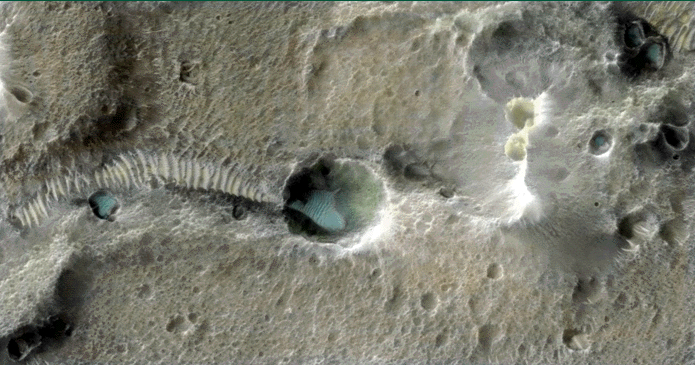
Figure 4. Pipe openings. Image credit: J. Danger2
- Openings. In some places pipes open into a crater or other depression, as shown Figure 4.
- Organic shapes. As with the domes, in close-up images of the pipes we see organic shapes.
Dome and pipe connection
The domes and pipes are connected within a larger system (this is apparent in image strips of Acidalia Planitia).
Dome and pipe system purpose
Considering the almost certain presence of a vast body of water beneath that surface (discussed in the appendix) and the opening of pipes into what look like reservoirs (at dome sites and elsewhere), this would be a water transport and management system. Many other people have reached the same conclusion.
Ground covering pipes
In Figures 3a and 3b we see a roof following the shape of the visible pipes and this roof overhangs the visible pipes. Eric Lausch3 explains that “shape-from-shading” (photoclinometry) was used to determine the surface shape in Figure 3b. This enables us to see that the roof covers many invisible pipes running at right angles to the visible pipes. These features indicate that — like the domes and pipes — the ground covering was designed and constructed by ETs.
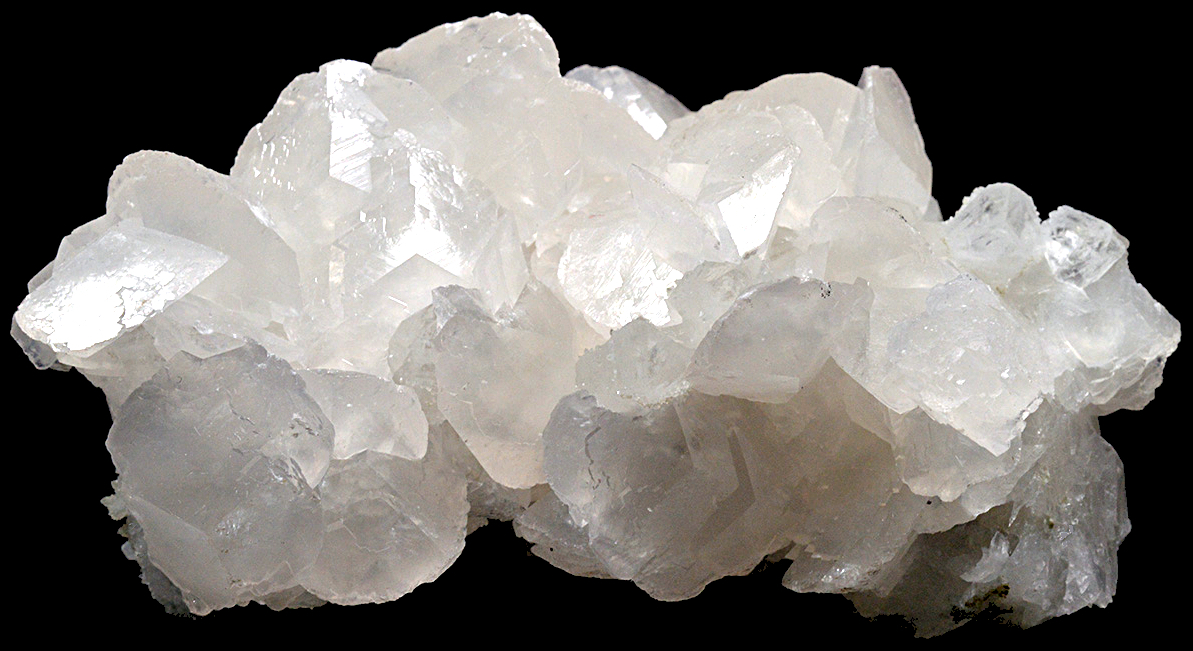
Figure 5. Calcite (CaCO3)
ET building science
Biocement
Biocement could be used to produce the marble-like domes and pipes as well as the ground coverings.
As of 2004 researchers at Murdoch University (Perth, Western Australia) have known that:4,5,6
- In the right circumstances, the bacterium Sporosarcina pasteurii (formerly known as Bacillus pasteurii) generates binding calcite cement (calcium carbonate).
- Treatment of soft sand with this bacterium makes the sand harder. Depending on the number of treatments, the sand can be turned into stone that resembles marble.
- The treatment process is rapid, does not need oxygenation, and works on a large scale, e.g. the researchers turned sand in a shipping container into stone.
Potential applications of this biocementation technique noted by the researchers include:
- Mining. Tunnels drilled into sand could be made stable.
- Construction. Retaining banks such as dikes could be solidified.
- Roads. Spray-on roads across the desert.
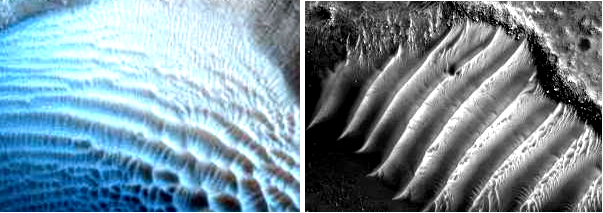
Figure 6. Close-up views of a dome and pipe (cropped from the main image and Figure 3a). Image credits A. Johnson.1
Biotechnology
In Figure 6 we see that the dome and pipe share the following features:
- Geometric and organic shapes, i.e. they look as if they were grown.
- They could be made from marble-like stone, i.e. they are reflective and hard-looking.
- Both have ribs.
- Their ribs are connected by strands of the same material.
- Both structures look as if they could be built entirely from the strands.
- The overlying ground has a mat-like appearance, as if it too could be made up of strands.
How might ETs have directed the bacterium Sporosarcina pasteurii or similar (e.g. bacteria synthesized specifically for each of these three applications) to biocement sand into strands that form domes, pipes and shaped ground covering? Human advances in biotechnology can at least give us an idea about how ETs might have exercised such fine control over biocementation in civil engineering. For example, Kriegman et al. (2021)7 showed that artificial intelligence can design clusters of cells that replicate and perform useful work with little outside guidance.
References
- Johnson, Andrew (2018). Secrets in the Solar System: Gatekeepers on Earth. Andrew Johnson discusses this book with Richard Hall in this video on RichPlanet TV.
- Danger, Johnny. Dangerous Mars site.
- Lausch, Eric C. (2001). Is this an artificial construct on Mars? An examination of MGS imaging data for MOC Image M15-01228.
- Whiffin, Victoria S. (2004). Microbial CaCO3 precipitation for the production of biocement. PhD thesis, Murdoch University.
- Calvo, Shasta (2009). Scientists turn sand to stone, Science Alert, 7 May 2009.
- Catchpoole, David (2009). From sand to rock—quickly! Creation.com, 3 Nov 2009.
- Kriegman, S., Blackiston, D., Levin, M. & Bongard, J. (2021). Kinematic self-replication in reconfigurable organisms, PNAS 7 Dec, 118 (49) e2112672118.
Appendix
Water
Liquid water
There is proof of liquid water running at or near the surface in many locations on Mars in the form of Recurring Slope Lineae (RSL).1 These flows occur on warm slopes during the warmest months on Mars in places with peak surface temperatures from −23 °C to 27 °C. One of the confirmed RSL sites is in Acidalia Planitia,1 a plain on Mars.
Frozen sea
On 22 November 2016 NASA announced that data from Mars Reconnaissance Orbiter’s ground-penetrating Shallow Radar (SHARAD) instrument had revealed a frozen sea at Utopia Planitia (a large plain to the east of Acidalia Planitia).2 According to NASA this sea contains as much fresh water as is in Lake Superior (largest of the Great Lakes) on Earth and it is only about 3 to 33 feet (1 to 10 meters) beneath the land surface.2
The sea at Utopia Planitia is likely part of the larger sea that once covered most of the ancient Martian northern hemisphere. Therefore much of the other low areas likely contain large amounts of ice.1 On that basis, nearby Acidalia Planitia, also low, could be expected to have frozen sea close to the land surface. Moreover, ETs’ modern water management system in Acidalia Planitia can be seen as confirmation that there is sea beneath that surface.
Appendix references
- Roffman, David A. & Roffman, Barry S. (2021). Mars correct: Critique of all NASA Mars weather data.
- NASA (2016). Mars Ice Deposit Holds as Much Water as Lake Superior, 22 Nov 2016.

Family from afar
 Toward the Light
Leave a comment