A representation of Nommos in their white state (they are more commonly coloured green)
Post outline
- Dogon cosmology
- The Nommo
- Celestial knowledge
- Symbolic architecture
- Ritual practices
- Major mask types
- Sacrifice
- References
Appendix: Dogon continuation of Egyptian religion
The enlightenment, coherence, and beauty of the Dogon religion contrasts with the ignorant, disordered, and hideous jew-invented killer religion based on the jew “Jesus” hoax known as Christianity. This is understandable as Dogon religion is a natural religion and it originated in Ancient Egypt (explanation in Appendix). Instead of relying on a static ‘holy book’, Egyptian culture was rooted in a sophisticated understanding of natural cycles, human psychology, and the integration of the spiritual world with everyday life.
The Dogon are an ethnic group of about 300,000 people in Mali, West Africa.1 These people and their remarkable culture are the subject of this video: The Dogon – In Search Of The Dark Star (1979). French anthropologists Marcel Griaule and Germaine Dieterlen visited and studied the Dogon people as of 1931. Their book Le Renard Pâle (French); The Pale Fox (English translation)2 is a landmark anthropological study. Information about the Dogon presented below is from that book.
1. Dogon cosmology
Core cosmological elements of the highly elaborate and systematic Dogon cosmology:
- The Supreme Creator Amma, a formless creator deity who existed before all else. Amma conceived the universe as a cosmic egg (aduno tal), intending to create perfect male-female twin births (representing cosmic balance).
- The Cosmic Egg is quadrangular in shape (prefiguring four cardinal directions), it contains all potential existence compressed within, and it vibrates (bummo), creating primordial spirals. Inside the Egg are four pairs of twin Nommo [from Dogon word meaning “to make one drink,” plural: Nommos, Nummo], eight ancestors, eight seeds of grain, determining the future world structure. Compared to pottery, Amma fashioned the Cosmic Egg from clay/earthenware discs.
- The Pale Fox (Ogo/Yurugu) symbolizes the Principle of Disorder. This being is single, imperfect, and born first from the cosmic egg. His nature is solitary, chaotic, and rebellious. He violated cosmic order by being born alone (should have been twins) and committed incest. This being symbolizes the anti-society, anti-law, disobedient son of the Creator. He is punished by Amma, became jackal/fox, and retreated to dark corners of Earth to live alone. The disorder represented by the Pale Fox contrasts with the ordered twin births that followed.
- Amma (supreme creator) sacrificed Lébé, one of the perfect twin progeny, to restore cosmic balance after Ogo’s rebellion. They dismembered his body and scattered it across the universe to restore order and create life-giving elements. The Universe “drank of his body” and humans gained life principles. In the words of Griaule/Dieterlen,2 “The Nommo divided his body among men to feed them; that is why it is also said that as the universe ‘had drunk of his body,’ the Nommo also made men drink. He gave all his life principles to human beings.”
2. The Nommo
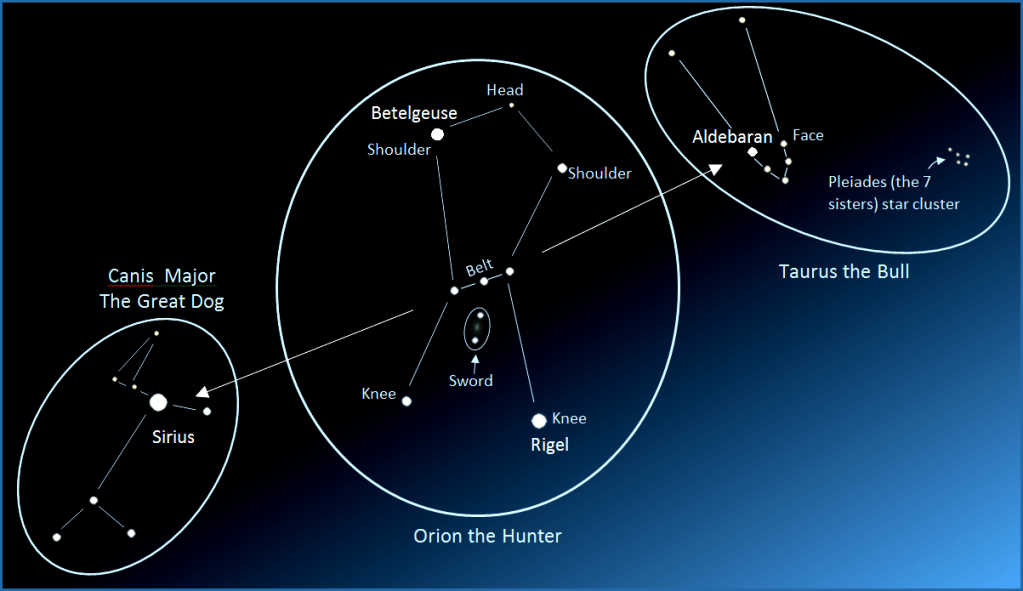
The Dogon claim that the Nommo originate from a world circling the Sirius star system and descended to Earth from the Sirius region for the purpose of bringing cosmic wisdom, civilization, and order. The Dogon see the Nommo as star-born ancestors connecting Dogon to the cosmos.
In the Dogon cosmogony and religion, the Nommo are highly advanced ancestral beings, amphibious, associated with the Sirius star system, and the first living creatures created by the sky god Amma. In the Dogon astronomical tradition, the Nommo traveled to the Sirius star system, returned to Earth in a vessel of fire and lightning, and created a lake that they dove into, because as amphibious beings they require water in which to live.
2.1 Dogon names for the Nommo
“Masters of the Water” — they control water, rain, fertility
“The Teachers” — they brought civilization, knowledge, language
“The Monitors” — they watch over humanity
“The Speakers” — they are the source of language and speech
2.2 Nommo primary functions
Bringers of Order — they replaced chaos with cosmic law
Culture Bringers — they introduced speech, language,
agriculture, weaving, metallurgy
Water Masters — they govern rain, rivers, lakes, fertility
Divine Ancestors — they are the progenitors of Dogon people
2.3 Nommo physical appearance
The Nommos are humanoid from the loins up, serpent-like below; accompanied by water serpents, crocodiles, turtles; and they appear in the form of twin beings (one male, one female).
Concerning colour, the Nommos’ fish-like exterior is green and the hair on their head is green (associated with water, rain, fertility); their eyes shine red like embers (fire, thunder, transformative power); and when touching the ground their appearance becomes white (symbolizing Sirius B star, purity, celestial origin).
3. Celestial knowledge
Dogon rituals, symbolism, and cosmological knowledge include artifacts (e.g. a statue that is over 400 years old) that describe the Sirius star system. For example, the Dogon knew:
- The star Sirius (now known as Sirius A, 8.6 light years from Earth) had a companion star that was invisible to the human eye, moved in a 50-year elliptical orbit around Sirius, was small and incredibly heavy, and rotated on its axis. The Dogon name for Sirius B (Po Tolo) comprises the word tolo (star) and po (the name of the smallest seed known to them). By this name they describe the star’s smallness. They also claim that it is “the heaviest star” (composed of a super-dense metal) and white.
- These ancient Dogon beliefs are now astronomical facts. In 1862 the companion star of Sirius (Sirius B) was seen through a telescope, in 1970 Sirius B was first photographed, and it is now known that Sirius B orbits Sirius A over a period of 50.04 +/- 0.09 years. In 1926 Western scientists discovered that Sirius B is a white dwarf, a category of star characterized by very great density.1
- The Dogon also believe that a third star (Emme Ya, larger and lighter than Sirius B) revolves around Sirius A and that the Nommos’ home planet orbits this third star. However to date astronomers have not identified Emme Ya.
- In addition to their knowledge of Sirius, Dogon mythology includes ancient knowledge of (a) Saturn’s rings, (b) Jupiter’s four major moons, and (c) the planets’ orbit of the sun. The Dogon use such knowledge in their four calendars for the Sun, Moon, Sirius, and Venus.
The only logical explanation for Dogon astronomical knowledge is the explanation given by the Dogon themselves: This knowledge was given to them by the Nommos who were sent to Earth from Sirius for the benefit of mankind.
4. Symbolic architecture
Dogon architecture links daily life to cosmic origins. Every village is literally a lived map of the creation story. Dogon architecture makes the cosmic creation story physically inhabitable. The architecture is not about cosmology — it is cosmology made manifest. Daily life becomes a continuous enactment of the creation narrative, with no boundary between the sacred and the mundane. Walking through the village means moving through the body of the cosmos itself:
- The village overall layout represents a prone human body.
- Togu na (men’s meeting house) is the head (cosmological centre) — for decision-making, teaching, rest, intellectual/spiritual authority.
- Ginna (senior man’s house/courtyard) is the torso (lineage anchor) — for domestic life, extended family, daily meals.
- Granaries (male and female) are the limbs (prosperity markers) — for food storage, women’s belongings, economic independence.
- Streets/pathways are the spiral motion of cosmic egg opening — for movement through space-time interconnectedness.
- Altars are the sacred sites where Nommo body parts fell — for ritual sacrifices, prayers to ancestors.
There is unity of spiritual and material. ‘Everyday’ is sacred. Every detail of domestic, social, and economic life is connected to their cosmogony.
5. Ritual practices
Dogon ritual practices express cosmological themes through:
- Embodied transformation — Masks make the dancer become the spiritual being.
- Cyclical renewal — Sigui every 60 years regenerates cosmic order.
- Ancestral passage — Dama guides souls from village to ancestor realm.
- Celestial correspondence — Rituals follow star cycles and agricultural calendars.
- Dual complementarity — Paired masks, twin principles, male-female balance.
- Material symbolism — Every object (wood, grain, shells) carries cosmological meaning.
- Hidden knowledge — Esoteric teachings transmitted through initiation.
The ritual is not about cosmology—it performs cosmology. Each dance, each mask, each ceremony is an act of creating and maintaining the world according to the blueprint established when the cosmic egg opened and the Nommo descended.
6. Major mask types
- Kanaga Mask (the cross of Creation) — a cross-shaped frame with outstretched arms and two parallel bars extending from the central mask face to represent the supreme creator Amma (top bar = sky, bottom bar = earth). The cross pattern echoes the four cardinal directions from the cosmic egg’s quadrangular shape — each arm points to a direction established when the egg opened. The mask features black/white patterning of alternating light and dark zones to represent dualities: day/night, male/female, life/death, order/chaos. The Kanaga Mask is performed in Dama (funeral rites) to guide souls from village to ancestor realm.
- Sirige Mask (the tree of ancestors) — a helmet-shaped tall multi-tiered superstructure with geometric motifs to represent the great house (ginna) and the tree of life. The staircase-like or stepped designs represent the ascension of souls through levels of existence and links the living world with ancestral/spiritual realms. The cross is used in mourning ceremonies honouring ancestors.
- Nommo Masks (amphibious ancestral beings) — a fish-like lower body/tail and serpentine or aquatic tail design represents the amphibious Nommo, flowing hair or mane represents the Nommo’s green hair, and blue pigments and wave patterns symbolize water and denote rain, fertility, and purification. Every river, lake, and pond is a Nommo dwelling and these masks summon the beings for blessing and protection.
- Imina Na (“Mother of masks”) — created only during Sigui (explained below) and thus appears once every 60 years. It is an extraordinarily tall (up to 3 meters) and massive wooden structure requiring multiple carriers. The mask symbolizes the scale of cosmic transformation, embodies the death of the first ancestor and world renewal. The complex motifs represent mythic language that carries the secret cosmological knowledge transmitted during Sigui. Imina Na is exclusive to the Sigui ceremony and its appearance marks the passing of one generation to the next and the transmission of secret teachings (sigui so, ritual language).
The Sigui ceremony
This is the Dogon’s most significant ritual. It occurs once every 60 years (a generational milestone) and lasts 6–7 years (a multi-year cycle moving village to village). The Imina Na mask (never seen outside Sigui) is created, it teaches secret language (sigui so, restricted to initiates), and it renews the world (spiritual cleansing and regeneration). It honours the first ancestor (commemorates Lébé’s death), connects villages (inter-community solidarity), and transmits knowledge (prevents loss of cosmological secrets).
The next Sigui cycle starts in 2027 (60 years after 1967).
7. Sacrifice
The core purpose of sacrifice in Dogon cosmology is to maintain balance between living community, ancestors, and cosmic order. Blood represents vital life force. It is poured on village altars (Binu) as offering to divine beings. The primary recipients are Creator god Amma, ancestral spirits (Nommo), and serpent-god Lébé. Sacrifices are embedded in agrarian, funerary, and renewal rituals.
Types of sacrifices
Animal sacrifices
- Chickens. Very common, for minor rituals, transgressions; quick to drain blood.
- Goats. Common, regular altar offerings, purification rites; only healthiest animals selected.
- Cattle. Rare, major communal ceremonies, highest-value sacrifice.
- Mice. Specifically for the mono sect (unmarried men), in January/February.
Selection criteria: Only the healthiest specimens are chosen, swift killing allows rapid blood drainage, blood is the main offering; meat distributed afterward.
Plant and liquid offerings
- Boiled millet (8 grains + 1), standard ritual formula, for eight ancestors from sky-granary; +1 = Amma.
- Palm wine / millet beer, communal feasting, for sacramental drink after sacrifice.
- Rice, supplemental offerings, for prosperity, abundance.
- Water libations, purification rites, to invoke Nommo, rain blessings.
The sacrifice is not merely offering to gods—it is actively maintaining the world according to the cosmic blueprint established when the Nommo descended and were sacrificed to create the sacred geography.
8. References
- World Pilgrimage Guide, Sacred sites of the Dogon, Mali.
- Marcel Griaule & Germaine Dieterlen (1965). Le Renard Pâle (French); The Pale Fox (English translation). Paris: Institut d’Ethnologie
Appendix:
Dogon continuation of Egyptian religion
Various writers have proposed that the Dogon are descendants of Nile Valley peoples. A prominent proponent of the Dogon – Egyptian connection was Cheikh Anta Diop.1,2,3,4 He used comparative linguistics, anthropology, and historical analysis to argue for the continuity of Egyptian civilization across Africa. According to Diop, migration patterns and oral traditions indicate that culture spread westward from Egypt, and comparative mythology and linguistic parallels suggest that Dogon inherited Egyptian knowledge.
Specific parallels between Dogon and Egyptian traditions highlighted by Diop:
- Po Tolo (Sirius B) is central to Dogon cosmology, and Sirius is central to the Isis/Osiris cult.
- Dogon Sirius vocabulary contained ancient Egyptian words.
- Amphibious beings. Nommo (water deities, appearance as twins, hermaphroditic teachers) in the Dogon tradition are equivalent to Hapi (Nile inundation god) and the divine twins [Egyptian “divine twins” are primarily sibling couples representing cosmic dualities, the clearest examples being Nut and Geb (sky/earth) and Shu and Tefnut (air/moisture), while the Ogdoad represents four primordial complementary pairs that existed before creation]. Diop saw the Dogon and Egyptian deities as the same archetypal figures, adapted to different environments.
- The similar Creator deity names of Amma (Dogon) and Amun (Egyptian) evidence linguistic continuity.
Concerning Sirius, Dogon knew of Sirius B’s existence and 50-year orbital period. This knowledge predates modern astronomical discovery (1862). Egyptian temple texts recorded Sirius cult practices and Diop believed that this knowledge passed down from from ancient Egyptian star-cult traditions across millennia via Dogon oral tradition.
Perhaps the most striking structural parallel between Egyptian and Dogon traditions is that of Dismemberment and Resurrection:
Egypt. Set dismembers Osiris, scattering his body parts across Egypt; Osiris is reconstituted and resurrected by Isis; Osiris becomes eternal lord of the dead; sites of his body parts become sites of worship; temples and worship centers were built at each location where a body part landed (80+ sites); this event is tied to the Nile flood, planting, and harvest; Osiris’ resurrection symbolizes the annual renewal of the land.
Dogon. Amma sacrifices a Nommo; his body is dismembered and scattered across the universe; the purpose is to restore cosmic balance after Ogo’s rebellion and create the source of water, fertility, and life; Binu shrines mark where body parts fell and there are sacred sites across Dogon territory; Nommo are resurrected and their cyclical death/resurrection is reenacted in ritual; this event is tied to rain, soil fertility, and planting cycles.
The dismemberment-scattering-reassembly cycle of the Dogon is a remarkable structural echo of the cycle in Egypt. In both cases, the fragmentation of a divine body creates the geography of sacred sites and the cycle of agricultural renewal.5,6
Appendix references
- Diop, Cheikh Anta(1954). Nations nègres et culture (2nd ed. 1955) Chapter 8: Le Dogon et les sources de la civilisation africaine (pp. 215-226)
- Diop, Cheikh Anta(1967). Antériorité des civilisations nègres,
- Diop, Cheikh Anta(1974).The African origin of civilization: Myth or reality, (English translation), compiled sections from above works.
- Diop, Cheikh Anta(1981). Comparative cultural analysis; Civilisation ou barbarie, Synthesized arguments;
- Hornung, E. (2001). The Secret Lore of Egypt: Its Impact on the West. Cornell University Press.
- Pinch, G. (2004). Egyptian Mythology: A Very Short Introduction. Oxford University Press.

Family from afar