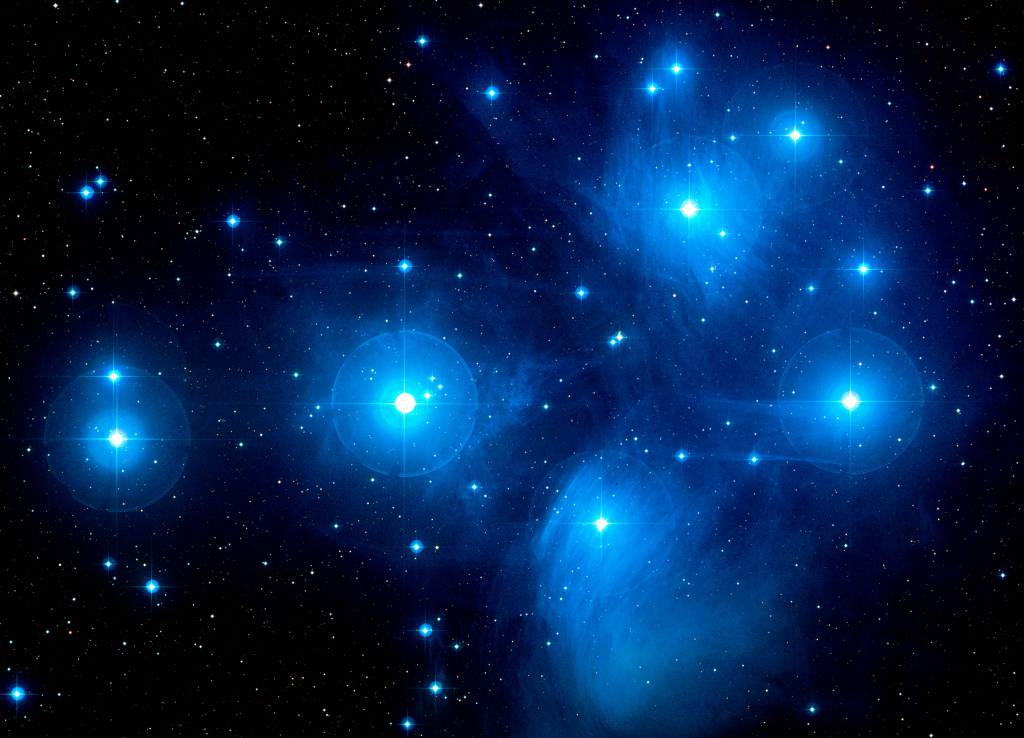
Pleiades — central to our true religion
This post continues the discussion about our long-head ancestors started in the preceding post, Family from afar 1: Long-heads of Europe.
The information presented below and most of the images are from Cosmick Traveler.
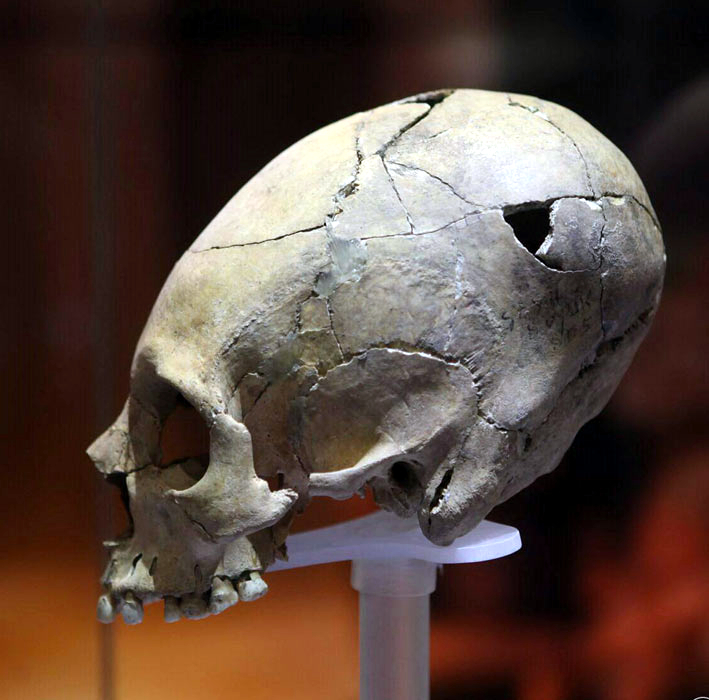
One of many long skulls in the Archaeological Museum in Antakya, Turkey
An example of long skulls found in the Siberian city of Omsk
During the 1990s, near the city of Omsk in Siberia, long skulls were found in burial mounds dated to the 4th century CE.
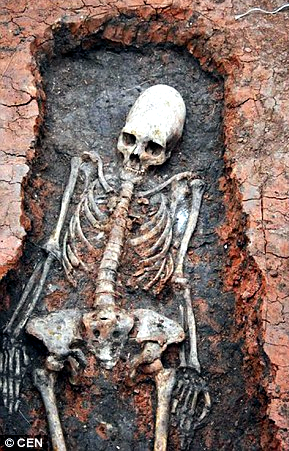
The skeleton of a long-skull woman found in Arkaim, Russia
This skeleton of a long-skull woman was found in Arkaim, near Chelyabinsk in central Russia. The skeleton is dated to the second or third century CE, and the settlement is dated to about 2,000 BCE. The settlement was about 20,000 square metres in size, had a central square surrounded by two circles of houses separated by a street, and was protected by two circular walls.
According to historian K. K. Bystrushkin (2003), the site is comparable to Stonehenge in that both sites enabled ancient people to study the stars. However, Bystrushkin considers the Arkaim site to be more advanced than Stonehenge as Stonehenge allows for observations of 10 astronomical phenomena using 22 elements, but Arkaim enables observations of 18 phenomena using 30 elements. Therefore ancient people at Arkaim could have observed and tracked more celestial events than was possible at Stonehenge.
Eventually the Arkaim settlement was burned down and abandoned.
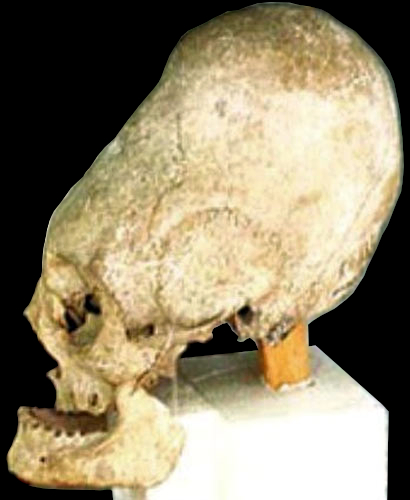
One of the long skulls on display in the Pyatigorsk museum, Russia
This long skull was found at the Khasaot burial ground in the vicinity of Kislovodsk, in the North Caucasus region of Russia. The burial site dates to the 3rd – 5th centuries CE.
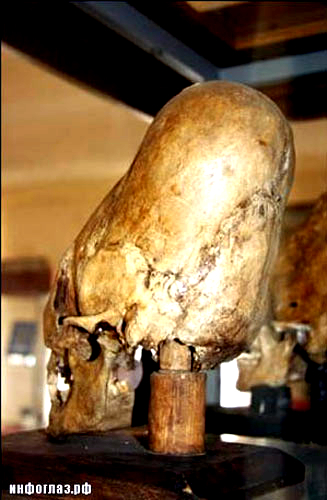
One of the long skulls in the Museum of Kislovodsk, Russia
This is one of the long skulls found in a valley on the outskirts of Kislovodsk, a city in South Russia.
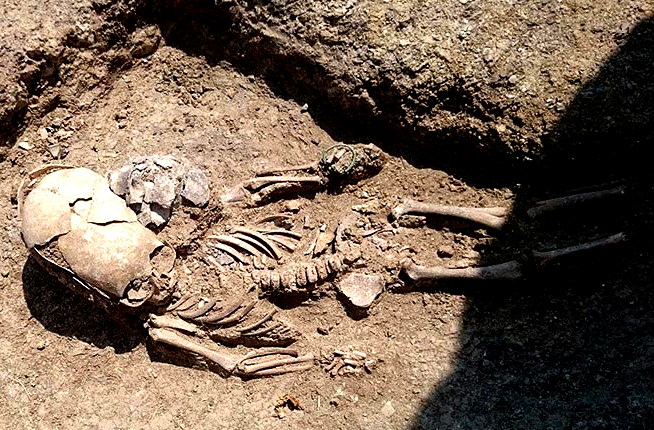
The remains of a long-skull 1.5-year-old boy
This long-skull skeleton of a 1.5-year-old boy was found near the village of Yakovenkovo in the eastern part of the Crimean Peninsula. His grave dates to the second century CE.

 Toward the Light
Leave a comment