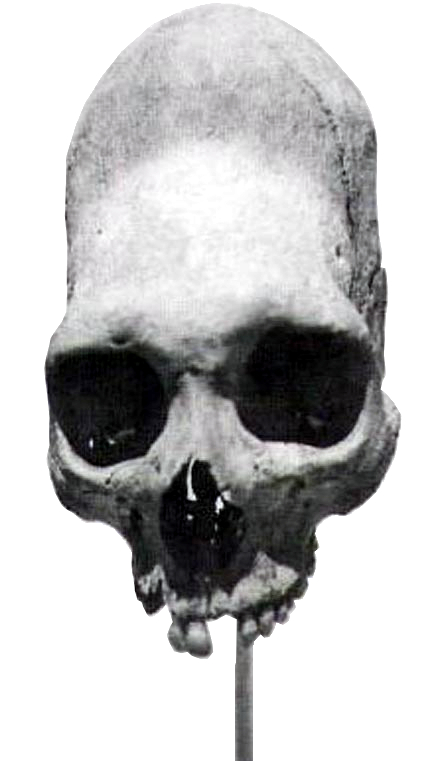
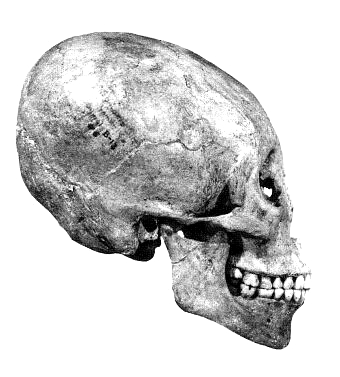
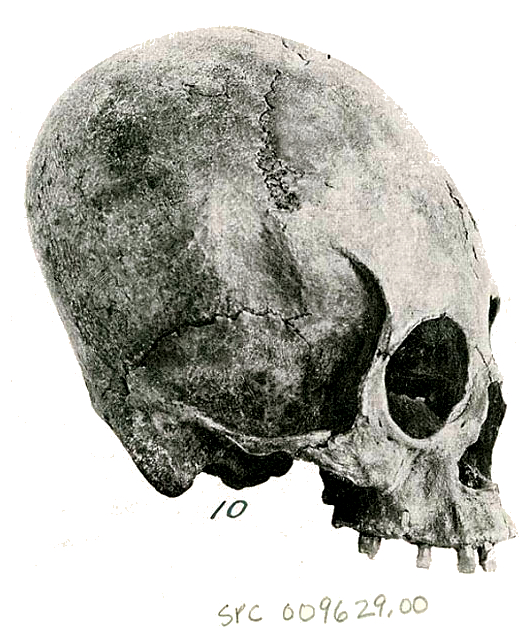
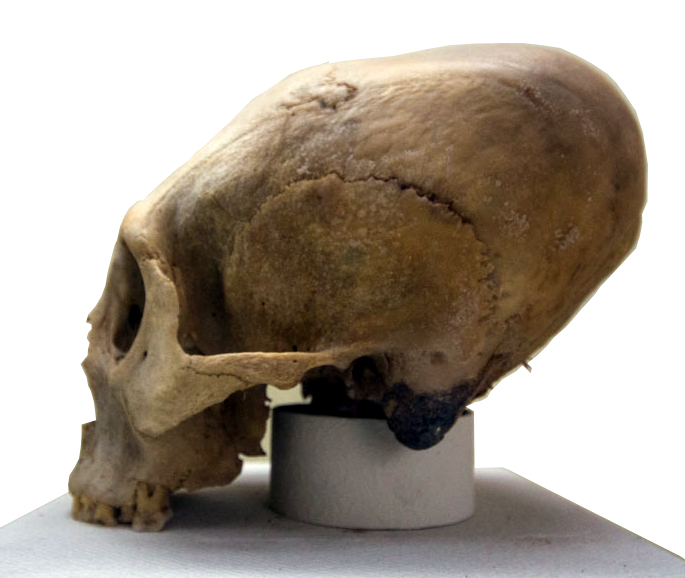
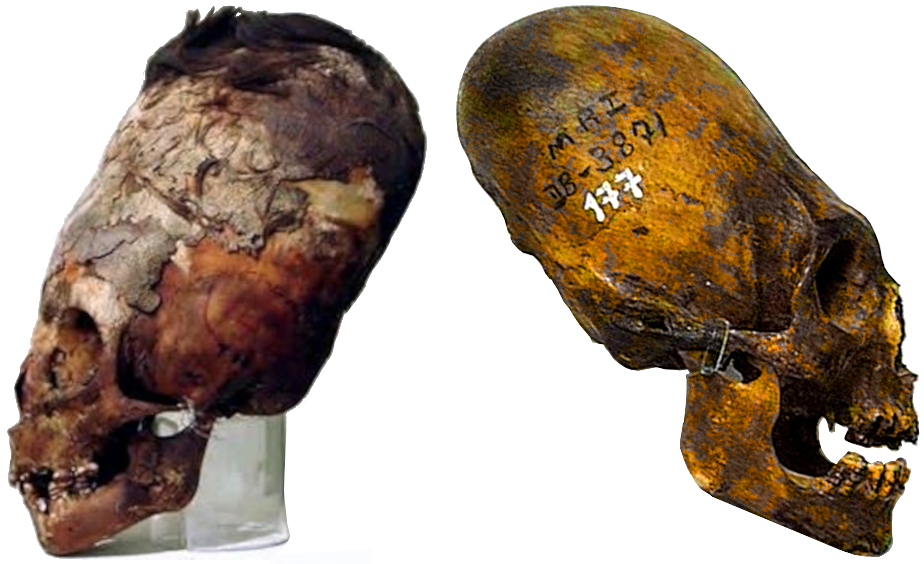
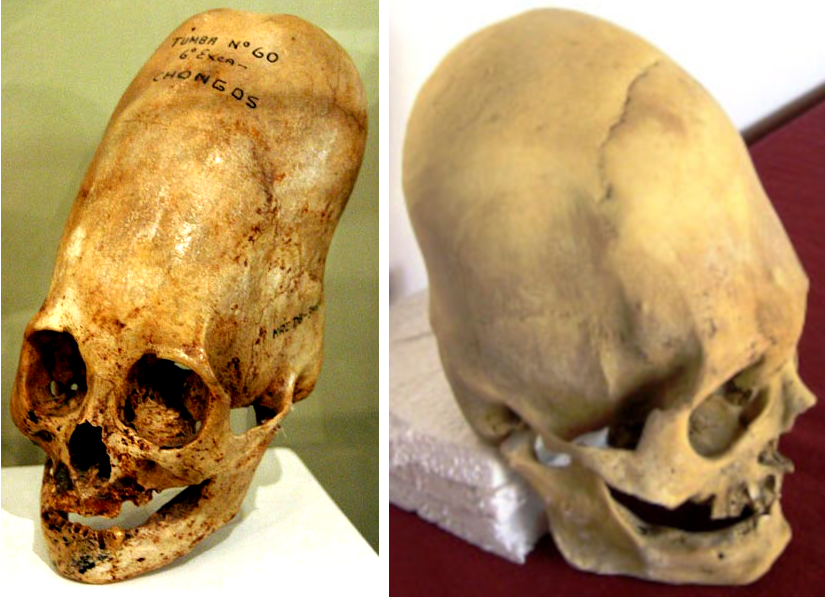
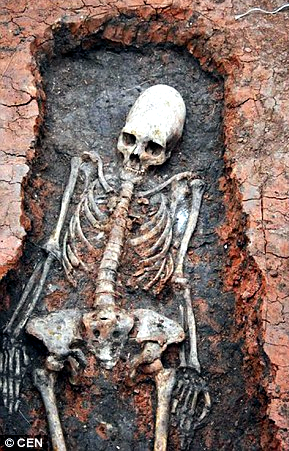
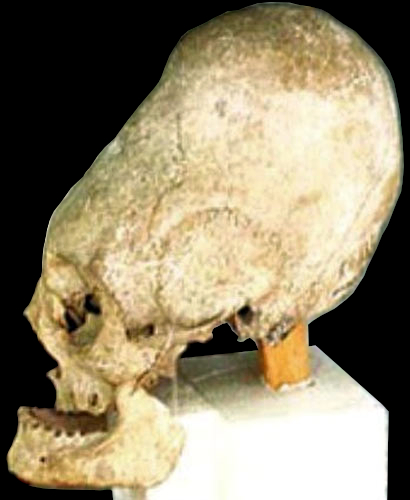
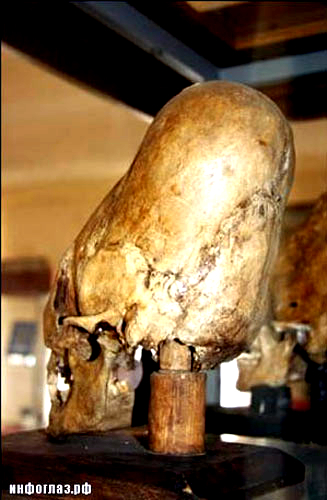
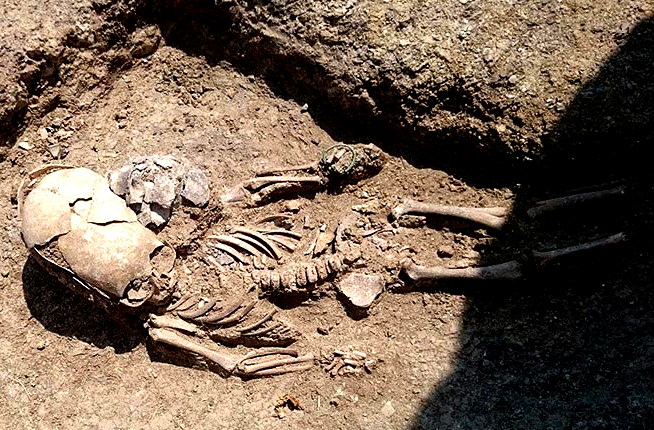
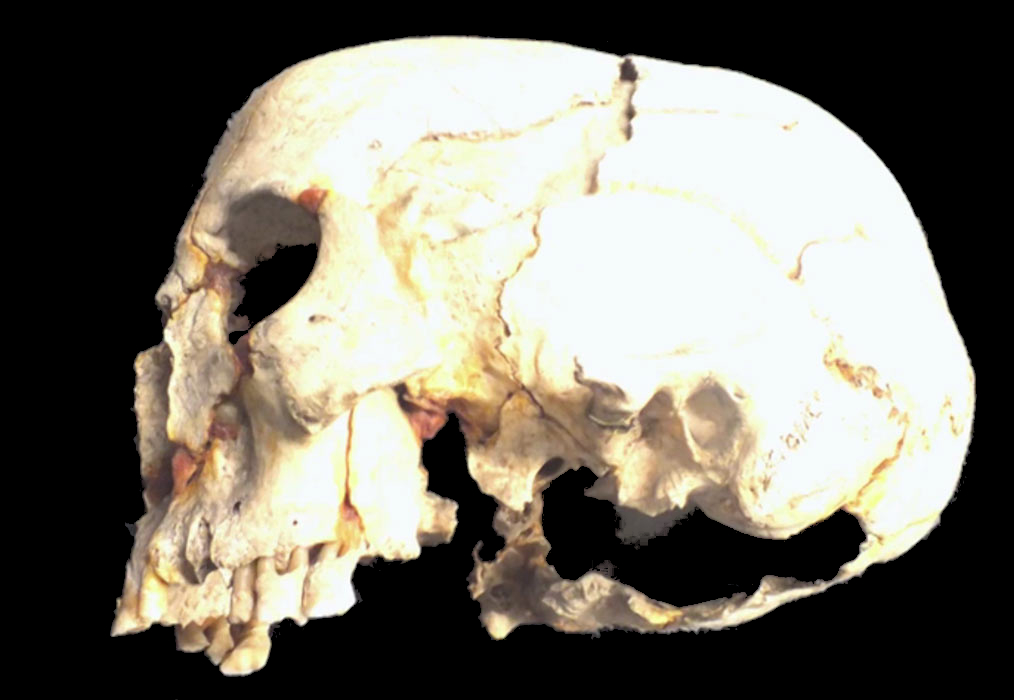
The Galley Hill skull, dated to 10,000–15,000 years before present. This skull is discussed below.
Post outline
- Introduction
- Long-head and round-head differences
- Long-head and round-head migrations
- Long-heads and the Frisians
- Baby long-heads
- Long-heads in Europe
- Long-heads in Malta
- References
- Appendices
1. Introduction
A series of posts about our ancestry will be offered for consideration. This includes information about our long-head ancestors, from whom we can learn much about our god-like creators.
Following is a summary of information from “Cosmick Traveler” (Dirk Gillabel),1 an authority in this field from whose site I obtained many of the scientific references and images used in my posts on this subject:
- Human races of long-head (dolichocephalic) people lived all over Earth and they were a different subspecies (“race”) to that of other humans. Old archaeological publications available online evidence archaeologists’ awareness that the whole of Europe was populated by long-head people.
- The long-heads were matriarchal, peaceful, and highly knowledgeable and skilled, especially in stone-work.
- The long-head people were intuitive, energy-sensitive, worked with energy lines and places of power, and built numerous earth works and stone megaliths.
- In some places these people were the rulers and in other places they lived in small communities.
- Humans with round skulls (brachycephalic) multiplied, spread all over the world, and took over the territory of the long-head people.
- The round-head people were patriarchal and warring, they thrived on conquest, and it seems that the round-head people were the first to work metal. They made metal weapons with which they subjugated or exterminated the long-head people.
- Although many long-head people were murdered and exterminated by the round-heads, as happened in England, on the European continent there is abundant evidence of both races living together and interbreeding, causing the gradual disappearance of the long-heads.
- Humans of today are primarily descended from the round-head people.
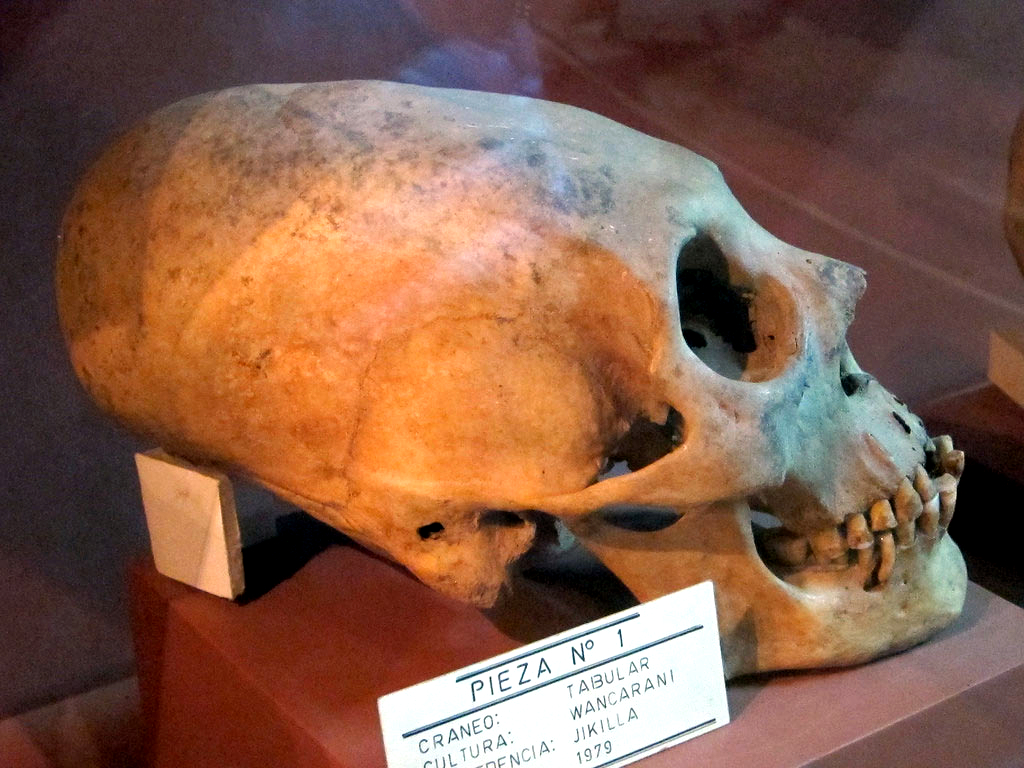
Sometimes the long skulls are incorrectly referred to as “elongated.” However the long skulls of interest are not elongated, as occurs by means of artificial cranial deformation. They are naturally long skulls.
In Appendix 1 are three examples of scientists who carefully examined long skulls and concluded that those long skulls do not show any signs of deformation and that they are natural. One of those scientists is Dr Graves (1834),2 who wrote: “. . . these skulls belonged to a race of mankind now extinct, and which differed from any now existing.” (p 477)
In Appendix 2 are images to illustrate the methods and results of artificial cranial deformation.
2. Long-head and round-head differences
2.1 Cephalic index
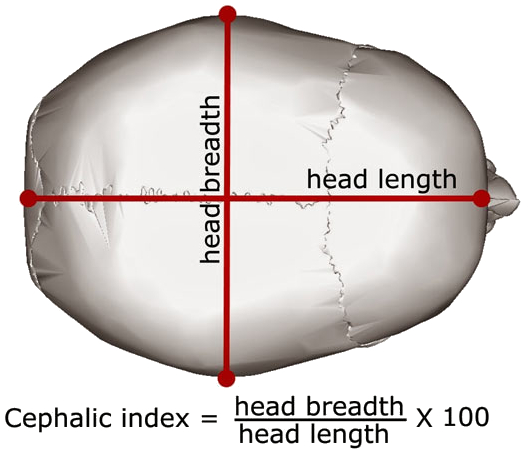
The cephalic index, or cranial index, is the ratio of the maximum width of the head multiplied by 100 divided by its maximum length, in the horizontal plane, or front to back.3

Dolichocephalic vs brachycephalic skulls
Brachycephalic skulls (round skulls) are typical for present day humans (Homo sapiens). Their cephalic index is larger than 81-83, i.e. the width of the face is slightly smaller than the length of the skull.3
Dolichocephalic skulls (long skulls) have a cephalic index smaller than 71-73, i.e. the length of the skull is much larger than that of round skulls. Dolichocephalic skulls can differ from brachycephalic skulls to the extent that the long skulls can be seen as belonging to another human subspecies. The long skulls vary (a) in length from medium to large, and (b) in orientation, sometimes extending in the horizontal plane and sometimes extending upward from from a slanting forehead.3
Mesocephalic skulls are often ovoid in shape and between the shapes of round and long skulls. Mesocephalic skulls are the result of interbreeding between round-skull and long-skull people.3
2.2 Sagittal suture
The long-skulls show “greater liability to premature obliteration of the sutures. This can hardly be regarded as other than a race-character, which these skulls exhibit in common with those of other dolichocephalous peoples” (Thurnam, 1866, p. 35).4
2.3 Foramen magnum
In the long skulls, “the position of the foramen magnum [hole in skull through which spinal cord passes] too is remarkable, for it will be found to be considerably anterior to the centre of gravity” (Bellamy, 1842, p 98).5
2.4 Red hair
Long-head Egyptian dynastic rulers studied, and the Paracas aristocracy, had several members with red hair, and both lived among people with dark hair. For example, Queen Tiye, mother of the famous Egyptian pharaoh Akhenaton, was long-headed with red hair; Ramses II was long-headed with red hair; and apparently, the Ramses lineage (long-head people with red hair) believed themselves to be divine descendants of the god Seth (who had red hair), with their red hair as proof of their lineage.3
There is reason to believe that the Ramses’ claim to godly ancestry might be true. Seth (one of the most ancient gods of the ancient Egyptian pantheon) and all the other ancient Egyptian gods — before they became heroes or myths — are extraterrestrial beings [i.e. the Anunnaki, who people revered as gods] according to many students of this subject.6
Of possible significance, DNA analysis of the Neanderthal genome has shown that Neanderthals had red hair.3
2.5 Teeth
The long skull of a child, less than two years old, found at Lake Titicaca in Bolivia, had 24 teeth. In a human, 24 teeth would only be expected in a six-year-old child. The skull of another long-skull baby, about 18 months old, found near Cusco, Peru, had fully-grown teeth of a normal 7-12 year-old human child, but contained fewer molars than a human.3
2.6 Nasal root
The nasal root in humans is the top of the nose and it forms an indentation where the nasal bones meet the frontal bone (the skull plate that forms the forehead).3 The numerous statues and clay figures of the Maya cultures in Meso-America show that many of their aristocratic members had both long skulls and also long noses that start high up on their forehead.3
2.7 Trepanation
Trepanation (to bore or otherwise make a hole in the skull) is usually done to release pressure underneath the skull. It was a common procedure among both long-head and round-head people. Some skulls have multiple trepanned holes, and in some cases the holes are very large. In many cases the holes seem to have been cut crudely with stone or metal knives, suggesting that the trepanation was an emergency procedure to treat a serious medical problem.3 Such medical problems seem consistent with the known medical hazards of subspecies-mixing (resulting in hybrids), e.g. Rossetti (2018, Mixed race infants are unhealthy because of complex gene-environment interaction),7 Health Colombia (2014, Mixed race people are more likely to develop metabolic syndrome),8 and Black Issues (2003, Students of mixed race suffer more health problems).9 Evidence presented in a future post in this series will show that the Anunnaki (Aryan extraterrestrials) created humans with genetic material from different species and that we are all hybrids and prone to medical problems of hybridization to some extent.
2.8 Personality
Intelligence
The volume of the long skulls is larger than that of a normal human skull, especially in the extremely long skulls of South America. This greater brain size would have been associated with increased mental abilities. John Thurnam (1866),4 a prominent English archaeologist and craniologist, excavated and examined the barrows in Salisbury plain, South England, and found both round and long skulls. He explained the brain differences that would have been associated with the observed differences in the skulls:
“Turning to the hind head, we find the supra-occipital region full and rounded in the dolichocephalic [long skull] Britons, giving room for the backward development of the posterior lobes of the brain, which in this series must have materially overlapped the cerebellum; whilst in the other [round skulls], the occipital tuberosity becomes the most prominent part, and the cerebellum can have been barely covered by the posterior lobes of the brain. As common in long skulls, those of the pre-Celtic Britons are more or less depressed — platycephalic [marked flatness on top of the head]; whilst there is a compensatory elevation in the brachycephalic series, or more or less of the form termed acrocephalic [high, pointed skull]. (p 35)
Aggressiveness
Archaeologists found burials of long-head people that lacked signs of respectful burials, were disorderly, bodies were often covered with dirt and rocks, and many bodies showed clear signs of violent deaths, usually by severe damage to their skulls. In many cases the victim’s skull was split in two by a sword, with great force. The archaeologists concluded that round-skull invaders had exterminated the long-head people in Britain and taken over their territory.1
Thurnam (1861)10 gives examples of long-head murder victims:
- “In the south-east angle of the chamber, to the left of the entrance, was the skeleton of a youth of about seventeen years of age, apparently in a sitting posture. The skull was extensively fractured at the summit by what appeared to have been the death-blow.” (p 7)
- “Almost in the centre of the floor was the skeleton of a man of about fifty years of age . . . . A fracture, probably the death-wound, extended from one temple to the other, through the forehead into the right cheek, entirely severing the malar bone, which had fallen off below the skull . . . .” (p 8)
- “In 1801 Mr. Cunnington opened the long barrow near Heytesbury, called “Bowls’ Barrow,” in which he found several skeletons crowded together at the east end, the skull of one of which “appeared to have been cut in two by a sword.””(p 14)
- Tilshead Long Barrow. This round-head brutal murder of eight long-head people, including three women and two children, is discussed below in relation to the long-head people in England. Evidently the round-head people showed no mercy, even to women and children.
3. Long-head and round-head migrations
- In 1866 John Thurnam4 wrote that he excavated and examined the barrows in the Salisbury plain and came to the conclusion that the long-head people were the oldest race in England, and were replaced by an invading force of round-head people. According to Thurnam, the long-head people were known as the Ancient British People; their skeletons lacked metal ornaments or weapons, suggesting that they only had stone implements; and they lived in Britain during the period of about 4,000 to 3,000 BCE.
- Thurnam (1866, p 1):4 “In addition to the brachycephalous [round] skulls, of which so many examples are described in the Crania Britannica, a less number of decidedly dolichocephalic [long] crania have also been depicted. These are principally derived from the chambered long-barrows of North Wilts and Gloucestershire, being the district of the British Dobuni, the same tribe which, at the time of the conquest under Claudius, was subject to the great neighbouring tribe of the Catuellani. There is no well-authenticated proof that metallic objects, whether of bronze or iron, have in any case been found in the undisturbed chambers of these tombs, which, however, yield well-chipped flakes and arrowheads, and also axes of flint.”
- After studying the findings of the French archaeologists, Thurnam (1866)4 concluded: (a) the long-head people in England were Teutonic [Germanic] in origin, with roots in Anglo-Saxon and Scandinavian regions, and (b) the long-head people in France were equally Teutonic, with roots in Gothic, Burgundian, Frankish, or Scandinavian areas. (p 8)
- The literature review by Dirk Gillabel1 indicates that in about 3,000 BCE, tribes of round-head people (Gauls, i.e. Celts of an ancient region in western Europe) arrived in England, murdered the long-head people, buried them in their long barrows, and closed off the entrances.
- Deniker (1900, p 313)11 wrote the following in The races of man: “Several hundred skulls, found in Neolithic [c. 10,000 BCE to c. 2,000 BCE] burial-places in France, Switzerland, Austria, and Germany, exhibit an intermixture of brachycephals [round skulls] and dolichocephals [long skulls]. According to the more or less frequent occurrence of the former in relation to the latter in each burial, we may, with Hervé, trace the route followed by these brachycephals of Central Europe, from the plains of Hungary, by the valley of the Danube, into Belgium and Switzerland; from these last-named countries they flung themselves on the dolichocephalic populations of France and modified the primitive type, especially in the plains of the north-east and in the Alpine region.”
- Deniker (1900, p 313)11 continues: “But if the “neolithic” people of France and Central Europe belonged to at least two distinct races, the same has not been the case with the other countries of our continent. In the British Isles we find ourselves, on the contrary, as regards this period, in presence of a remarkable homogeneity of type; it is without exception dolichocephalic, with elongated faces, such as are found in the long-barrows.”
- Three adolescent male skeletons, likely associated with the Huns or Germanic tribes, and dating to the Great Migration Period (5th to 6th century CE), were discovered in a pit at the Hermanov vinograd site in Osijek, Croatia. Two of the three boys had long skulls, one of which was slanted (“tabular oblique-type”) and the other being “circular erect-type.” Genetic analyses of the skulls (Fernandes et al. 2019)12 revealed: The boy with the slanted long skull had East Asian ancestry, the boy with the circular erect long skull had Near Eastern ancestry, and the boy whose skull was not long had West Eurasian ancestry.
- DNA analyses (Veeramah et al. 2018)13 of 40 individuals buried in Early Medieval (5th and 6th century) sites Altenerding and Straubing in Bavaria, showed that nine were women with long skulls who came from southeastern Europe, specifically Bulgaria and Romania.
- Some of the long-skull tribes survived until recent times. In 1862 Broca14 studied 60 Basque skulls from an old cemetery in the province of Guipuzcoa and found that the large majority were dolichocephalic.
- Long and round skulls found together at some burial sites show that that in some places these different races lived together and likely cross-bred. The Ofnet cave, found in 1908, is an example of such a burial site (Osborn, 1918).15
- Examination of long-skull skeletons in Malta indicated that these long-skull people were a race of lower medium height, akin to the early people of Egypt, who migrated westward along the north coast of Africa, to Malta, Sicily, Sardinia, and Spain.16
- As in the rest of Europe, Italy’s Neolithic [c. 10,000 BCE to c. 2,000 BCE] people were also long-skulled: “Skulls which are believed to be of Palaeolithic age [c. 3.3 million — c. 11,700 years BP] have been found in various parts of Italy — at Olmo, at Isola del Liri, at Mentone, and in some Sicilian caves. They are all dolichocephalic, or long skulls” (Taylor, 1891, p 490).17
- Consistent with Thurnam (1866),4 Taylor also states that the long-skull people were quite short: “In the early Neolithic period [c. 10,000 BCE to c. 2,000 BCE] we find skulls of the Iberian [SW Europe] type all over western Europe, in Caithness, Yorkshire, Wales, and Somerset, in the south of France, in Spain and Italy. This race was swarthy, with olive complexion and black curly hair; it was orthognathous [face profile vertical or nearly so], leptorhinic [narrow nose], and highly dolichocephalic [very long heads], with a low orbital index [ratio of the greatest height of the orbital cavity to its greatest width multiplied by 100], and short stature, averaging about 5 feet 4 inches” (Taylor, 1891, p 491).17
- Taylor also provides yet more evidence of the round-skull and long-skull people living together: “In the early Neolithic period we find in Italy only these two races, the dolichocephalic, or longheaded, Iberian race, who are physically allied to the North African tribes, and the brachycephalic, or round-headed, Liguijan race, allied to the Lapps and Finns. These two races inhabited the same caves, together or in succession. Thus in a Neolithic cave at Monte Tignoso, near Livorno, two skulls were found, one of the Iberian type, with an index less than 71, and another of the Ligurian type, with an index of 92. In another Neolithic cave, called the Caverna della Matta, an Iberian skull was found with an index of 68 [hyperdolichocephalic, i.e. very long], and a Ligurian skull with an index of 84. No anthropologist would admit that these skulls could have belonged to men of the same race” (Taylor, 1891, p 492).17
It is particularly interesting that in the above quote Taylor (1891, p 492)17 (a) links the long-head people of that era to North African tribes and (b) he links the round-head people to the Lapps and Finns. These links fit with other information in this section on long-head and round-head migrations:
- The long-skulls in Malta [7,000 long-heads who died c. 3,000 BCE] were of a relatively short people whose links included North Africa and Egypt in particular.16
- The Neolithic [c. 10,000 BCE to c. 2,000 BCE] round-heads who “flung themselves” on the long-head populations of France came from the East (from the plains of Hungary in Central Europe) and they modified the long-heads, especially in the plains of the north-east and in the Alpine region.11
- Further, concerning the reference to round-head Finns, the Oera Linda Book (OLB),18 (discussed in the post The Oera Linda Book: Explosive power for Aryans) does not speak well of these round-heads. For example:
- “. . . the Finns came to the defenceless villages and ran away with the children.” (pp 39-40)
- “. . . just at the time of the Juulfeest, they [the Finns] overran our country like a snowstorm driven by the wind. All who could not flee away were killed.” (p 28)
- “. . . we call them Finns, because although all the festivals are melancholy and bloody, they are so formal . . . .” (p 28)
- “. . . they [the Finns] are slaves to their priests, and still more to their creeds.” (p 28)
- “. . . of Wr-alda’s [God’s] spirit they [the Finns] know nothing.” (p 28)
4. Long-heads and the Frisians
I have not found clear evidence to indicate that the Frisians (the people of the OLB) were predominantly long-heads during the period covered by the OLB (2,193 BCE to 803 CE). However, it seems reasonable to assume that the Frisians (a highly God-conscious and virtuous people, as the OLB shows) were predominantly long-head people because:
- The long-heads in France and England were of Germanic origin (Thurnam 1866).4
- The Frisians were a Germanic people.
- The time period covered by the OLB overlaps that during which there was still a large population of long-heads in Europe, although the long-heads were being gradually replaced by the round-heads.
In the above context, it seems that the societal decay as of the great flood in 2,193 BCE (documented in the OLB) was associated with the decline of long-heads (agents of yang) and the rise of round-heads (agents of yin). For a discussion of the context (climate, religion, yin and yang) within which our civilization has been collapsing, please see the post The Oera Linda Book: Explosive power for Aryans.
5. Baby long-heads
Countless unusually long skulls have been found all over the world and they are displayed in various museums. Suitably-knowledgeable scientists who have studied the skulls concluded that these long skulls were not artificially elongated and that they are naturally long. In particular, very young babies who are too young to have long heads due to artificial cranial deformation, and unborn babies with long heads, provide unequivocal evidence of naturally long skulls.
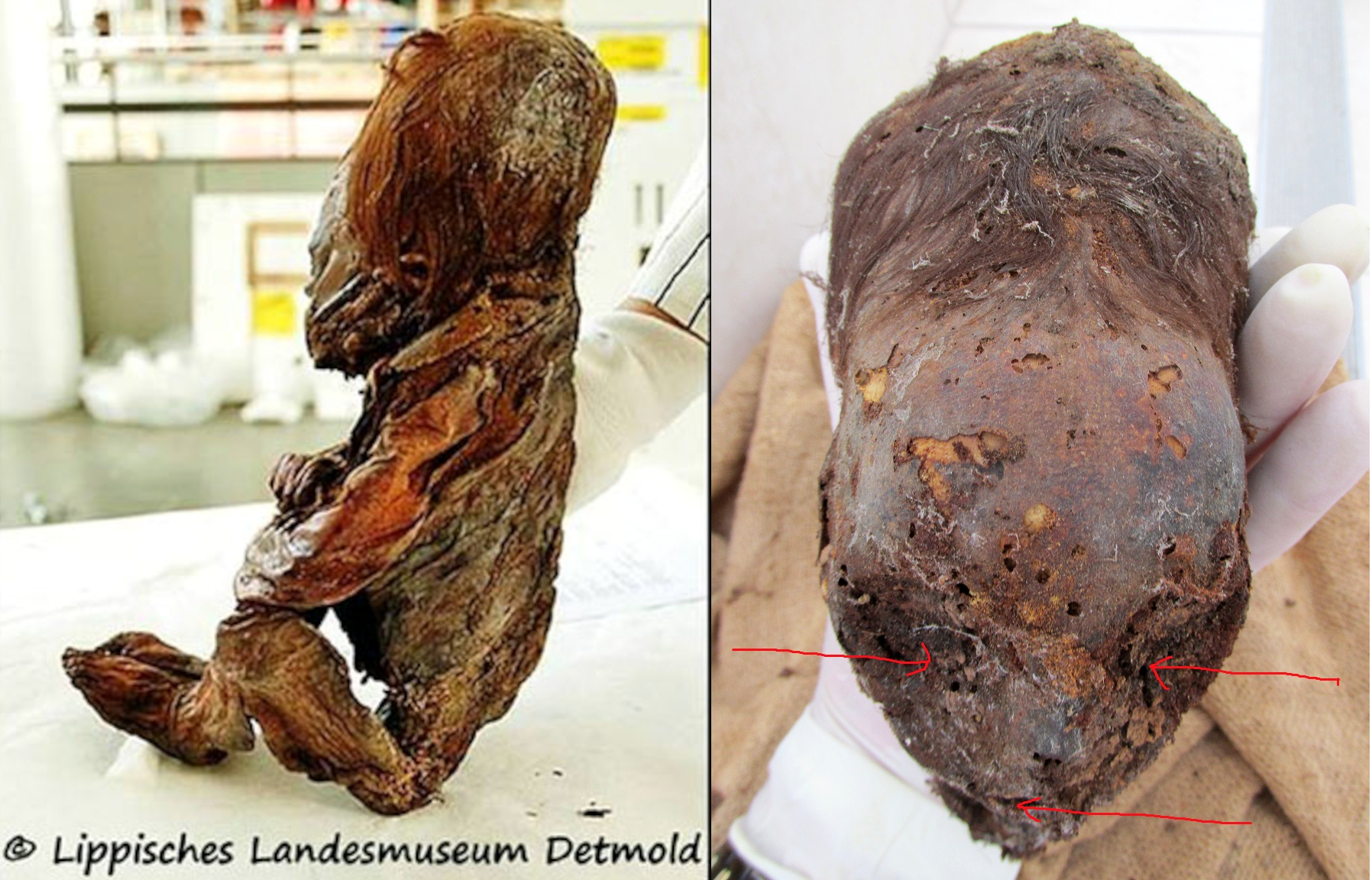
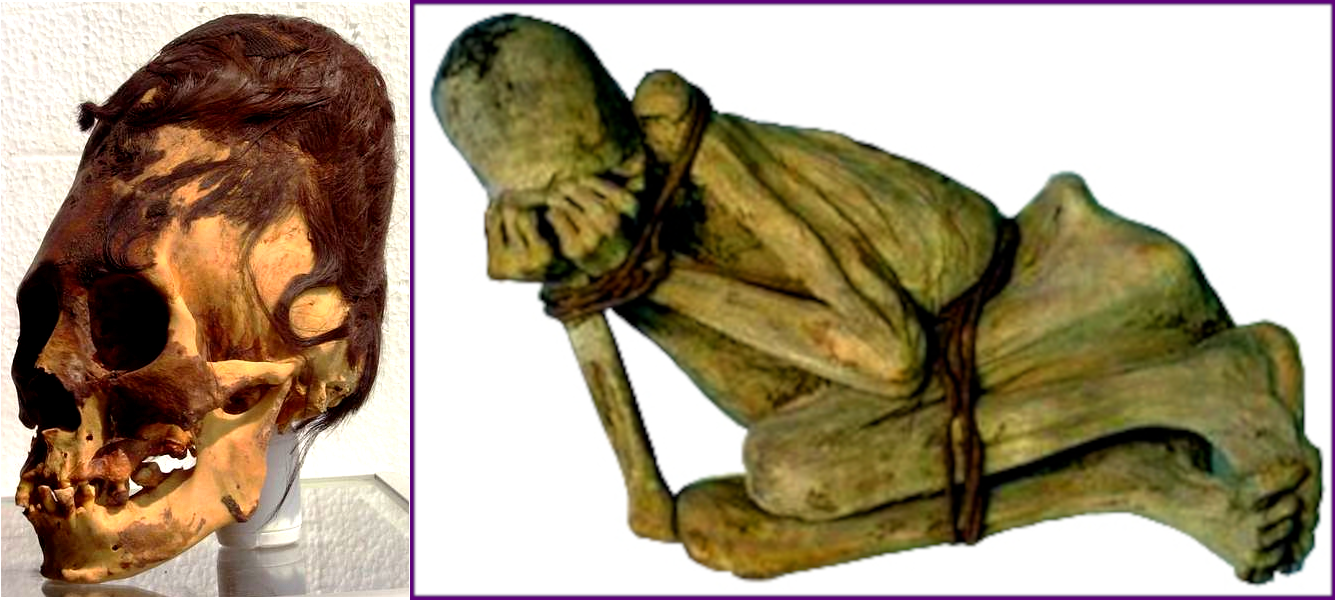
L Detmold child, R Paracas baby skull
Image credits: Detmold child — Cosmick Traveler,19 Paracas baby skull — Hidden Inca Tours.20
Detmold child
In 4,480 BCE this 8 to 10-month-old baby died in Peru. An x-ray scan revealed it died from a malformed heart. Originally the mummy was owned by Völkerkundliches Museum (Ethnological Museum) of the city of Witzenhausen. Later the mummy was donated to Lippisches Landesmuseum Detmold, where it become known as the Detmold child.19
Paracas baby skull
This long skull (owned by a private individual in Peru) is of a three-month-old baby and at least twice the size of a normal human baby skull of that age. The baby was born with this long skull. There was no time for artificial cranial deformation by any means.19 The arrows indicate the positions of the eye sockets and mouth.20
This baby (a) is of the Paracas culture in Peru; (b) has very fine auburn-colour hair (not the typical black colour of Native American People); (c) lived about 2,800 years ago; (d) was not subject to artificial cranial deformation (indicating that the long skull was genetically determined); and (e) has a vertebral column that is located further back in the skull than in normal humans, consistent with an evolutionary adaptation to compensate for the long skull.20,23
 Patapatani fetus and mother
Finnish archaeologists working near the village of Patapatani in Bolivia unearthed the skeletons of a mother and her unborn baby, both of whom had long heads. According to experts: (a) the fetus died between eight and nine months into development, most probably with the mother during birth; (b) the shape of the mother’s pelvis indicates that she likely died between 10 and 12 years old, possibly 13; (c) the mother’s long head exceeds the proportions of an artificial cranial deformation; and (d) the baby would have been born with a long head.21,22
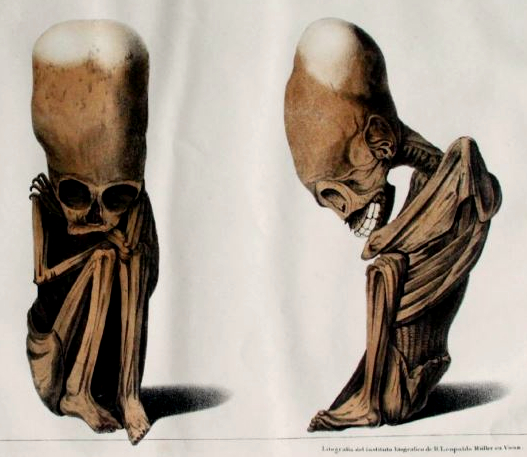
Central Peru fetus
The lithograph is by D. Leopoldo Mueller in the Spanish 1851 edition of Peruvian Antiquities. Professor D’Outrepont in the department of obstetrics determined the fetus to be age seven months and — according to the very clearly defined cranium formation — of the Huancas tribe in Peru.24 The Huancas people occupied the highlands of ancient central Peru and their culture flourished from about 600 CE to 1,532 CE.25 This fetus is discussed by Professor D’Outrepont in Appendix 1.
As the images and discussion below and in future posts will show, there were previously subspecies of long-skull humans living in communities and civilizations on all continents of Earth.
6. Long-heads in Europe
“Leaving out of the question the most ancient palaeolithic [c. 3.3 million — c. 11,700 years BP] inhabitants of Europe, this continent was peopled in neolithic times [c. 10,000 BCE — c. 2,000 BCE] by a long-headed (dolichocephalic) folk who to this day form the substratum of the population” (Bradley, 1912, p 30).26
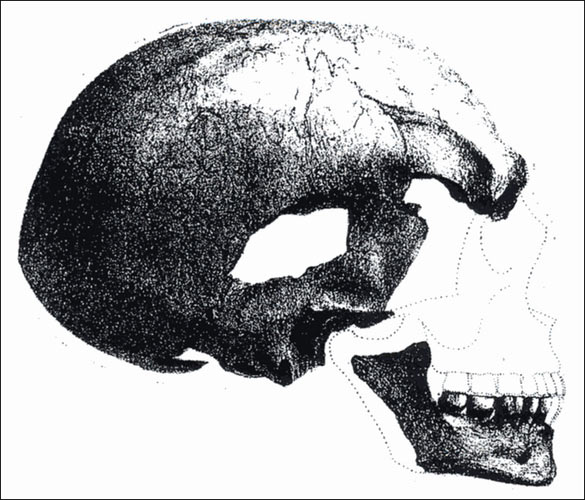
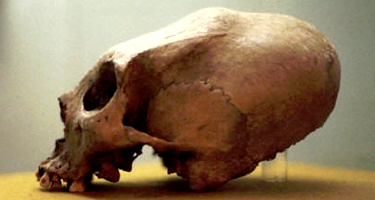
The Galley Hill skull
In 1888 this skeleton was found in Galley Hill, Kent, England. Despite initial claims of ~170,000 years, the Galley Hill skull is now dated to 10,000–15,000 years before present. According to Sir Arthur Keith (1915):27
- The skeleton does not show a single feature which can be called Neanderthaloid, nor any simian feature which is not also to be seen in the skeletons of men of the modern type.
- The Galley Hill man is similar to modern man except that he has a markedly long head — the width is about 69 per cent of the length, i.e. the cephalic index is 69, which is classified as hyperdolichocephalous, or extremely long.
- Most of the Palaeolithic Europeans (2.6 millions years — 10,000 years BP), especially of the Aurignacian period (40,000 years — 28,000 years BP) had exceptionally long heads.
A woman’s long skull from Tilshead Long Barrow
In 1863 John Thurnam4 excavated eight skeletal remains at the Tilshead Long Barrow, Tilshead, Wiltshire county, England, and found the following:
- The remains seem to be of a family group (three men, three women, and two children age one to two years) that was brutally murdered, as indicated by extensive gashes in the skulls.
- The limb bone lengths are not above medium and imply a stature of from 5 feet 5 inches to 5 feet 8 inches for the men, and 4 feet 9 inches to 5 feet 3 inches for the women.
- All the skulls are elongate, with the occiput full and prominent; the mean breadth is about 71 to the length taken as 100; the largest male skull has a breadth of 68; and there is postcoronal [corona in this context refers to the top of the head] depression in most (Thurnam, 1866).4
Although I cannot find information about the age of these skeletal remains, according Wikipedia,28 the barrow dates from 3,500 to 4,000 BCE.
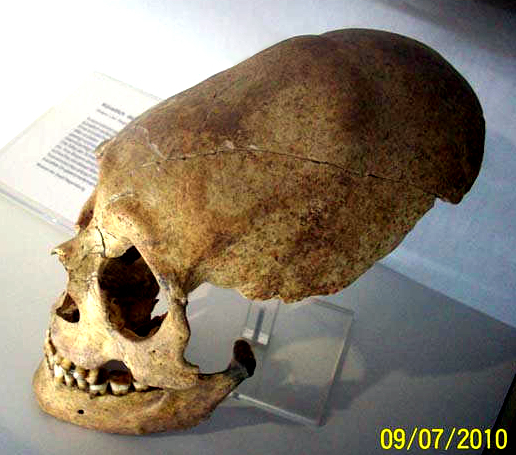
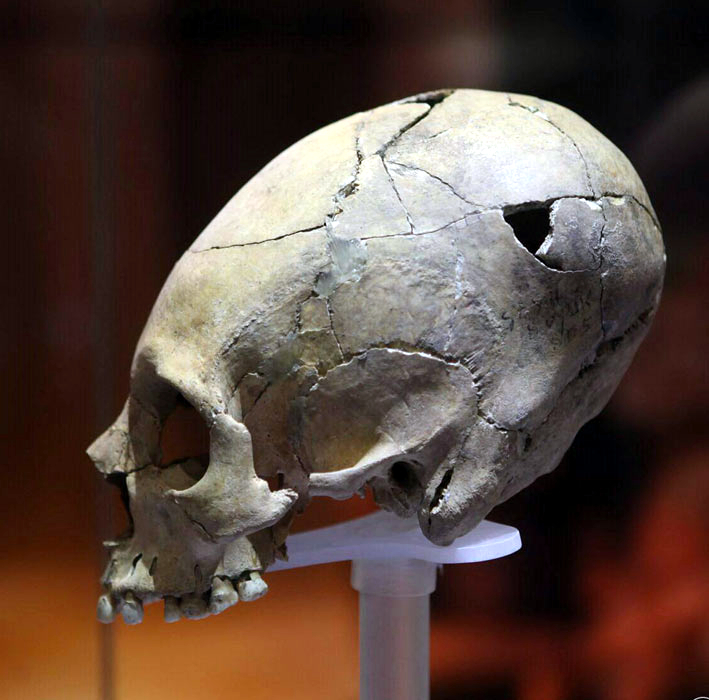
Skull from Bavaria, Germany
This extremely long skull is in the State Collection for Anthropology and Palaeoanatomy in Munich, Germany. Long skulls were found buried in 5th and 6th century sites in Altenerding and Straubing, Bavaria, Germany.29 According to the 2018 PNAS study by Krishna R. Veeramah and colleagues, this skull is about 1,500 years old.
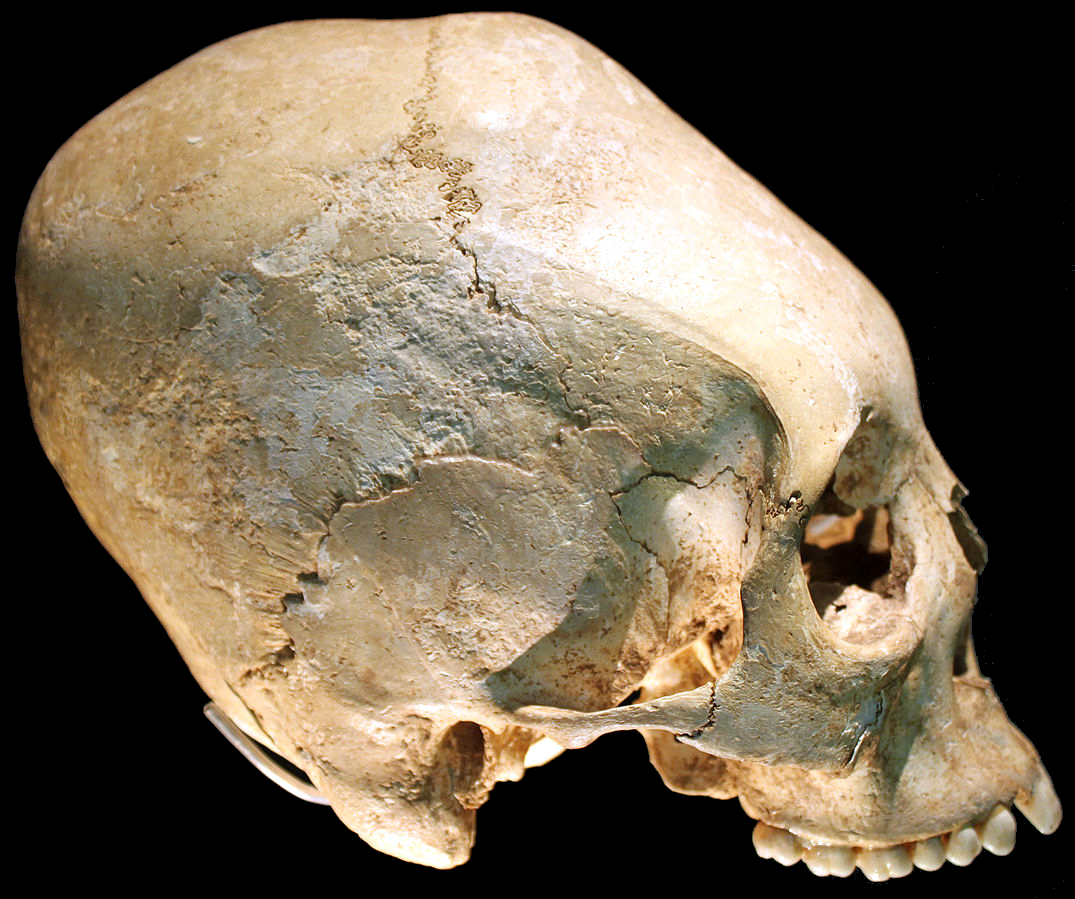
Skull in Stuttgart, Germany
This skull is of a 30 to 40 year old Alemannic woman of the early 6th century.29 It is in the Württembergisches Landesmuseum, Stuttgart, Germany.

Skull in de Sainte Odile, France
This skull is of a woman who lived in the 5th-8th century CE. The skull was found during excavations in an industrial park in Pays de Sainte Odile, Obernai, in the northeastern French province of Alsace, France.29
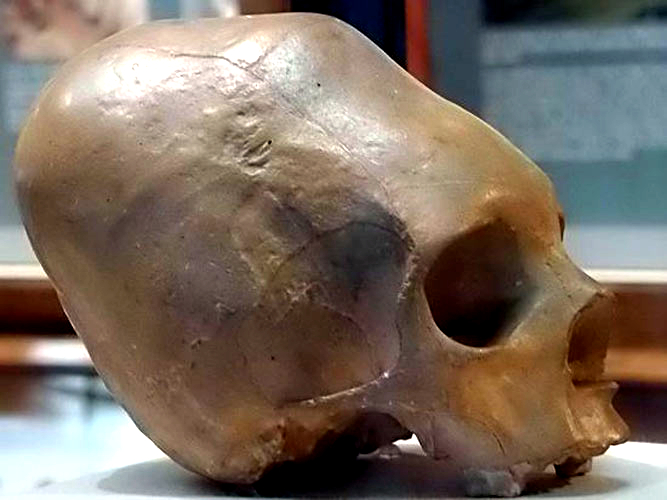
Skull from Globasnitz, Austria
The skull is from the 4th century Globasnitz.29
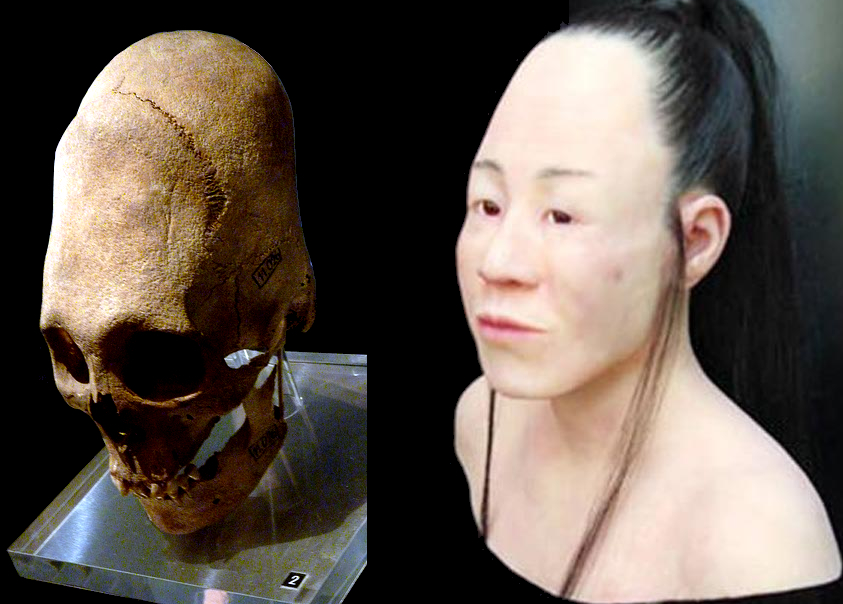
Skull of a female Hun and reconstruction
This skull is at the Hungarian National History Museum. The reconstruction is by Marcel Nyffenegger. Long skulls were common among the the Huns, a nomadic group of people known to have lived in Eastern Europe, the Caucasus, and Central Asia, between the 1st and 7th centuries.29
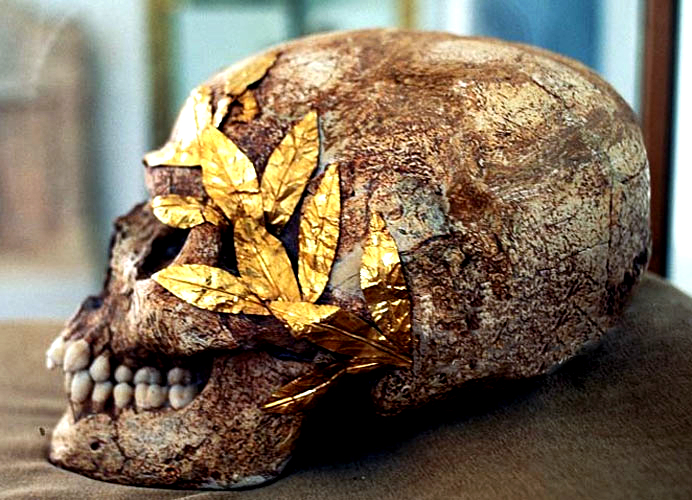
Skull in Agios Nikolaos, Crete
This skull is displayed in Archaeological Museum of Agios Nikolaos, Crete, Greece. The gold wreath of olive leafs suggests that this is the skull of an athlete. There was a coin in its mouth from 13-47 CE.29
7. Long-heads in Malta
As in the rest of Europe, in Neolithic times [c. 10,000 BCE to c. 2,000 BCE] Malta was populated by long-head people and these people were of a different subspecies to the round-head Homo sapiens.29 There is so much information about this case of long-head people that it is discussed separately from the other European long-head findings.
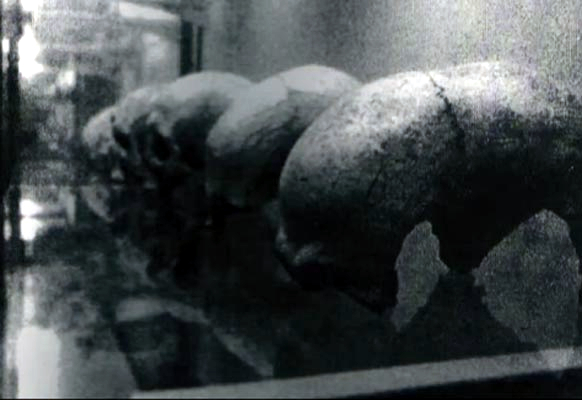
Skulls from the Hypogeum of Hal Saflieni
In 1902 the remains of 7,000 long-head people were discovered at the Hypogeum of Hal Saflieni, an underground temple in Paola, Malta.
The temple is dated to 3,300 – 3,000 BCE but it could have been built as early as 4,000 BCE according to Trump and Cilia (2004, in Ancient Wisdom).16
7.1 The people
The human remains date to about 3,000 BCE (Bradley, 1912).26
Skull characteristics
Below are more findings by Bradley (1912):26
“There are eleven skulls from Hal Saflieni in the Valletta Museum, and the question arises whether we can fit them in to any particular type. Their cephalic indices are as follows: 75.1, 74.4, 72.9, 75.1, 68.5, 76.5, 66.0, 72.1, 70.3, 67.5, one undetermined, but probably below 66. [The indexes of 66 to 68.5 indicate very long skulls compared to the typical dolichocephalic skulls of Neolithic Europe.] All are therefore dolichocephalic except three, which are sub-dolichocephalic. In spite of their dolichocephaly, however, one thing is certain: they have nothing in common with the Cro-Magnon skulls, nor does the stature suggest any such relationship. . . . In general characteristics they seem to approximate most closely to this type of the wider Galley Hill class. A representative specimen is given in Fig. 51. Two, however, have the thick skull, low forehead, prominent brow-ridges, and heavy muscular attachments characteristic of Neanderthal race (Fig. 52), although the excessive dolichocephaly and the convexity of the forehead are foreign to this type. The persistence of such features is not at all strange, as they are found in rare cases even at the present day.” (pp 197-198)
According to Wikipedia:30 Cro-Magnons contributed ancestry to present-day Europeans as of 37,000 years ago. As Bradley (1912)26 concluded that the long-skulls in Malta “have nothing in common with the Cro-Magnon skulls” and that “they seem to approximate most closely to this type of the wider Galley Hill class,” it seems that the ancestry of the long-heads is different to that of other humans as of at least 37,000 years ago. This is consistent with the observation of Sir Arthur Keith (1915),27 referred to above, who said that most of the Palaeolithic Europeans (2.6 millions years — 10,000 years BP), especially of the Aurignacian period (40,000 years — 28,000 years BP), had exceptionally long heads. This in turn is consistent with fossil and archaeological records showing the existence of Homo sapiens for at least the past 300,000 years.31
Concerning the start of round-head and long-head existence, we can know that it was not through evolution. With reference to the scientific literature, geologist Dr Casey Luskin (2015)32 showed that (a) there are no fossils documenting a transition from ape-like Australopithecus to human-like Homo and (b) this gap is real and not due to a poor fossil record.
In contrast, evidence presented in a future post in this series will show that (a) the Anunnaki (Aryan extraterrestrials) created humans with genetic material from different species, (b) the long-heads were genetically closer to our ET creators than were the round-heads, and (c) the long-heads were up to over half pure Anunnaki.
Books written by doctors Anton Mifsud and his colleague Charles Savona Ventura indicate that the long skulls from Hal Saflieni had drilled and swollen occiputs, suggesting treatment and recovery from traumas, and that these features are similar to those seen in long skulls from other locations.16 As was noted above in relation to trepanation, the medical problems implied by the drilling or cutting of a hole in the skull seem consistent with the known susceptibility of mixed-subspecies (mixed “race,” i.e. hybrids, which is what these round- and long-head people would be according to the Anunnaki method of creating them) people to medical hazards of species / subspecies-mixing.
Social status
The skeletons were likely representative of a group of peoples who were considered important (as attested to by the location of their discovery) and who were closely involved in the activities of the temple builders.16
Stature and migration
Examination of the skeletons indicated that these long-skull people were a subspecies of lower medium height, akin to the early people of Egypt, who migrated westward along the north coast of Africa, to Malta, Sicily, Sardinia, and Spain.16
7.2 The temple
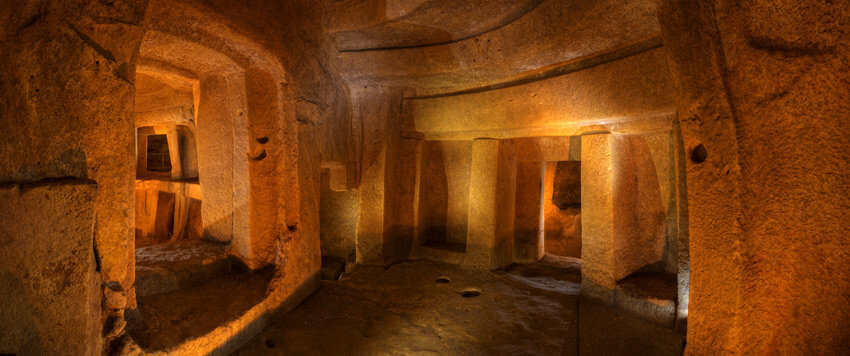
The Hypogeum of Hal Saflieni
The hypogeum is a massive underground structure comprising three levels carved into stone and would have required the removal of over 2,000 tonnes of stone. The temple is aligned to allow illumination of the ‘Holy of holies’ within the heart of the hypogeum by the annual winter solstice sunrise (the shortest day of the year), which would have shone through the entrance and directly onto the furthest parts of the underground complex.16
The hypogeum includes replicas of features from megalithic structures above ground on Malta, has trilithons and ‘doorways’ in the same style as those found in the numerous other temples on the islands, and is similar in design to other large temple complexes on Malta. This indicates that the hypogeum is contemporary with several large temple structures found on Malta. As Maltese temples are often ‘paired’, the nearby Tarxien temple is most likely a partner.16,33
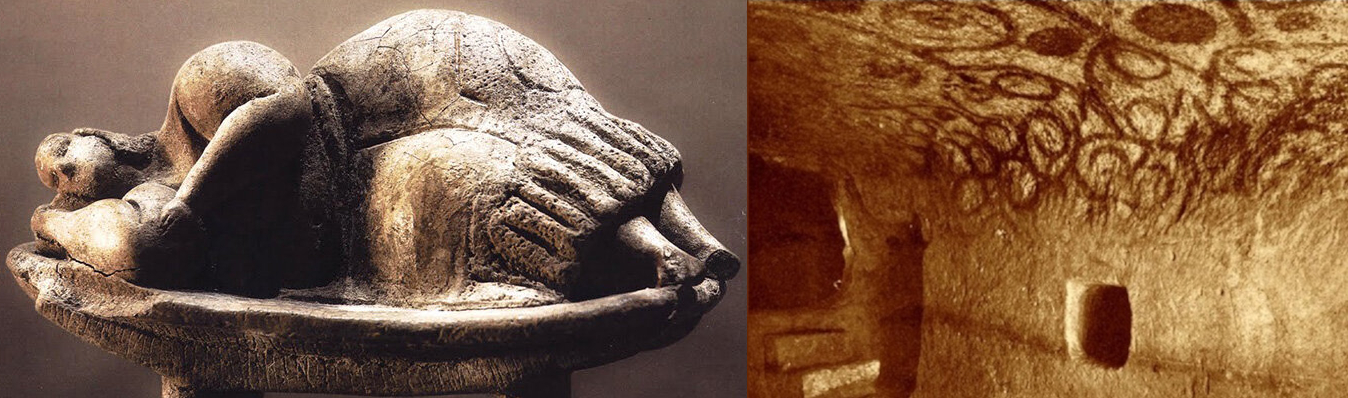
L Sculpture of obese woman, R Painting on wall and ceiling
The temple includes the following features:
Obese woman
The ‘main chamber’ included the terracotta figurine of a reclining obese woman, associated to a relic with a snake inscription on it.16,33 Similarly, carved onto a rock wall situated directly over the trilithon that leads into a small cave is the image of an obese woman holding an axe.16
Meaning
According to Johnson et al. (2020),34 figurines of obese or pregnant women (“Venus figurines”) are (a) among the earliest art in Europe, (b) characterize the period from 38,000 to 14,000 years BP, and (c) are associated with proximity to glaciers, i.e. nutritional stress, regional extinctions, and a reduction in the population. Further to (c), the authors found that figurines are less obese as distance from the glaciers increases, which they interpreted as support for the view that the over-nourished woman was a symbol of survival and beauty during episodes of starvation.
A literature review16 shows that obese women holding axes were found (a) scratched in some ancient tombs in Spain and Portugal and (b) sculpted and painted in Chieftains Chamber tombs in Champagne, France.
Although the two representations of an obese woman in the hypogeum seem to have been made after the period covered in the above-mentioned study, the meaning is likely similar, i.e. the long-head people in Malta at that time were concerned about food availability and the risk of starvation and defence (obese woman with axe) against such. On a related point, perhaps famine was a causal factor in the huge number of long-head deaths in that location in about 3,000 BCE.
Snake
Meaning
The snake inscription would represent the serpent, which was linked with the Annunaki. Serpent worship was common among ancient peoples. Throughout the world, the serpent was associated with gods and goddesses.35,36
The religion of the long-heads would have been a star-god religion that recalled a visiting star-god. In some variations of this religion, the star-god visited with his companions. The god was known by a variety of names but the description of him and his behaviour was always the same. Similar sky-god symbolism is evident at Avebury (Wiltshire, England), Tiwanaku (Bolivia), Egypt, Babylon, Assyria, parts of Asia, and Central America.35,36
The Ancients linked this god to the Pleiades stars, and some peoples believed that their ancestors came from these stars. As the Pleiades is close to the ecliptic in the constellation of Taurus, it is a spring and autumnal object in both the northern and southern hemispheres. The Pleiades regulated early calendars. Early temples, pyramids, and religious sites were aligned to the rising and setting of the Pleiades. This event marked the end of an era or a new beginning.35,36
The hypogeum also contains a two-metre-deep pit in which snakes might have been kept according to some sources.37,38,39 If that structure was indeed a snake pit, it would be consistent with the serpent worship that was part of this star-god religion.
Paintings
Many different images are painted inside the hypogeum. On the walls and ceilings, ‘spiral’ and ‘floral’ patterns, and pentagons (polygons with five sides and five angles) are painted in red ochre. Variations of the ‘spiral’ and ‘floral’ patterns on walls and ceilings can be seen in different chambers.16,33
In the main hall, painted spirals within pentagons extend to the ceiling, where the spirals are interwoven with a honeycomb pattern. From the ceiling of one chamber, a honeycomb design transforms into a collection of ‘floral’ spirals on the ceiling of another chamber.16,33
On the right hand side wall of the Holy of Holies, a bull is painted in black pigment. The bull resembles the bulls found carved on stone blocks at the Tarxien Temples (an archaeological complex in Tarxien, Malta), dating to about 3,400 BCE40 and is also about the same size.16,33
Meaning
‘Spiral’ and ‘floral’ patterns. Further to the discussion above in relation to the snake / serpent, as this temple was for the long-head people’s star-god religion, the pervasive ‘spiral’ and ‘floral’ patterns in the temple would represent the Pleiades stars.
Pentagons
From Cirlot (1962),41 A dictionary of symbols: Odd numbers and their geometric forms (e.g. three, five, triangle or pentagon) indicate dynamism. Concerning the number five in particular (as in a pentagon), the number five (a) corresponds to the five Elements (four material Elements + spirit or quintessence), (b) it denotes love, health and humanity, and (c) the number five is analogous with the human figure (four extremities + head).
The D&M pyramid on Mars illustrates this symbolism.
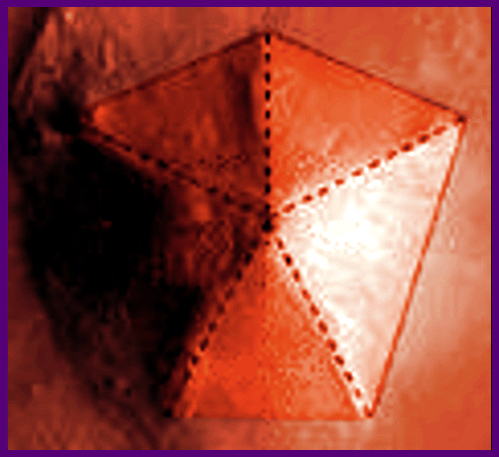
The D&M pyramid on Mars
This five-sided pyramid is in the Cydonia region of Mars. At its apex there are two 90 degree angles and three 60 degree angles.42
This pentagon (5 sides) pyramid symbolizes a dynamic (interactive, aware / active) relationship with our Creator (all pyramids are about material world – heaven communication) in all things (the five Elements) for the purposes of love, health and humanity.
Honeycomb pattern
The meaning of the honeycomb pattern is closely related to that of the Flower of Life, a sacred geometric figure composed of overlapping circles. The Flower of Life is an ancient symbol, believed to contain the blueprint of all creation, found in various spiritual and religious contexts throughout history, and it represents the interconnectedness of all living things and the divine order of the universe. In some spiritual practices, honeycomb-like hexagonal grids are used to represent this interconnectedness, raise levels of consciousness, and connect with the Divine.43 For example, honeycomb patterns were used in ancient pagan traditions of Europe and the Near East.44
In other words, the honeycomb pattern in the temple amplifies the meaning of the Pleiades and pentagon symbolism in the temple by showing that (a) our connection to the Pleiades stars (representing our creators and ancestry) for the purposes of love, health and humanity (represented by the pentagon) involves (b) an elevated state of God-consciousness.
Bull
This would represent Taurus the Bull, the constellation within which the Pleiades star cluster occurs.
‘Speaking chamber’
The ‘speaking chamber’ is a hole in the wall carved with a rounded interior surface. Anything spoken into the chamber produces an echo that reverberates throughout the hypogeum. It is thought that this chamber was used in ceremonies.
Other small chambers in the hypogeum are also thought to have been used in rituals because echoes from the ‘speaking chamber’ reverberate within those other chambers in a rhythm that is similar to the human heartbeat. It seems that the builders of this temple possessed knowledge of acoustics that enabled them to precisely alter the consciousness of worshippers.16
Meaning
Using frequencies for the purpose of elevating consciousness and connecting to the Divine was an important aspect of ancient culture. This included the wine culture of ancient Sumer. Sumerians and later Assyrians consumed wine to tap into a certain frequency of the vertical plane for this spiritual purpose.45
Similarly, music enabled Mesopotamians to have a direct and intimate relationship with the gods. There were many types of music, songs, rituals, and beautiful chants for each deity at religious occasions to enable such Divine connections. The sounds of musical instruments became associated with the voices of worshipped gods, who were differentiated by their voices. For example, Enki (later known as Ea), god of the deep sea, was associated with the drum, whose sound personified his essence; Ramman, who commanded the thunder and winds, was the “spirit of sonorous voice;” and the goddess Ishtar was represented musically by “the soft reed-pipe.”46
Talented and enterprising people have recreated the melodies of Mesopotamia with the help of ancient musical instruments recovered from burial sites. An example of such recreated music is Hurrian Hymn to Nikkal / No. 6 (1,400 BCE). Imagine the spiritual high of worshippers in the Hypogeum of Hal Saflieni when such music was played in the ‘speaking chamber’!
8. References
- Cosmick Traveler. Elongated skulls from Europe.
- Graves. R. J. (1834). Remarkable skulls found in Peru, Dublin J of Medical and Chemical Science, 15: 477.
- Cosmick Traveler. Elongated skulls: physical features.
- Thurnam, J. (1866). Further Researches and Observations on the Two Principal Forms of Ancient British Skulls, J of the Anthropological Society.
- Bellamy, P. F. (1842). A brief account of two Peruvian mummies in the Museum of the Devon and Cornwall Natural History Society, Annals and magazine of natural history: including zoology, botany and geology, 10: 96-100, London.
- Verma, V. (2023). Seth: Most mysterious Egyptian god with the head of extraterrestrial animal? How&Whys.
- Rossetti, C. (2018). Mixed race infants are unhealthy because of complex gene-environment interaction, National Vanguard, 7 Apr 2018.
- Health Colombia (2014). Mixed race people are more likely to develop metabolic syndrome, 30 May 2014.
- Black Issues (2003). Students of mixed race suffer more health problems, Diverse, 19 Nov 2003.
- Thurnam, J. (1861). Examination of a chambered long barrow at West Kennet, Wiltshire. Oxford U.
- Deniker, J. (1900). The races of man: an outline of anthropology and ethnography, London: W. Scott.
- Fernandes, D., Sirak, K., Cheronet, O. et al. (2019), Cranial deformation and genetic diversity in three adolescent male individuals from the Great Migration Period from Osijek, eastern Croatia, PLOS, 21 Aug 2019.
- Veeramah, K., Rott, A., Groß, M. et al. (2018), Population genomic analysis of elongated skulls reveals extensive female-biased immigration in Early Medieval Bavaria, PNAS, 12 Mar 2018, 115 (13) 3494-3499.
- Schiller, Francis, (1979). Paul Broca, Founder of French Anthropology, explorer of the brain, Los Angeles: U of California Press.
- Osborn, Henry Fairfield, (1918). Men of the old stone age, their environment, life and art, New York: C. Scribner’s sons.
- Ancient wisdom. The Hypogeum of Hal Saflieni.
- Taylor, Canon Isaac (1891). The prehistoric races of Italy, From the Smithsonian report for 1890, Washington: Govt. printing office.
- The Oera Linda Book, English translation by William R. Sandbach, 1876.
- Cosmick Traveler. Elongated skulls: A genetic feature.
- Hidden Inca Tours (2017). The most amazing Paracas elongated skull found so far: New born baby.
- Strange sounds (2016). Skeletons with anomalous large elongated skulls newly discovered in Bolivia, 5 Jul 2016.
- Hidden Inca Tours (2017). Possible discovery of ancient mother and baby with elongated heads in Bolivia.
- Awake Goy (2017). The most fascinating Paracas mummy found so far: Newborn baby with elongated skull, Jew World Order, 24 Jan 2017.
- Gontcharov, I. (2021). Elongated skulls in utero: A farewell to the artificial cranial deformation paradigm? Ancient origins.
- Cartwright, M. (2014). Wanka Civilization, World History Encyclopedia, 4 May 2014.
- Bradley, Robert Noël (1912). Malta and the Mediterranean race, London: T. F. Unwin.
- Keith, Sir Arthur (1915). The Antiquity of man, London: Williams and Norgate.
- Wikipedia: White Barrow
- Cosmick Traveler. Elongated skulls from Europe: Genocide of the long heads.
- Wikipedia: Cro-Magnon
- Ragsdale, A., Weaver, T., Atkinson, E. et al. (2023). A weakly structured stem for human origins in Africa, Nature 617, 755–763, 17 May 2023.
- Luskin, C. (2015). Abrupt appearance of species in the fossil record does not support Darwinian evolution, Evolution News, 29 Jan 2015.
- Black, J. (2014). The Hypogeum of Hal Saflieni and an unknown race with elongated skulls, Ancient Origins.
- Johnson, R., Lanaspa, M., & Fox, J. (2020). Upper Paleolithic figurines showing women with obesity may represent survival symbols of climatic change, Obesity, 29 (1): 11-15, 1 Dec 2020.
- Farra, L. (2012). The Pleiades enigma, 18 Jan 2012.
- Farra, L. (2014). Stonehenge revealed, 9 Nov 2014.
- Interesting Engineering (2013). Hypogeum, the underground temple in Malta, 24 Feb 2013.
- Jewelbai (2022). Hal Saflieni Hypogeum, 2 Jul 2022.
- Papa, R. (2015). The only known prehistoric underground temple worldwide is located in Malta, Learning Mind, 10 Apr 2015.
- Wikipedia: Tarxien Temples
- Cirlot, Juan E. (1962, extensively revised in 1971). A dictionary of symbols
- Haas G. J., Saunders, W. R., Miller, J. S. et al. (2017). Three-sided pyramidal formation in the western region of Candor Chasma, J Space Explor. 2017; 6 (3): 133.
- Spiritual meaning of everything (2025). Unlocking the profound symbolism and spiritual significance of the honeycomb pattern in various cultures and belief systems, 27 Jan 2025.
- Cralle, T. (2024). The spiritual meaning and symbolism of honeycomb, 27 Mar 2024.
- Cherne, O. (2023). The Wine Culture of Mesopotamia
- Miri, A. PhD. Ancient Mesopotamian music
9. Appendices
Appendix 1
Graves. R. J. (1834). Remarkable skulls found in Peru. The Dublin J of Medical and Chemical Science, 15: 477:
“A careful examination of these skulls has convinced me that their peculiar shape cannot be owing to artificial pressure. The great elongation of the face and the direction of the plane of the occipital bone are not to be reconciled with this opinion, and therefore we must conclude that the peculiarity of shape depends on a natural conformation. If this view of the subject be correct, it follows that these skulls belonged to a race of mankind now extinct, and which differed from any now existing.”
Bellamy, P. F. (1842). A brief Account of Two Peruvian Mummies in the Museum of the Devon and Cornwall Natural History Society, Annals and magazine of natural history: including zoology, botany and geology, 10: 96-100, London:
“It will be manifest from the general contour of these skulls that they are allied to those in the Museum of the College of Surgeons in London, denominated Titicacans. Those adult skulls are very generally considered to be distorted by the effects of pressure; but in opposition to this opinion Dr. Graves has stated, that “a careful examination of them has convinced him that their peculiar shape cannot be owing to artificial pressure;” and to corroborate this view, we may remark that the peculiarities are as great in the child as in the adult, and indeed more in the younger than in the elder of the two specimens now produced; and the position is considerably strengthened by the great relative length of the large bones of the cranium; and by the direction of the plane of the occipital bone, which is not forced upwards, but occupies a place in the under part of the skull; by the further absence of marks of pressure, there being no elevation of the vertex nor projection of either side; and by the fact of there being no instrument nor mechanical contrivance suited to produce such an alteration of form (as these skulls present) found in connexion with them.”
Ustariz, R., Eduardo, M., Tschudi, J., & Lilly, L. (1853). Peruvian antiquities: 35-38, New York: G.P. Putnam:
“The two crana (both of children scarce a year old) had, in all respects, the same form as those of adults. We ourselves have observed the same fact in many mummies of children of tender age, who, although they had cloths about them, were yet without any vestige or appearance of pressure of the cranium.
More still: the same formation of the head presents itself in children yet unborn; and of this truth we have had convincing proof in the sight of a foetus, enclosed in the womb of a mummy of a pregnant woman, which we found in a cave of Huichay, two leagues from Tarma, and which is, at this moment, in our collection. Professor D’Outrepont, of celebrity in the department of obstetrics, has assured us that the foetus is one of seven months’ age. It belongs, according to a very clearly defined formation of the cranium, to the tribe of the Huancas. We present the reader with a drawing of this conclusive and interesting proof in opposition to the advocates of mechanical action as the sole and exclusive cause of the phrenological form of the Peruvian race.
The same proof is to be found in another mummy which exists in the museum of Lima, under the direction of Don M. E. de Eivero.
It is not possible to explain how, by means of pressure with fillets or bandages, the occipital bone can be transformed to a plane almost horizontal, without producing, at the same time, a considerable declination of the sinciput; which last is entirely wanting in the Aymaraes, and which we yet find in the Huancas, whose occiputs, notwithstanding, show no sign of pressure, not being, by any means, able to preserve their regular inclination as the points of resistance to a frontal pressure.
The considerable extension in length of the frontal bone of the parietals, and of the occipital in the last two races, might sometimes lead one to suspect pressure on the sides; but to this opinion is opposed the inclination of the frontal and occipital bone; but the most effectual proof against the use of mechanical means will, after all, be found in the actual existence of the three races in distinct though limited localities, in which there cannot be found any traces of envelopment or pressure of the head in the newly-born.”
Appendix 2
Children’s skulls can be artificially deformed from about age three months until about age one year, when the anterior and posterior fontanels (soft spots) make the skull amenable to deformation (Winters, R., 2017, Why Did Parents in the Chinookan tribe Perform Cranial Deformation on their Babies? Ancient Origins, 12 Feb 2017). As artificial cranial deformation does not change cranial volume, such craniums look small compared to the craniums of naturally long heads. Methods and results of artificial cranial deformation are shown below.
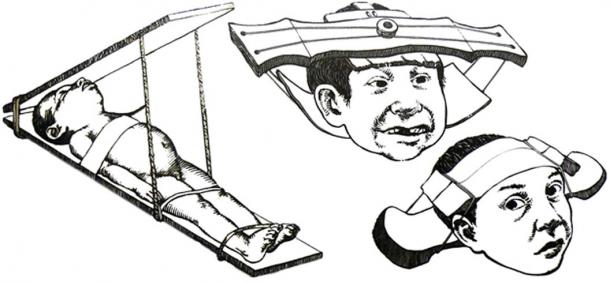
Three methods of cranial deformation
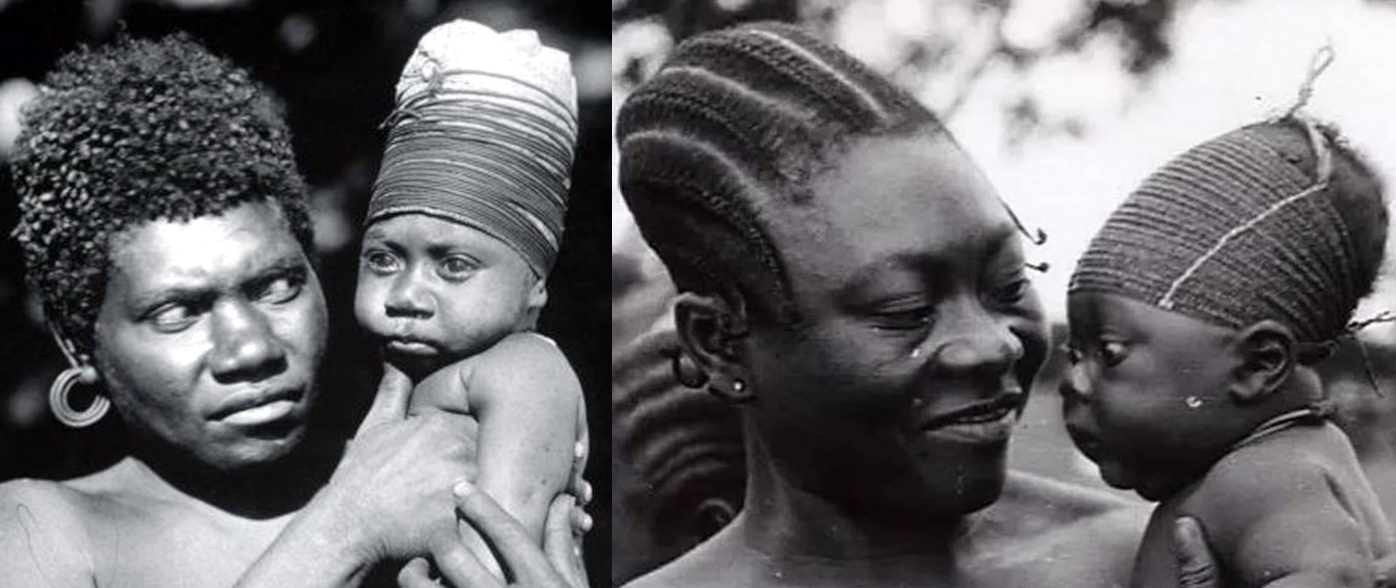
Cranial deformation by head binding

Results of head binding

Family from afar