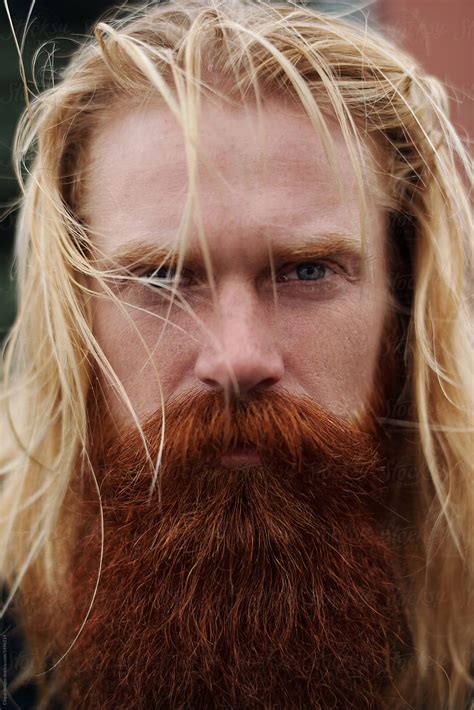
The term “Nordic features” generally refers to the physical traits historically native to the populations of Northern Europe — specifically Scandinavia (Sweden, Norway, Denmark).
Post outline
- Nordic features
1.1. Nordic Nose
1.2 General facial features
1.3 Hair and skin pigmentation - Bioarchaeology and skull dimensions
- References
1. Nordic features
1.1 Nordic Nose
In physical anthropology (anthropometry), the Nordic nasal structure is classified as leptorrhine (high, narrow and long):
- The Bridge. Typically high, narrow, and straight, running directly from the brow ridge without a significant dip at the root.
- The Profile. Mostly straight, though a slightly aquiline (convex) or turned-up (concave) tip can occur naturally.
- The Nostrils. Exceptionally compressed and narrow.
Biological Function: Evolutionarily, a narrow, long nasal passage allows cold, dry northern air to be warmed and humidified before it reaches the lungs.1
1.2 General facial features
- Skull shape. Characterized by a long, narrow head and face shape. Increased facial height relative to facial width (leptoprosopic or elongated facial profile). When viewed from the top or front, the skull is elongated (dolichocephalic) rather than round.
- Eyes. Naturally deep-set beneath a prominent brow ridge. They are predominantly light-pigmented, appearing in shades of blue, grey, or light green.
- Forehead. Slanting slightly backwards rather than being completely vertical or bulbous.2,3,4,5
1.3 Hair and skin pigmentation
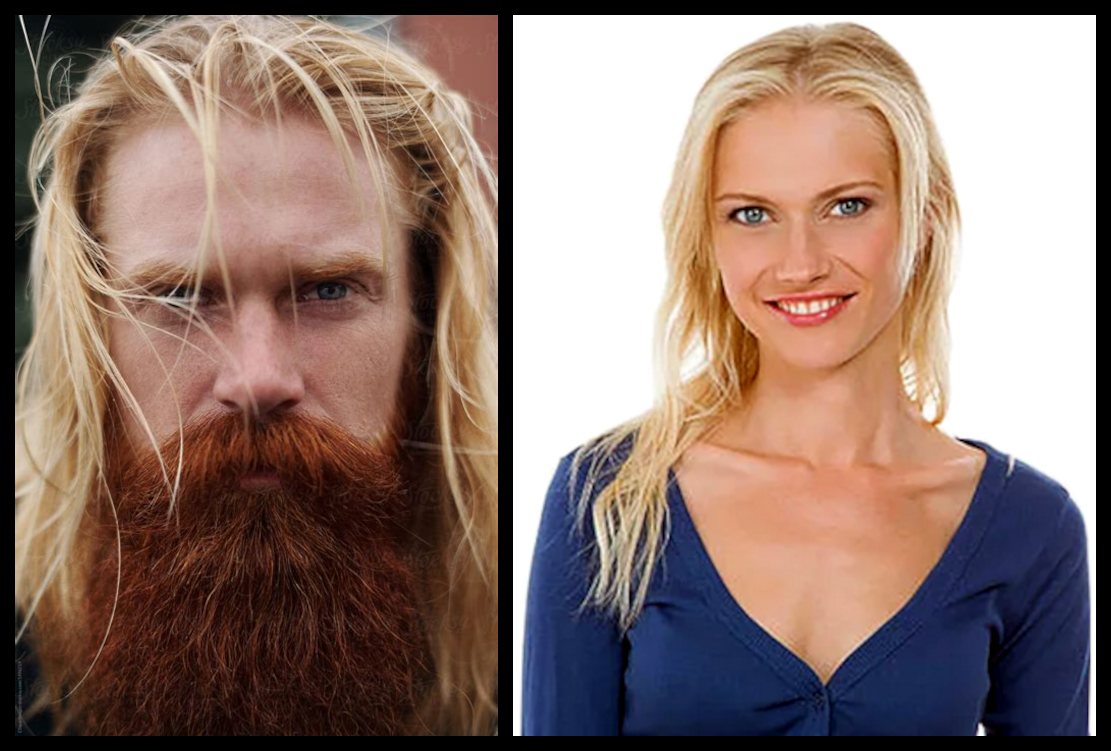
- Hair. Predominantly blond, ranging from ash-blond to platinum, with fine texture. Red or light brown hair is also common.
- Skin Tone. Exceptionally fair, pale, and vascular (often showing a reddish/pink undertone due to thin skin layers). It is prone to freckling and burns easily in the sun.
In modern evolutionary biology and anthropology, these physical characteristics are understood as phenotypic adaptations resulting from thousands of years of human genetic adaptation to specific environmental pressures, such as low sunlight, high latitudes, and cold climates.6,7
2. Bioarchaeology and skull dimensions
The high craniometric dolichocephaly (longer skull vaults from front to back) is largely driven by inherited Indo-European Steppe ancestry.6,7,8 A study by Grasgruber (2025)8 shows that modern Scandinavian populations heavily inherited their skeletal traits (larger, longer, and taller skulls paired with narrow facial breadth, i.e. dolichocephaly) from Bronze Age Steppe pastoralist DNA.
3. References
- Zaidi A.A., Mattern, B.C., Claes P. et al. (2017). Investigating the case of human nose shape and climate adaptation, PLoS Genet.,13(3), 16 Mar 2017.
- Evteev, Andrej A., Movsesian, Alla A., Grosheva, Alexandra N. (2017). The association between mid-facial morphology and climate in northeast Europe differs from that in north Asia: Implications for understanding the morphology of Late Pleistocene Homo sapiens, ScienceDirect, 36-48, 107, 14 Apr 2017.
- Bakken, Trygve E., Dale, Anders M., Schork, Nicholas J. (2011). A geographic cline of skull and brain morphology among individuals of European ancestry, PubMed Central, 17 Aug 2011, 72(1):35–44.
- Wilke, Franziska; Herrick, Noah; Matthews, Harold; et al. (2023). Exploring regional aspects of 3D facial variation within European individuals, Sci Rep, 6 Mar 2023.
- Evteev, Andrej; Santos, Patrícia; Grosheva, Alexandra; et al. (2021). Associations between human genetic and craniometric differentiation across North Eurasia: The role of geographic scale. Chapter 8 in Ancient Connections in Eurasia, ed. by H. Reyes- Centeno and K. Harvati, pp. 157-192. Tübingen: Kerns Verlag, 9 Dec 2021.
- Masell, Nihel (2017). Overview of Nordid phenotypes, 25 Aug 2017.
- Amazing Aurora. What do Scandinavian people look like? Key features explained.
- Grasgruber, Pavel (2025). The evolution of European cranial morphology: From the Upper Paleolithic to the Late Eneolithic steppe invasions, Archaeol Anthropol Sci ,17, 108, 22 Apr 2025.
 Toward the Light