Tag: Christianity

  • From where did Jews steal ideas for the Jew Jesus hoax?

    From where did Jews steal ideas for the Jew Jesus hoax?

    Jews’ Jew “Jesus” hoax is based on natural religion originating with our Aryan gods (known by names including Anunnaki, Tall Whites, Nordics, Pleiadians) from the Pleiades stars. Stanley Wilkin (2019, University of London, Jesus and Bel Christianity and the Continuation of Paganism) explains that Christianity is based on Mesopotamian religion and in particular the Anunnaki supreme god, called An in Sumerian and Anu in Akkadian. As is shown in the posts Family from afar [link to follow], there is compelling evidence that humans were created and civilized by these Aryan gods from Pleiades and that sky-god religions based on these Aryan gods have continued until today.

    Pagan origins of the Bible

    Old Testament

    The Bible was once believed to be the oldest book in the world, with completely original stories. That was before excavations in Mesopotamia in the mid-19th century revealed that Hebrew scribes stole biblical stories from pagan sources. Translated cuneiform showed that many biblical stories originated in Mesopotamia (World History). Examples of the Hebrews’ self-serving theft are presented below.

    The Epic of Gilgamesh

    The Epic of Gilgamesh, some of which dates back to 2,100 BCE Mesopotamia, is a foundational work in religion.

    Epic of Gilgamesh and Hebrew Bible similarities

    There are striking similarities between the Epic of Gilgamesh and the Hebrew Bible (similar to the Christian Old Testament), which dates back to the 8th/7th centuries BCE. Wikipedia notes that accounts of the following subjects in the Epic and Bible are correlated:

    Garden of Eden

    In both stories a human is created from the soil by a god and lives in nature; he is introduced to a female congener who tempts him; the man accepts food from the woman; he covers his nakedness; he must leave his former home, unable to return; a snake steals a plant of immortality from the hero.

    Advice from Ecclesiastes

    “A triple-stranded rope is not easily broken.” This rare proverb about the strength of a triple-stranded rope is in both books.

    Genesis flood story

    The Genesis flood story follows the Gilgamesh flood tale point by point and in the same order. This close match indicates that the Genesis flood story originates in a Mesopotamian account. In the Epic, the man who is told to build a boat before the great flood is called Utnapishtim. In Genesis he is named Noah.

    Woman created from a man’s rib

    In the Epic, the Sumerian goddess of life, Ninti, was created from Enki’s rib. It seems that this story served as the basis for the tale in Genesis about Eve being created from Adam’s rib.

    The Epic of Atrahasis

    The Epic of Atrahasis dates back to at least c. 1,650 BCE.

    Creation of humans

    The Epic explains the creation of humans by the Anunnaki gods Anu, Enlil, and Enki (rulers of the sky, Earth, and freshwater sea respectively) for the purpose of doing manual work such as farm labor and maintenance of rivers and canals. The work was undertaken by mother goddess Mami. She created humans by shaping clay, spat upon by all the gods, into figurines mixed with the flesh and blood of the slain god Geshtu-E. After 10 months humans were born from a specially made womb.

    The flood

    The Epic contains the flood story: Enki (a) warns the hero Atrahasis of Enlil’s plan to destroy mankind by flood, (b) tells him to build a boat to escape, (c) says that the boat should (i) have a roof “like Abzu” (a subterranean, freshwater realm presided over by Enki), (ii) have upper and lower decks, and (iii) be sealed with bitumen.

    Atrahasis boards the boat with his family and animals, seals the door, and the storm and flood begin. The flood ends after seven days and Atrahasis offers sacrifices to the gods.

    Enuma Elish

    Enuma Elish (also known as The Seven Tablets of Creation) is a Babylonian creation myth dated to the 9th century BCE. It is a story of the great god Marduk’s victory over the forces of chaos and his establishment of order at the creation of the world.

    There are many similarities between Enuma Elish and the Atrahasis epic. Enuma Elish describes the creation of the world and the creation of man destined for the service of the Mesopotamian deities.

    According to this account, before creation, when only the primordial entities Apsu and Tiamat existed and co-mingled, there were no other things or gods. Then from the mixture of Apsu and Tiamat two gods issued: Lahmu and Lahamu. Then Anshar and Kishar were created. From Anshar came the god Anu, and from Anu, came the god Nudimmud (also known as Ea). Within the Apsu, Ea and Damkina created Marduk.

    Marduk told Ea that he would use his own blood to create man, and that man would serve the gods. Ea advised one of the gods be chosen as a sacrifice; the Igigi advised that Kingu be chosen. His blood was then used to create man.

    As is the case with the Epic of Gilgamesh and the Epic of Atrahasis, Enuma Elish contains numerous parallels with passages of the Hebrew Bible. In particular, both Enuma Elish and the Bible refer to:

    • Watery chaos before creation
    • Separation of the chaos into heaven and earth
    • Different types of waters and their separation
    • The number seven: seven tablets of the epic and the seven days of creation
    • A similar order of creation events: first darkness, then light, the firmament, dry land, and finally man, followed by a period of rest
    • Dust infused with “godhood”: through a god’s blood in Enuma Elish and by being made in God’s image in Genesis

    Joshua J. Mark (2018) notes major points in the Enuma Elish:

    • Triumph of order over chaos and light over darkness
    • Replacement of old static gods by younger and more dynamic gods
    • The younger gods’ introduction of the concept of change and mutability to the universe through their creation of mortal beings who are subject to death
    • The mortal beings’ task of helping the gods maintain their creation and thereby play an integral role in the eternal work of the gods

    It is notable that these themes also occur in European paganism (Odinism / Wotanism).

    New Testament

    Date of birth

    Although Jesus was supposedly born on 25 December, his birthday was not declared as such until the fifth century. That day was previously named a holiday in honour of the Roman sun god Sol Invictus (Sanders, E. P., 1993, The Historical Figure of Jesus, London, England, New York City, New York).

    General similarities to earlier stories

    The Gospel of Mark

    This Gospel is a Jew retelling of the Odyssey, with Jesus as its central character instead of Odysseus (MacDonald, Dennis R., 2013, Mythologizing Jesus: From Jewish Teacher to Epic Hero, Lanham, Maryland: Rowman & Littlefield).

    The Gospel of John

    This Gospel contains ideas from Platonism and Greek philosophy: The “Logos” in John’s prologue was devised by philosopher Heraclitus and adapted to Judaism by Philo Judaeus (Philo the Jew) of Alexandria (Porter, Stanley E., 2015, John, His Gospel, and Jesus: In Pursuit of the Johannine Voice, Grand Rapids, Michigan: Wm. B. Eerdmans Publishing Company, pp. 102–104).

    The Gospel of John also seems to have been influenced by symbolism associated with the cult of Dionysus, the Greek god of wine, e.g. Jesus’ miracle of turning water into wine at the Marriage at Cana in John 2:1–11 resembles stories that were told about Dionysus (Salier, Willis Hedley, 2004, The Rhetorical Impact of the Sēmeia in the Gospel of John, Tübingen, Germany: Mohr Siebeck) and Jesus’ declaration of himself as the “True Vine” sounds like Dionysus, who discovered the first grape vine (Shorrock, Robert, 2011, The Myth of Paganism: Nonnus, Dionysus and the World of Late Antiquity, A&C Black).

    The Gospel of John also contains parallels with The Bacchae, a tragedy featuring Dionysus as a central character. It was written by Athenian playwright Euripides and first performed in 405 BCE.

    As in the Gospel of John, the central figure is an incarnate deity who arrives in a country where he should be known and worshiped. However, because he is disguised as a mortal, the deity is not recognized and is instead persecuted by the ruling party (Stibbe, Mark W. G., 1993, The Elusive Christ: A New Reading of the Fourth Gospel, The Gospel of John As Literature: An Anthology of Twentieth-Century Perspectives, Leiden, The Netherlands: Brill).

    Like Dionysus in Euripides’ Bacchae, in the Gospel of John, Jesus is elusive, makes ambiguous statements to evade capture, is supported by a group of female followers, and one of the central figures suffers a violent death (Stibbe, Mark W. G., 1994, John as Storyteller: Narrative Criticism and the Fourth Gospel, Cambridge, England: Cambridge University Press).

    Water of life

    In the New Testament, Jesus is called the “water of life.” Similarly, a votive altar to Mithras from Poetovio calls him the fons perennis (“the ever-flowing stream”) (Clauss, Manfred, 2001, The Roman Cult of Mithras: The God and His Mysteries, translated by Gordon, Richard, New York City, New York and London, England: Routledge).

    Healing miracles

    The supposed healing miracles of Jesus are similar to the miracles associated with Asclepius, the Greek god of healing and medicine (Edelstein, Emma J.; Edelstein, Ludwig, 1998, Asclepius: Collection and Interpretation of the Testimonies, Baltimore, Maryland: The Johns Hopkins University Press).

    Dying and rising savior gods

    From the article Dying-and-Rising Gods (2018) by Richard Carrier, Ph.D. in ancient history, specialist in the modern philosophy of naturalism and humanism, and the origins of Christianity:

    Many cultures around the borders of Judea had a dying and rising personal savior god. The idea was fashionable. It is unsurprising that some fringe Jews decided to invent their own dying and rising savior, this time a Jew. If any erudite religious scholar in 1 BCE had been asked what a future Jesus cult would look like, he would have described the entire Christian cult precisely, before it even existed.

    Richard Carrier (2018) on the following dying and rising savior gods:

    Osiris

    Like Jesus, he died during a full moon and was resurrected on the “third day.” Like Jesus, after being restored to life in his deceased body, Osiris visits people on earth and then rules from heaven above.

    Dionysus

    In a popular tale about Dionysus (also known as Bacchus), after being killed as a baby, he is resurrected by a human woman (Semele). Dionysus is a “reborn” savior god. Like Christians (1 Corinthians 15:29), those baptized into his cult received eternal life in paradise.

    Zalmoxis

    Zalmoxis is another resurrected savior. He died and rose from the dead. Zalmoxis appeared in his same body and visited his followers to prove he was alive.

    Inanna

    Clay tablets inscribed in Sumer over a thousand years before Christianity describe Inanna’s humiliation, trial, execution, crucifixion, and her resurrection three days later. Inanna was “turned into a corpse,” “the corpse was hung from a nail,” and “after three days and three nights” her assistants ask for her corpse and resurrect her (by feeding her the “water” and “food” of life). Her cult continued to be practiced into the Christian period.

    Adonis

    Adonis, who is sometimes equated with Tammuz, is another resurrected savior. There were national ceremonies of mourning for Adonis’ death followed the next day by celebrations of his return to life and ascending into outer space. It is likely that the resurrection of Adonis was celebrated long before Christianity began.

    Romulus

    Romulus is another resurrected savior god before Christianity. He is murdered, his corpse vanishes, the sun goes out, people flee in fear and mourn his death; then he returns to earth alive, resurrected in a new divine body. Then he preaches his gospel to the disciple Proculus before departing to rule from heaven.

    Asclepius

    By a god (Zeus) Asclepius was turned into a bloodless corpse. Then Zeus restored Asclepius to life. After this resurrection, Asclepius was immortal, eternal, and supernaturally powerful, like Jesus.

    Baal

    The death of Baal (or “Ba’al”) is likely the same death mourned under the name Hadad-Rimmon in Zechariah 12:11. Baal’s corpse is found by Anat and multiple gods declare him dead. After Baal is then buried and funeral rites performed, he is resurrected and lives forever. Later, but before the onset of Christianity, Baal becomes a personal savior god.

    Hercules

    The legend of Melqart became fused with that of Hercules. After Hercules was killed by Typhon, Iolaus restored him to life by ritually burning a quail. After he was raised from the dead, Hercules ascended to heaven with divine power, like Jesus.

    The idea of resurrection, especially of the whole world at a designated end-time, was pagan.

    Richard Carrier concludes:

    • It’s time to face the fact that resurrected savior gods was a pagan idea.
    • All Jews did was invent a Jew one for Christianity.

    Finally, from where did Jews get the idea of calling their fictitious Jew deity “Jesus?”

    Jessos

    Jesus-like Jessos (born in 2193 BCE according to the ancient Oera Linda Book, discussed in the post The Oera Linda Book: Explosive power for Aryans) seems like a candidate.

    Esus

    Esus (Celtic: “Lord,” or “Master”)also seems to have inspired the Jew hoaxers. From Britannica (Esus, Celtic deity):

    “Esus was a powerful Celtic deity, one of three mentioned by the Roman poet Lucan in the 1st century AD; the other two were Taranis (“Thunderer”) and Teutates (“God of the People”). Esus’ victims, according to later commentators, were sacrificed by being ritually stabbed and hung from trees. A relief from the Cathedral of Notre-Dame in Paris portrays him as a bent woodman cutting a branch from a willow tree.”

    To clarify, Esus was a killer carpenter (a wood cutter who stabbed and hanged people from trees). Although the New Testament is quiet about this aspect of J/esus’ character, it seems that Esus became Jesus for the purposes of Christianity. Both Esus and Jesus were carpenters, both were involved in human sacrifice on wood (Jesus was allegedly sacrificed on a wooden cross) and both were involved in stabbing (Jesus was supposedly stabbed while on the cross).

    The Anunnaki are commonly depicted with wings, and the concept of winged angels can be traced to the Anunnaki (Stanley Wilkin, 2019, University of London, Jesus and Bel Christianity and the Continuation of Paganism)

  • Jews’ cruel hoax: Christianity

    Jews’ cruel hoax: Christianity

    Jews’ Jew-Jesus invention

    Thomas Dalton (PhD) exposes this cruel hoax with his rational analysis of historical facts in Christianity: The Great Jewish Hoax. Points from his essay as published on Renegade Tribune (1 Jan 2024):

    Christian naivete

    Not even a fraction of a percent of Christians understand the basic facts of their so-called religion. If they did, they would realize that their entire religion is a harmful and soul-destroying fraud of Jewish lies.

    The star of Bethlehem

    There is no independent confirmation of any unusual celestial events around that time. In any case, it is impossible for a star to indicate the location of a particular village like Bethlehem, let alone a specific manger.

    No evidence of “Jesus“

    Despite him supposedly preaching to huge crowds of people and performing great miracles, there is no independent confirmation that the biblical Jesus even existed.

    Romans were the ruling power in that region and they were acknowledged experts at documentation. We have their records of military battles, taxes, foreign trade, political events, and more as of the early first century. This includes coins, papyrus fragments, stone engravings and the “Pilate Stone” that confirms the existence of Roman governor Pontius Pilate during the years 26 to 36 CE. However there is absolutely no Roman documentation about Jesus, his miracles, or his following, from the time in which Jesus allegedly lived. Is it possible that somehow, all the ruling authorities and experts completely overlooked the coming of the “Son of God”?

    Not even the Jewish scholars of the time and for decades afterward left a single comment about this supposed miracle-man who emerged in their own community. Eventually, in the year 95 (about 60 years after Jesus’ alleged crucifixion), a Jewish writer (Josephus, 37-100 CE, in Antiquities of the Jews) briefly mentioned Jesus and the Christians twice. Josephus’ earlier work (The Jewish War, circa 75 CE) did not mention Jesus at all.

    The total lack of contemporaneous evidence of Jesus can only lead to one logical conclusion: the biblical Jesus never existed.

    As Thomas Dalton concludes, “Christians! Wake up! Your lives are a fraud. . . . Jews pulled a colossal hoax on you, and present-day Jews are only too happy to perpetuate this fraud. And you pay the price, every single day.”


    Jew Jesus is Jew fiction. We have Aryan gods from Pleiades.

  • The Christ-Con

    The Christ-Con

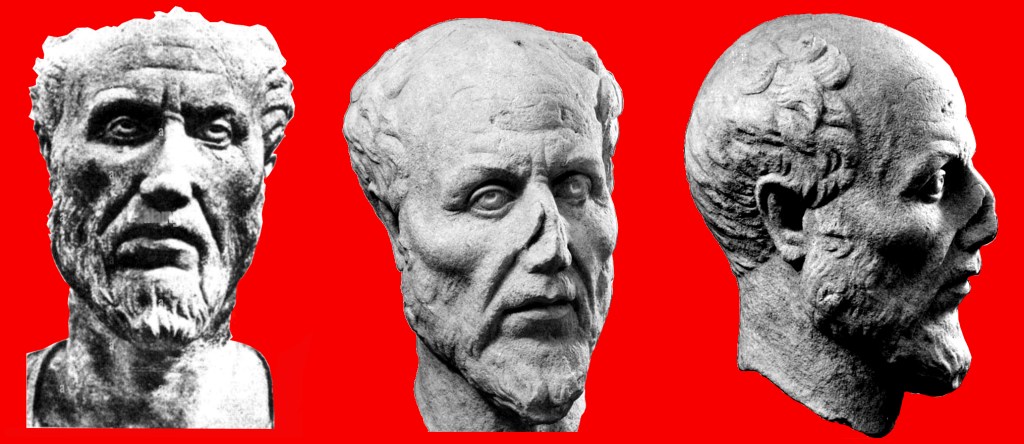
    Mugshots: Philo Judaeus (Philo the Jew). Source: Internet search on Plotinus + bust. The marble busts attributed to Plotinus are based on a lost portrait of Philo and consistent with Philo being described as having a long crooked nose, being bald, and having Semitic features. Reference: Christianity Exposed

    From Christianity Exposed and Steve H of Christianity Exposed in his comments under the article Are We All One In Christ Jesus? (Pierre Simon, Occidental Observer, 21 June 2023):

    1. The criminals

    • The original draft of the New Testament was written at the Alexandrian School in Egypt by Philo Judaeus (Philo the Jew), pictured above.
    • Other Jews put the finishing touches to the New Testament. These Jews were Philo’s nephews Tiberius Julius Alexander aka “Josephus” who became the head of the Roman army (the Roman Prefect) and the governor of Roman Egypt, and Thaddeus Alexander Herod aka “Paul the Apostle.”

    2. The conspiracy

    • The Alexandrian School in Egypt was a proto-Frankfurt School where Jews specialised in corrupting existing religions by adding a Jewish messiah and slave-making ethos.
    • Examples of these Jewish pacifist slave-making religions include the Serapis cult, Gnosticism, Mithraism, Christianity, Manichaeanism, Valentinianism, Hermeticism, Buddhism and many others. Christianity is Zoroastrianism corrupted by the Alexandrian criminals to include a Jewish messiah.
    • Jew Karl Marx created a secularized variant of Christianity where God is replaced by the government.
    • Like Christianity, Marxism targets the oppressed, promises them a utopia (classless society), but in reality it weaponizes their resentment for a violent overthrow of the existing social order.
    • Marxism was filtered through the Frankfurt School and Communist Russia and became modern Liberalism.

    3. A control-con

    Christianity has in-built population control systems:

    3.1 Self-control

    Christians are fooled into believing that they are sinners since birth (Original Sin), require “salvation,” and that they will be punished in “Hell” or rewarded in “Heaven” depending on how submissive / compliant they are. In reality, scientific evidence from continuity of consciousness research shows that there is no “Hell” and that after physical death everyone continues life in a heavenly realm, including psychopaths.

    Due to their irrational negative feelings of guilt, shame, fear and self-hate, Christians engage in bizarre acts of self-discipline, mortification of the flesh, confession (reinforces guilt and shame through continued confession of ‘guilt’), penance, evangelism, missionary work, and prayer (reinforces the guilt, shame and fear through repetition of directed affirmations).

    3.2 Other-control

    Christianity instils an irrational belief in the Christard’s spiritual superiority and authority to police other people’s behaviour. Such delusions lead to Christards labelling others as “heretic” (“racist,” “sexist,” “homophobe” in secularized form) if they violate Christard commandments such as those of race, gender and more, including political affiliation. As history shows (e.g. see Christianity kills), these religiously insane Christards are extremely dangerous to other forms of life, including people who choose to not participate in their religious sickness.

    3.3 Loss of cultural sustenance

    Christianity cuts people off from their tribe, true culture and ancient life-promoting ways. The “faith” required by Christianity reduces followers to Christards — people who lack intellectual curiosity and critical thinking skills, act stupid, and are obedient slaves to Jews.


    Cut off from our cultural roots

  • Then we told them …

    Then we told them …

    • To one who strikes you on the cheek, offer the other also, and from one who takes away your cloak do not withhold your tunic either. Give to everyone who begs from you, and from one who takes away your goods do not demand them back. (Luke 6:29–30)
    • Blessed are the meek, for they will inherit the earth. (Matthew 5:5)
    • The last will be first, and the first will be last. (Matthew 20:16)
    • Salvation is from the Jews. (John 4:22)
    • There’s a “pandemic.”
    • Take our jab for ‘protection’.
    • You will own nothing and be happy (Klaus Schwab, Executive Director of the WEF Board, Jew by his Jew biological mother). Don’t ask who wants to own everything.

  • Revenge in realms of Death

    Revenge in realms of Death

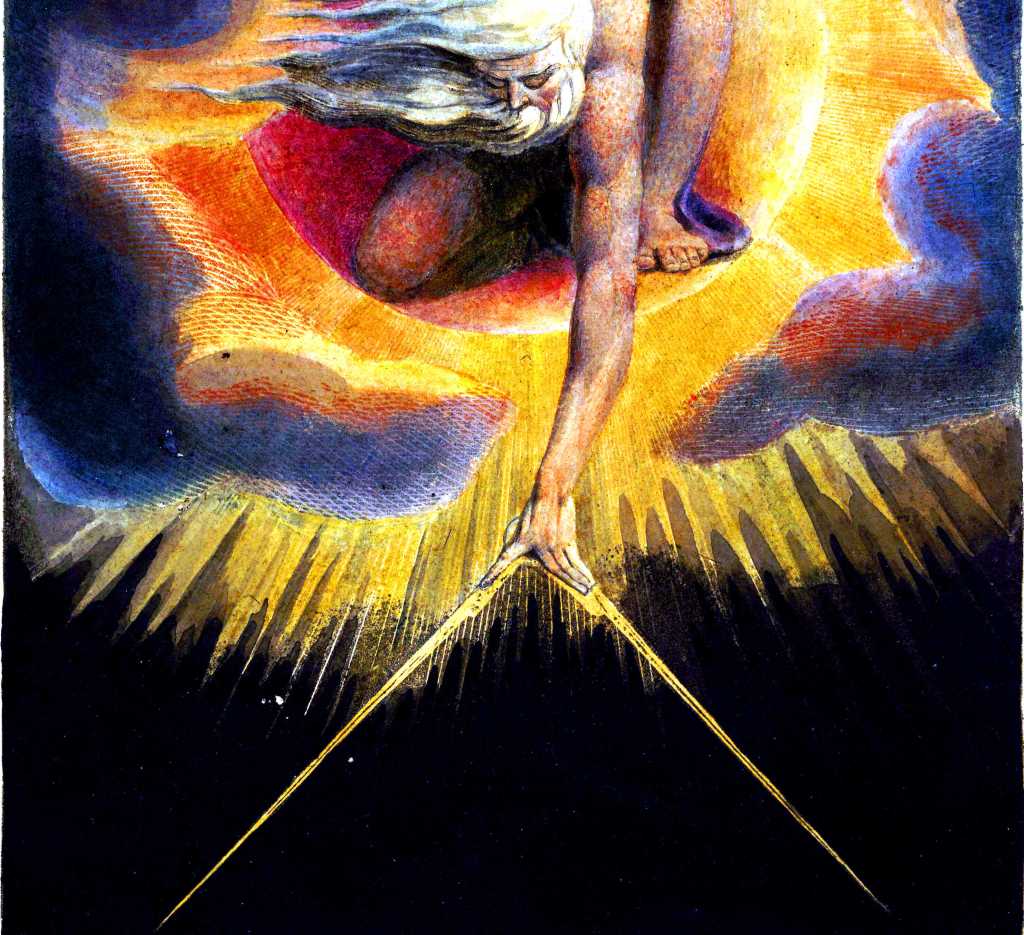
    The picture is by William Blake, eminent English poet and illustrator. It is called The Ancient of Days and was originally published as the frontispiece to his 1794 work Europe a Prophecy.

    The title of this post is from a line in William Blake’s prophetic poem Auguries of Innocence. The “revenge” can be understood in terms of the spiritual principle known in European paganism as örlög, the cosmic web of cause and effect that is influenced by, and influences, everyone. This means that we cannot escape the consequences of our actions.

    The post concerns matters about which Blake felt strongly, particularly the destructiveness of organized religion, abuse of Nature and senseless wars. Recent examples of senseless wars include WW2, engineered against Germany by an evil cabal, and the many wars since 1946 for strategic and financial benefit by the war-mongering victors.

    The post is structured with reference to William Blake, Adolf Hitler, our ecological catastrophe and örlög’s human consequences.


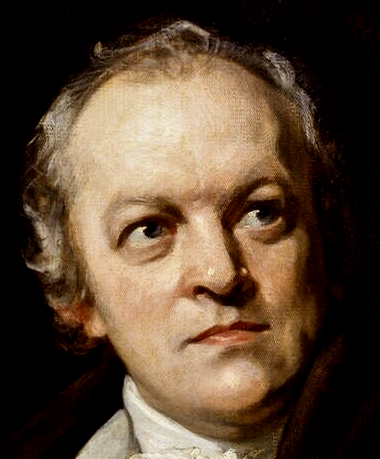
    William Blake (1757– 1827)

    William Blake was a deeply spiritual and Nature-conscious man. He was hostile to almost all forms of organized religion, the abuse of class power, senseless wars and disrespect for Nature. Blake’s warnings of catastrophe that would follow our abuse of Nature, and his extraordinary insight, are evident in poems such as Auguries of Innocence, I Saw a Chapel, The Garden of Love, A Divine Image, London and The Smile. The poems can be read on Poetry Foundation.


    Adolf Hitler (1889 — 1945)

    Note: For people who value facts but do not yet know about the hateful anti-Hitler lies and brainwashing after WW2, links to educational sites are offered in the post “The Holocaust”.

    Adolf Hitler on God, Nature and Christianity

    These statements by Adolf Hitler are from an article on The Truth Seeker. They were made by Hitler in private conversations with his closest friends and associates, mostly from 1941-1942. The conversations were not meant for public consumption. The quotations are from Hitler’s Table Talk, as recorded by Martin Bormann.

    God

    1. Fundamentally in everyone there is the feeling for this almighty, which we call ‘God’.
    2. What comes naturally to mankind is the sense of eternity, and that sense is at the bottom of every man.
    3. The soul and the mind migrate, just as the body returns to nature. Thus life is eternally reborn from life. As for the ‘why’ of all that, the soul is unplumbable.
    4. Man seizes hold, here and there, of a few scraps of truth, but he couldn’t rule nature. On the contrary, he is dependent on Creation.
    5. True piety is the characteristic of the being who is aware of his weakness and ignorance.
    6. Whoever sees God only in an oak or in a tabernacle, instead of seeing Him everywhere, is not truly pious. He remains attached to appearances.

    Nature

    1. Man has discovered in nature the wonderful notion of the Almighty whose law he worships.
    2. The man who contemplates the universe with his eyes wide open is the man with the greatest amount of natural piety: not in the religious sense, but in the sense of an intimate harmony with things.
    3. Learn to become familiar with the laws by which life is governed; acquaintance with the laws of nature will guide us on the path of progress.
    4. As for the ‘why’ of these laws, we shall never know anything about it.
    5. An educated man retains the sense of the mysteries of nature and bows before the unknowable.
    6. In nature there is no frontier between the organic and the inorganic.
    7. Today we know that our solar system is merely a solar system among many others. What could we do better than allow the greatest possible number of people like us to become aware of these marvels? When understanding of the universe has become widespread, when the majority of men know that there are perhaps inhabited worlds like ours, then the Christian doctrine will be convicted of absurdity.
    8. It’s possible to satisfy the needs of the inner life by an intimate communion with nature. At the present stage only a minority can feel the respect inspired by the unknown, and thus satisfy the metaphysical needs of the soul.
    9. Man should know that salvation consists in the effort that each person makes to understand Providence and accept the laws of nature.
    10. The observatory at Linz will give thousands of excursionists access to the greatness of our universe. The pediment will bear this motto: ‘The heavens proclaim the glory of the everlasting.’
    11. There’s no better method of instruction than the picture. Put a small telescope in a village, and you destroy a world of superstitions.
    12. Progress of science and technics led liberalism into proclaiming man’s mastery of nature, and announcing that he would soon have dominion over space. But a simple storm is enough — and everything collapses like a pack of cards!

    Christianity

    1. Christianity was the first creed in the world to exterminate its adversaries in the name of love. Its keynote is intolerance.
    2. Christianity is a rebellion against natural law, a protest against nature. Taken to its logical extreme, Christianity would mean the systematic cultivation of human failure.
    3. Christianity is an invention of sick brains: one could imagine nothing more senseless, nor any more indecent way of turning the idea of the Godhead into a mockery.
    4. [Saying what he would have done instead of what Mussolini did] For my part, in his place I’d have taken the path of revolution. I’d have entered the Vatican and thrown everybody out.
    5. Pure Christianity leads quite simply to the annihilation of mankind. It is merely whole hearted Bolshevism, under a tinsel of metaphysics.
    6. Christianity is the worst of the regressions that mankind can ever have undergone, and it’s the Jew who, thanks to this diabolic invention, has thrown him back 15 centuries.
    7. It is a great pity that this tendency towards religious thought can find no better outlet than the Jewish pettifoggery of the Old Testament, for a religious Folk who continually seek ultimate light on their religious problems with the assistance of the Bible, must eventually become spiritually deformed.
    8. It is deplorable that the Bible should have been translated into German, and that the whole of the German Folk should have thus become exposed to the whole of this Jewish mumbo jumbo.
    9. The priests of antiquity were closer to nature, and they sought modestly for the meaning of things. Instead of that, Christianity promulgates its inconsistent dogmas and imposes them by force. Such a religion carries within it intolerance and persecution. It’s the bloodiest conceivable …
    10. Since the Bible became common property, a whole heap of people have found opened to them lines of religious thought which as often as not turned them into religious maniacs.
    11. The Catholic Church has elevated to the status of Saints a whole number of madmen.
    12. The Ten Commandments are a code of living to which there’s no refutation. These precepts are inspired by the best religious spirit.

    A comment under the article on The Truth Seeker:

    We National Socialists call upon ourselves to live as naturally as possible – that is, in keeping with the laws of life. The more thoroughly we know and attend to the laws of nature and life, the more that we adhere to them, the more do we correspond to the will of the Almighty.


    Ecological catastrophe

    A talk by Prof. Eric Pianka

    Famous ecologist Prof. Eric Pianka (1939 — ) spoke about our ecological catastrophe on 21 Oct 2004 as part of IPFW School of Arts and Sciences Distinguished Lecturer Series. The talk is called The Vanishing Book of Life. It is on YouTube here.

    Quote from Prof. Pianka’s talk (as of 46:00) on the causes of our ecological catastrophe:

    Be fruitful and multiply, and subdue the earth. [quote from the Bible] Organized religion is the enemy man. They have painted the PATH to GET where we are! There it is. And, we didn’t replenish the earth. We checked off all the others. We HAVE dominion over the fish and the fowl, we’ve SUBDUED it, we’ve TAKEN it, but we haven’t replenished ANYTHING. We’re NOT taking good care of it…. We’re ALL responsible. Everything we do, every time you fill up your gas tank, every time you flush your toilet, every time you buy a new gizmo for your computer or a new telephone or a cell phone, you’re contributing to ALL of this! NONE of us are innocent!

    To clarify, these are Prof. Pianka’s main points:

    • Organized religion is the enemy.
    • Perverse religious teachings led to our destruction of Nature.
    • We are all responsible for the resulting ecological catastrophe.

    Later in his talk, and in more recent presentations by other scientists, we can learn why our destruction of Nature leads inevitably to human catastrophe.


    Human consequences